







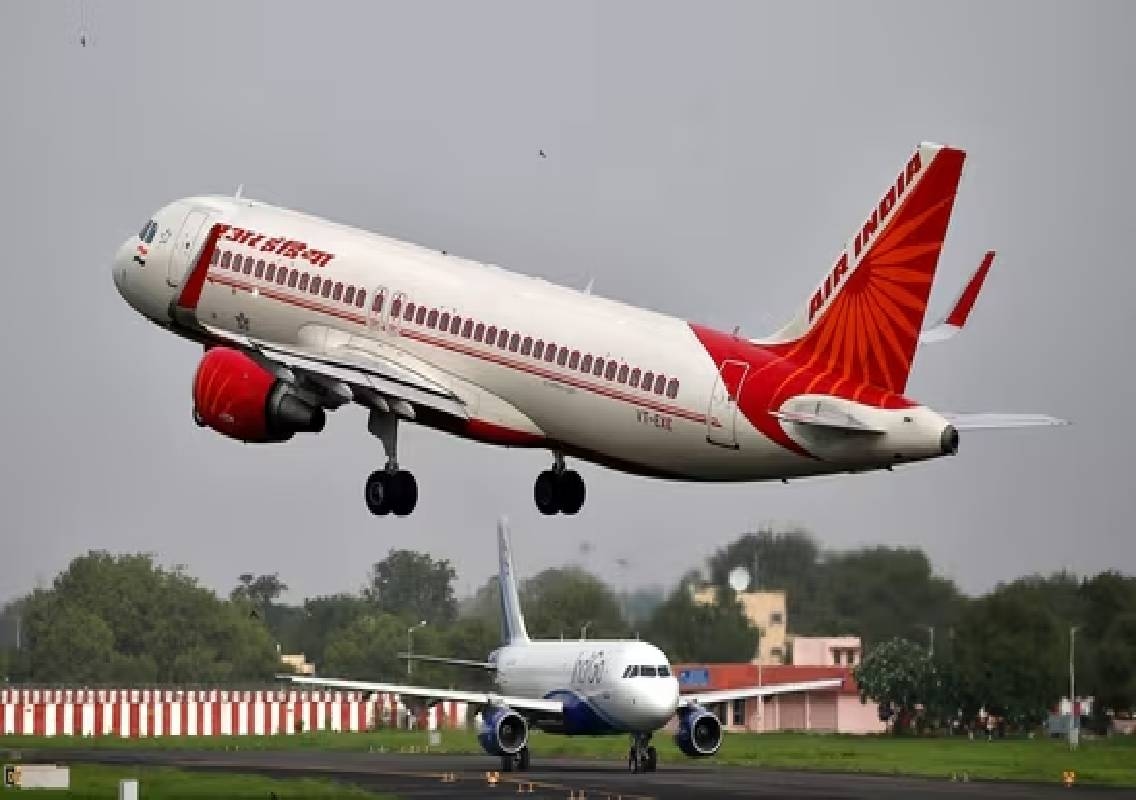


New Delhi: Indian airlines have warned of possible flight cancellations and disruption of services amid a sharp surge in aviation turbine fuel (ATF) prices, triggered by escalating geopolitical tensions in West Asia. The Federation of Indian Airlines (FIA), representing major carriers including Air India, IndiGo, and SpiceJet, has urged the Centre to intervene urgently to stabilise pricing.
Airlines flag risk of halted operations
In a letter dated April 26, the FIA cautioned that the aviation sector is on the verge of “stopping operations” if the current fuel pricing structure continues. The association said that the existing system where domestic and international ATF rates are treated differently has created a severe imbalance.
“Any ad hoc pricing and/or irrational increase in the price of ATF will result in insurmountable losses… leading to grounding of aircraft and cancellation of flights,” the letter stated.
Airlines said the April pricing revision had already made international operations unviable, resulting in significant financial losses.
Sharp rise in ATF prices
The crisis stems from a steep increase in global crude oil prices. According to the FIA, Brent crude has surged from $72 per barrel to $118 per barrel amid the ongoing West Asia conflict.
ATF prices, which are benchmarked against MOPAG (Mean of Platts Arab Gulf) plus a premium, have seen an even sharper rise. Prices jumped from $87.24 per barrel to a peak of $260.24 per barrel — a 295 per cent increase — before easing slightly to $235.63 per barrel.
The crack differential between Brent crude and MOPAG, which previously ranged between $11 and $18 per barrel, has widened dramatically to $132.59 per barrel, further inflating fuel costs.
Fuel costs strain airline finances
ATF typically accounts for 30–40 per cent of an airline’s operating costs. However, with the recent surge, its share has increased to nearly 55–60 per cent, severely impacting profitability.
Airlines also pointed to additional pressures such as rupee depreciation and rising input costs from sectors linked to petroleum, including polymers and petrochemicals.
Operational challenges have intensified due to airspace restrictions linked to the West Asia conflict, forcing airlines to take longer routes and increasing fuel consumption.
“Airlines have been somehow managing operations till date despite rising costs… Now, with an unprecedented rise in ATF prices… the operation of airlines is being challenged in totality,” the FIA said.
Government intervention and pricing concerns
On April 1, state-run oil marketing companies initially raised ATF prices for domestic carriers by 114.55 per cent, from ₹96,638 per kilolitre to ₹2,07,341 per KL in Delhi. Following government intervention, the increase was moderated to 8.6 per cent, bringing the price down to ₹1,04,927 per KL for domestic airlines.
However, international operations continued to bear the full impact of the price hike, worsening financial stress for airlines operating global routes.
Key demands by airlines
The FIA has made three major requests to the government:
- Reintroduction of the crack band mechanism, a transparent pricing framework with a $12–22 per barrel band implemented post-COVID-19
- Temporary deferment of the 11 per cent excise duty on ATF for domestic operations
- Reduction in value-added tax (VAT) on ATF in key states, where rates remain high
Delhi currently has one of the highest VAT rates on jet fuel at 25 per cent, while Tamil Nadu tops the list at 29 per cent.
Mixed views from industry experts
Not all industry observers agree with the airlines’ stance. Mark D. Martin, CEO of an aviation advisory firm, described the FIA’s warning as a pressure tactic.
He argued that India is already one of the few countries cushioning jet fuel costs to protect airlines from global price volatility, suggesting that the industry should explore alternative solutions instead of seeking further concessions.
Conclusion
The sharp escalation in ATF prices has placed Indian airlines under significant financial strain, raising concerns over potential flight disruptions. While the industry is seeking immediate government support to stabilise operations, differing viewpoints highlight the complexity of balancing market realities with policy intervention. The coming weeks, especially the next fuel price revision, will be critical in determining the sector’s near-term trajectory.