







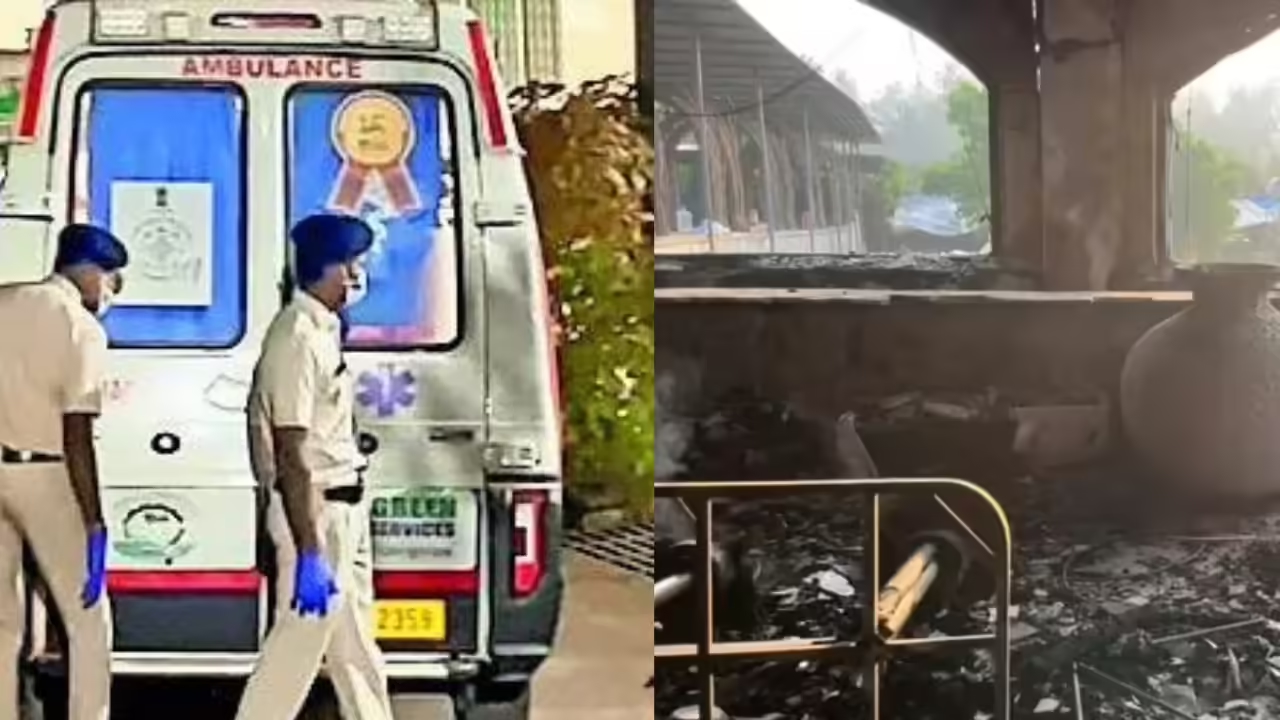


As flames engulfed a crowded nightclub in Arpora late on Sunday night, emergency services across North Goa scrambled to respond. For ambulance driver Hemant M, a resident of Santa Cruz and owner of a fleet of private ambulances, the call from the police came shortly after midnight — a familiar summons, yet one that would unfold into one of the most harrowing experiences of his career.
“I have never seen death like this, with the faces, the bodies burnt,” Hemant said, standing outside the Goa Medical College morgue hours after the tragedy. His voice carried the exhaustion of a sleepless night and the weight of memories he wished he could forget.
A tragic reminder of an earlier disaster
For Hemant, the night brought with it a chilling sense of déjà vu. Earlier this year, in May, his ambulances had been summoned to the Lairai Devi jatra in Shirgao, Bicholim, where a devastating stampede claimed at least six lives and left more than 70 people injured (Related reading: Goa communities mourn stampede victims).
But the scene at Arpora, he said, was unlike anything he had previously witnessed.
Firefighters and police officers battled smoke, darkness and chaos as they tried to pull survivors from the burning structure. Amid the confusion, the urgency of the moment was heightened by uncertainty — officials were struggling to determine how many people had lost their lives inside.
“The 108 ambulances were already there, but more were needed,” Hemant explained. “The police told us they didn’t know how many had died. We brought two bodies in each ambulance.”
The scale of the tragedy became clearer only as ambulances began lining up at the morgue, each carrying victims whose final moments had been marked by panic and suffocating heat.
Coordinating families and final journeys
Despite working through the night, Hemant continued to assist distraught families who gathered outside the morgue on Monday morning. The lines of communication never stopped — his phone rang constantly as relatives sought updates on identification, transport and the handover of their loved ones.
“I was asked to take the bodies to Ranchi,” Hemant said, “but somebody must take responsibility for them. We can send the bodies in ambulances, and we’ve made arrangements.”
His quiet determination reflected a harsh reality: transporting the deceased with dignity is often left to those who witness the aftermath most directly.
Emergency responders face unseen trauma
While investigations continue into the fire — which has already led to multiple arrests and nationwide scrutiny of nightclub safety standards — the emotional toll on first responders remains largely unspoken.
Emergency workers, including ambulance drivers, firefighters and police personnel, routinely witness scenes of intense suffering. Hemant’s reflections offered a rare glimpse into this hidden dimension of disaster response.
“Death takes an account every year,” he said quietly. “You cannot change that number, whether you are rich or poor.”
His words carried both acceptance and sorrow — a reminder that behind every headline and statistic lies a human story.
Goa nightclub tragedy raises urgent safety questions
Sunday’s blaze has reignited national discussions about fire safety compliance, crowd management and the responsibilities of nightlife establishments. Authorities have already intensified inspections across entertainment zones, particularly ahead of the Christmas and New Year season.
Cases such as this echo previous fire disasters in India, prompting calls for stronger safety audits and quicker emergency response mechanisms (Related reading: Fire safety lapses under scrutiny nationwide).
(Reference: Fire safety – Wikipedia)
For now, Goa continues to grieve. And responders like Hemant carry forward the memories of a night marked not only by devastation but also by their unwavering commitment to saving lives and supporting bereaved families.