







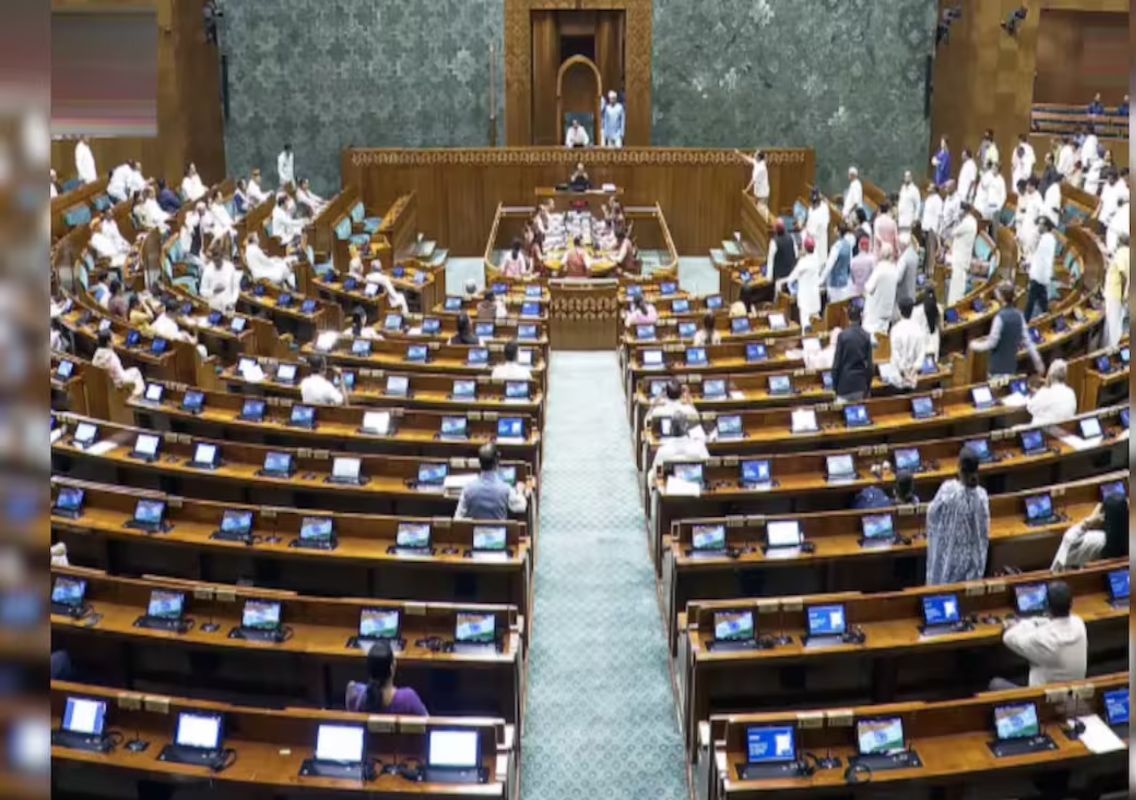


New Delhi: The Monsoon Session of Parliament 2026 saw a sharp exchange between the government and the Opposition on Tuesday as discussions intensified over the proposed amendments to the anti-paper leak law. The Centre indicated its willingness to extend the debate in the Lok Sabha up to 10 hours, reflecting the significance of the legislation aimed at curbing exam-related malpractices across the country.
The Public Examinations (Prevention of Unfair Means) Amendment Bill, 2026 was introduced on Monday by Jitendra Singh. The Bill proposes stricter penalties, including imprisonment of up to 10 years and fines up to ₹50 lakh, in a bid to tackle organised paper leak rackets and ensure fairness in public examinations.
Government signals flexibility on debate duration
Union Parliamentary Affairs Minister Kiren Rijiju said the government is open to extending the duration of the debate beyond the previously agreed timeframe.
“All political parties had initially agreed to six hours of discussion, which was later extended to eight hours. If the Opposition wants more time, we are willing to stretch it to 10 hours,” Rijiju stated as the House resumed proceedings at 2 pm.
The move comes amid growing demands from Opposition parties for a more detailed discussion, given the widespread impact of exam leaks on students and recruitment processes.
Opposition questions absence of senior leaders
The Opposition, led by Congress MP KC Venugopal, raised objections over the absence of key government leaders during the debate. Venugopal criticised the non-attendance of Prime Minister Narendra Modi and Home Minister Amit Shah, calling the Bill “a very important matter” that deserved their presence.
Opposition members also pushed for extending the discussion time further to ensure that all concerns regarding the legislation are adequately addressed.
The debate highlighted broader political tensions, with the Opposition questioning the government’s handling of recurring exam leaks and demanding greater accountability.
Key provisions of the amendment Bill
The amendment seeks to strengthen the existing Public Examinations (Prevention of Unfair Means) Act, 2024, which was enacted to prevent cheating and leaks in competitive exams conducted by government bodies.
Major highlights include:
- Jail term of up to 10 years for those involved in paper leaks
- Financial penalties up to ₹50 lakh
- Enhanced provisions to tackle organised cheating syndicates
- Measures to safeguard the integrity of recruitment and entrance examinations
The government believes that stricter punishments will act as a strong deterrent against those attempting to manipulate exam systems.
Government defends intent, cites student trust
BJP MP Tejasvi Surya defended the government’s approach, stating that students across the country have confidence in the leadership of Prime Minister Narendra Modi to reform the system.
He emphasised that exam integrity is crucial for ensuring equal opportunities for youth and maintaining trust in public institutions. According to him, the proposed amendments demonstrate the government’s commitment to protecting the interests of honest aspirants.
Why the issue is significant
Paper leaks have emerged as a serious concern in India over the past few years, affecting several high-profile examinations. These incidents have led to cancellations, delays in recruitment, and significant distress among candidates.
With lakhs of students appearing for competitive exams annually, even a single leak can disrupt the careers of a large number of aspirants. The financial and emotional costs associated with such disruptions have intensified calls for stricter laws.
The proposed amendment aims to address these concerns by introducing tougher penalties and strengthening enforcement mechanisms.
Conclusion
The anti-paper leak Bill has become a focal point of debate during the Monsoon Session, reflecting its importance in the current socio-educational landscape. While the government has shown flexibility in allowing extended discussion, the Opposition continues to press for greater scrutiny and accountability.
As the debate progresses in the Lok Sabha, the outcome of this legislation will be closely watched by students, educators, and policymakers alike. If passed, the amended law could play a crucial role in restoring faith in India’s examination system and ensuring a fair playing field for millions of aspirants.