







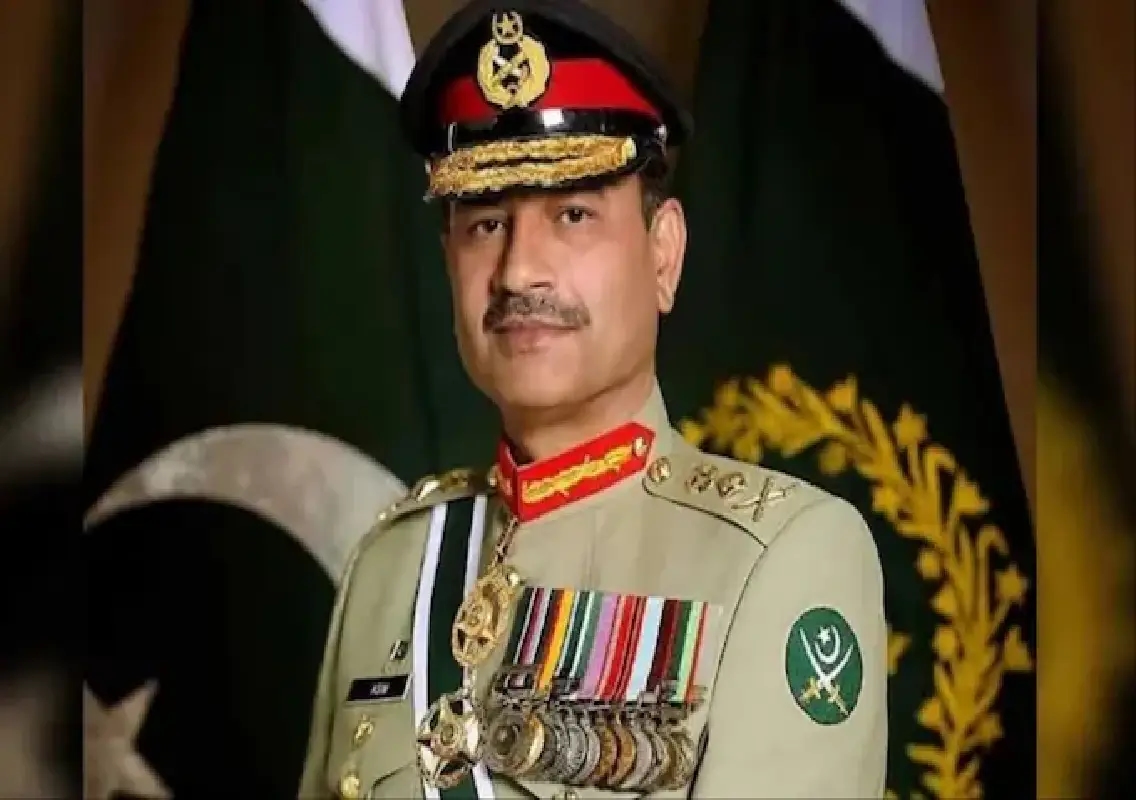


Pakistan’s newly appointed Chief of Defence Forces (CDF), Field Marshal Asim Munir, has yet again issued an aggressive warning to India, claiming that any future act of “aggression” would be met with an even more “swift, severe and intense” military response. Munir, who recently took charge as the country’s first CDF, made the remarks while addressing officers from all three wings of Pakistan’s armed forces during a ceremony held in his honour.
Munir escalates rhetoric against India
In his speech, Munir asserted that India should not “remain under any delusion,” declaring that Pakistan would retaliate forcefully if its territorial integrity were challenged. His remarks come months after India launched Operation Sindoor on 7 May, targeting terror infrastructure in Pakistan and Pakistan-occupied Kashmir in response to the Pahalgam attack that killed 26 civilians. The operations resulted in four days of military exchanges before both sides reached an understanding on 10 May to halt further strikes.
Despite Pakistan’s repeated condemnations, India maintained that its actions were targeted counter-terror operations against cross-border threats. Munir, however, framed his statement as a reaffirmation of Pakistan’s defence readiness.
He further claimed that Pakistan was a peaceful nation but would not allow anyone to “test” its sovereignty. The ceremony also included a guard of honour presented by the Pakistan Army, Navy and Air Force, marking his formal induction into the newly created CDF post.
Warning to Afghanistan amid tensions
Munir also directed a strong message toward the Afghan Taliban regime in Kabul, stating that they must choose between supporting Pakistan or siding with the banned Tehreek-e-Taliban Pakistan (TTP). He referred to the TTP as “Fitna al-Khawarij,” echoing the government’s designation of the militant organisation last year.
Tensions between Islamabad and Kabul have intensified following a rise in TTP-linked attacks within Pakistan. Munir said the establishment of the new Defence Forces Headquarters symbolised a historic structural shift designed to improve the country’s capacity for unified, multi-domain operations.
Consolidation of military power under the CDF
Munir’s elevation to the position of CDF significantly strengthens his authority. The role, created following the 27th Constitutional Amendment and changes to the Pakistan Army, Navy and Air Force Bills of 2025, grants him command over all three service branches as well as oversight of the National Strategic Command — the body responsible for Pakistan’s nuclear weapons and missile systems.
This consolidation effectively makes him the most powerful military figure in Pakistan. Senior officials including Air Chief Marshal Zaheer Ahmed Baber Sidhu and Naval Chief Admiral Naveed Ashraf were present during the ceremony, underscoring the significance of the newly introduced command structure.
History of threats and anti-India rhetoric
This is not the first instance of Munir issuing provocative statements targeting India. In October, while Pakistan itself carried out airstrikes on Afghan territory, Munir made nuclear threats aimed at India, warning that Islamabad’s expanding arsenal could “shatter the misconceived immunity of India’s geographical warspace.”
He delivered another aggressive address days before the terrorist attack in Jammu and Kashmir’s Pahalgam that led to the death of 26 civilians. At the time, he described Kashmir as Pakistan’s “jugular vein,” reiterating decades-old rhetoric often used by Pakistani military leadership.
India’s reaction to political changes in Pakistan
Amid Munir’s ascent and heightened military assertiveness, India’s Ministry of External Affairs (MEA) commented on the state of democracy in Pakistan. MEA spokesperson Randhir Jaiswal said India was closely observing developments but refrained from detailed remarks.
Responding to questions about Pakistan’s political crisis, including the situation involving former Prime Minister Imran Khan, Jaiswal offered a pointed assessment: “Democracy and Pakistan don’t go together. The less we talk the better.”
The comment follows growing scrutiny over Pakistan’s internal politics, the military’s expanding role in governance, and allegations of shrinking democratic freedoms.
Conclusion
Munir’s latest threat adds to escalating tensions between India and Pakistan at a time when Islamabad is reshaping its military leadership structure. With Munir now wielding unprecedented control over Pakistan’s armed forces and strategic assets, diplomatic observers warn that his confrontational stance may further strain regional stability. India, meanwhile, has maintained that it will continue to monitor Pakistan’s internal and external posture while focusing on counter-terrorism and national security interests.