







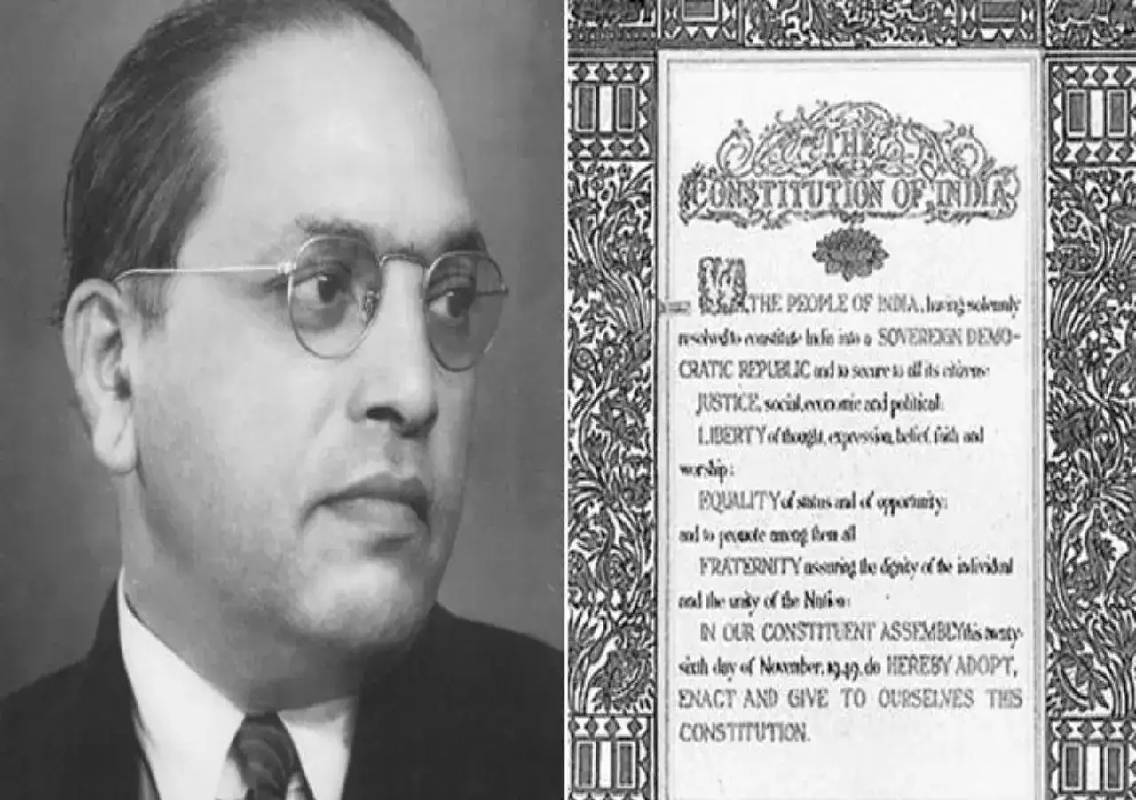


New Delhi: Nearly eight decades after India adopted its Constitution, the legacy of Dr B R Ambedkar and the document he helped shape continues to receive renewed attention. A new photo feature highlights the Constitution’s historical journey and Ambedkar’s central role in India’s constitutional history, bringing archival moments back into focus on the country’s 80th Independence Day.
Dr Ambedkar chaired the Constituent Assembly’s Drafting Committee, which was constituted on August 29, 1947. The Constitution was adopted on November 26, 1949, and came into force on January 26, 1950.
Ambedkar and the making of the Constitution
Dr B R Ambedkar is widely remembered as the principal architect of the Constitution, although the document was the result of extensive deliberations by the Constituent Assembly and the work of numerous lawmakers, advisers and officials.
As chairman of the Drafting Committee, Ambedkar played a crucial role in examining and refining the constitutional text. Constitutional adviser B N Rau had prepared an initial draft, while the Drafting Committee incorporated decisions taken during the Assembly’s debates.
The Constitution ultimately established the framework for independent India’s democratic system and guaranteed a wide range of rights and protections.
A document that transformed independent India
The Constitution provided the legal foundation for a country emerging from colonial rule and attempting to build a democratic republic across enormous social, linguistic and cultural diversity.
Among its important provisions were protections for fundamental rights, freedom of religion and the abolition of untouchability. It also established institutional mechanisms through which India’s elected government, legislature and judiciary would function.
For Ambedkar, constitutional democracy was closely connected to social equality and individual liberty.
His contribution therefore extended beyond drafting legal provisions. His speeches and interventions in the Constituent Assembly reflected his concerns about political democracy being accompanied by social and economic equality.
Archival photographs preserve a crucial chapter
Historical photographs offer a glimpse into the people and processes behind the making of the Constitution.
The Supreme Court of India’s archival gallery, for instance, includes photographs of Ambedkar perusing papers during the making of India’s Constitution, providing a visual record of the enormous drafting exercise.
Such images are significant because the Constitution is often encountered today as a printed document or a collection of legal provisions. Archival photographs instead show the people, meetings and working environment behind its creation.
The renewed interest in these photographs also gives younger generations an opportunity to engage with the history of the Constitution beyond textbooks.
From draft document to supreme law
The Constitution was not created overnight.
The Constituent Assembly began its work in December 1946, before India’s Independence. Following Independence in August 1947, the Assembly continued its task of framing the legal and institutional framework of the new nation.
The Drafting Committee was formed shortly after Independence, with Ambedkar as its chairman. The Assembly debated the draft extensively before adopting the final Constitution on November 26, 1949.
The Constitution then came into force on January 26, 1950, transforming India into a republic.
Ambedkar’s emphasis on constitutional democracy
Ambedkar’s contribution to India’s constitutional framework was shaped by his wider work as a jurist, economist, social reformer and politician.
He consistently argued that political freedom alone could not guarantee equality if social discrimination continued.
His constitutional vision therefore included safeguards for historically disadvantaged communities and protections for individual rights. His interventions contributed to provisions addressing discrimination and untouchability, while the Constitution also established mechanisms for affirmative action.
His ideas continue to influence debates about equality, representation and social justice in India.
The Constitution’s relevance after 80 years
The document has undergone numerous amendments since 1950, reflecting changes in Indian society and the country’s political and economic circumstances.
Yet its fundamental importance remains unchanged: it provides the framework through which the Indian state exercises power and citizens exercise their rights.
The Constitution has also survived periods of political upheaval, major social changes and shifts in governments, making its endurance an important part of India’s democratic history.
Ambedkar’s legacy continues
Ambedkar died in 1956, only a few years after the Constitution came into force. His public legacy, however, has continued to grow.
He was posthumously awarded the Bharat Ratna in 1990, and memorials, museums and institutions across India commemorate his contribution.
The Dr Ambedkar National Memorial in New Delhi also preserves aspects of his life and work. The memorial includes exhibits connected with his role in the making of the Constitution, including a recreation of his study and displays relating to the Constituent Assembly.
Why preserving the original history matters
The Constitution is frequently discussed in terms of its articles, amendments and court interpretations. However, understanding its origins is equally important.
Archival material can show how constitutional ideas evolved, how debates unfolded and how India’s founding lawmakers approached the difficult task of creating a democratic framework for a newly independent country.
Photographs and original documents therefore serve not merely as historical memorabilia but as records of the constitutional process.
A renewed look at India’s constitutional journey
The photo gallery comes at a symbolic moment, with India marking its 80th Independence Day on August 15, 2026. The occasion has prompted renewed attention to the people and institutions that shaped the country after Independence.
Ambedkar’s contribution remains particularly significant because the Constitution became one of the central foundations of the Republic.
The preservation and presentation of archival material allows that history to remain accessible even as the generation that witnessed the Constitution’s creation passes into history.
Conclusion
Eight decades after Independence, Dr B R Ambedkar’s constitutional legacy remains deeply embedded in India’s democratic institutions. As archival photographs and historical documents receive renewed attention, they offer a window into the people and painstaking work behind the Constitution.
Ambedkar’s role as chairman of the Drafting Committee, his emphasis on equality and individual rights, and his contribution to the constitutional framework continue to shape India’s public life.
The renewed interest in these images is therefore more than a look back at history. It is a reminder that the Constitution was created through sustained debate, disagreement and deliberation—and that its principles continue to influence India’s journey as a republic.