







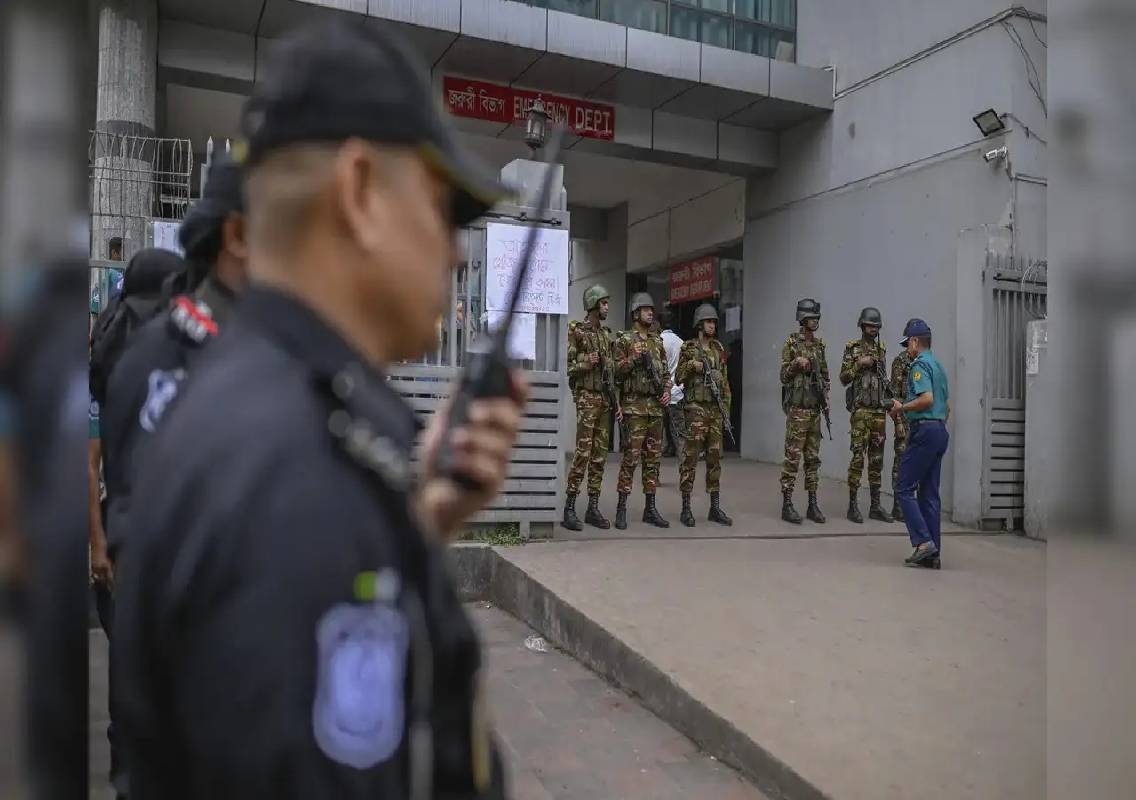


Dhaka: Bangladesh has issued a nationwide security alert following intelligence inputs warning of possible militant attacks targeting key installations, including the national parliament and military bases. The alert, described as “urgent and confidential,” has prompted law enforcement agencies to intensify surveillance and preparedness across the country.
According to officials from the Police Headquarters (PHQ), the warning is based on credible intelligence reports, though specific operational details have not been disclosed. Authorities have indicated that potential targets include the parliament complex, military and police facilities, armouries, places of worship, and even entertainment venues, raising concerns over coordinated and widespread threats.
Heightened security across key locations
Law enforcement agencies have been directed to remain on maximum alert, with specialised units such as the Criminal Investigation Department (CID), Special Branch, and Counter Terrorism and Transnational Crime (CTTC) unit stepping up monitoring efforts. Regular police forces have also been instructed to strengthen vigilance in their respective jurisdictions.
A senior police official confirmed that the advisory has been circulated nationwide and that district-level units are actively implementing enhanced security measures. In several regions, security presence has already been increased around sensitive locations, including government buildings and public spaces.
Officials have also warned that militant groups could employ multiple strategies to execute attacks, indicating a complex and evolving threat scenario. While no specific organisation has been named in the alert, authorities have described the suspected planners as “extremely dangerous,” highlighting the seriousness of the situation.
Arrest linked to intelligence warning
The alert follows the recent arrest of a suspected operative linked to a banned militant outfit. Identified as Istiak Ahmed Sami, also known as Abu Bakkar, the individual was reportedly in contact with two dismissed military personnel. Investigators believe this network could have played a role in planning potential attacks, though further details remain under investigation.
The PHQ communication reportedly included profiles of two key individuals believed to be behind the alleged plans. However, their identities have not been publicly disclosed for security reasons.
Rising concerns over extremist activity
The latest warning comes amid growing concerns over a resurgence of extremist activity in Bangladesh over the past 18 months. The situation has been further complicated by political instability following the removal of former Prime Minister Sheikh Hasina’s government in August 2024 after widespread protests known as the “July Uprising.”
The interim administration led by Muhammad Yunus has since faced mounting challenges in maintaining internal security, particularly in the aftermath of several jailbreaks during the unrest.
Officials previously reported that approximately 2,700 inmates escaped during the period of instability, with around 700 still unaccounted for. Alarmingly, several of those who escaped were convicted militants, raising fears of renewed extremist operations.
Impact of jailbreaks on national security
One of the most significant incidents occurred in Narsingdi in July 2024, when attackers stormed a prison, freeing more than 800 inmates and setting parts of the facility ablaze. In another major breach at Kashimpur High Security Jail in Gazipur, over 200 prisoners managed to escape after guards were reportedly taken hostage.
Authorities also confirmed that weapons were stolen during these jailbreaks, further exacerbating security concerns. The presence of armed and trained individuals outside the prison system has added to fears of coordinated militant activity.
Security experts have noted that such incidents can significantly weaken national security frameworks, particularly when combined with political unrest and administrative transitions.
Ongoing vigilance and preparedness
In response to the evolving threat landscape, law enforcement agencies have emphasised the importance of proactive measures, intelligence sharing, and coordination among various units. Surveillance has been intensified not only in urban centres but also in rural and border areas, where infiltration risks remain high.
Authorities have urged the public to remain vigilant and report any suspicious activity to local law enforcement agencies. While there is no immediate confirmation of an imminent attack, officials have stressed that preparedness is crucial to preventing potential incidents.
Conclusion
The nationwide alert underscores the fragile security situation in Bangladesh as authorities grapple with rising extremist threats and the lingering impact of recent political unrest. With hundreds of inmates still unaccounted for and intelligence pointing to possible coordinated attacks, the coming weeks will be critical in determining the effectiveness of the country’s security response. Vigilance, coordination, and swift action remain key to safeguarding national stability.