









New Delhi: A social media trend involving AI-generated photographs styled to resemble images from the 1980s has turned into a political slugfest between the BJP and Congress, with both parties using artificial intelligence to take veiled digs at their rivals.
The trend began with social media users sharing photographs processed through ChatGPT to give them the appearance of pictures captured on film cameras in the 1980s. Unlike conventional filters that mainly alter colours or lighting, the AI tool can also modify facial and other visual features, allowing users to create images that resemble a particular period.
The trend soon attracted political leaders, including Union ministers Kiren Rijiju and Piyush Goyal, who joined the viral phenomenon by sharing their own 1980s-style photographs.
BJP leaders join the 1980s trend
Rijiju was among the early BJP leaders to embrace the trend. Sharing his take on the nostalgia wave on X, he wrote, “Why is everyone going back to the 80s vibes? I’m also forced to 80s nostalgia.”
Goyal also joined in, posting, “Vibing to the 80s trend,” accompanied by a smiling emoji.
What initially appeared to be a light-hearted social media trend soon took a political turn, as party units began using AI-generated images to send indirect messages about their opponents.
Congress takes aim with Gujarat-themed image
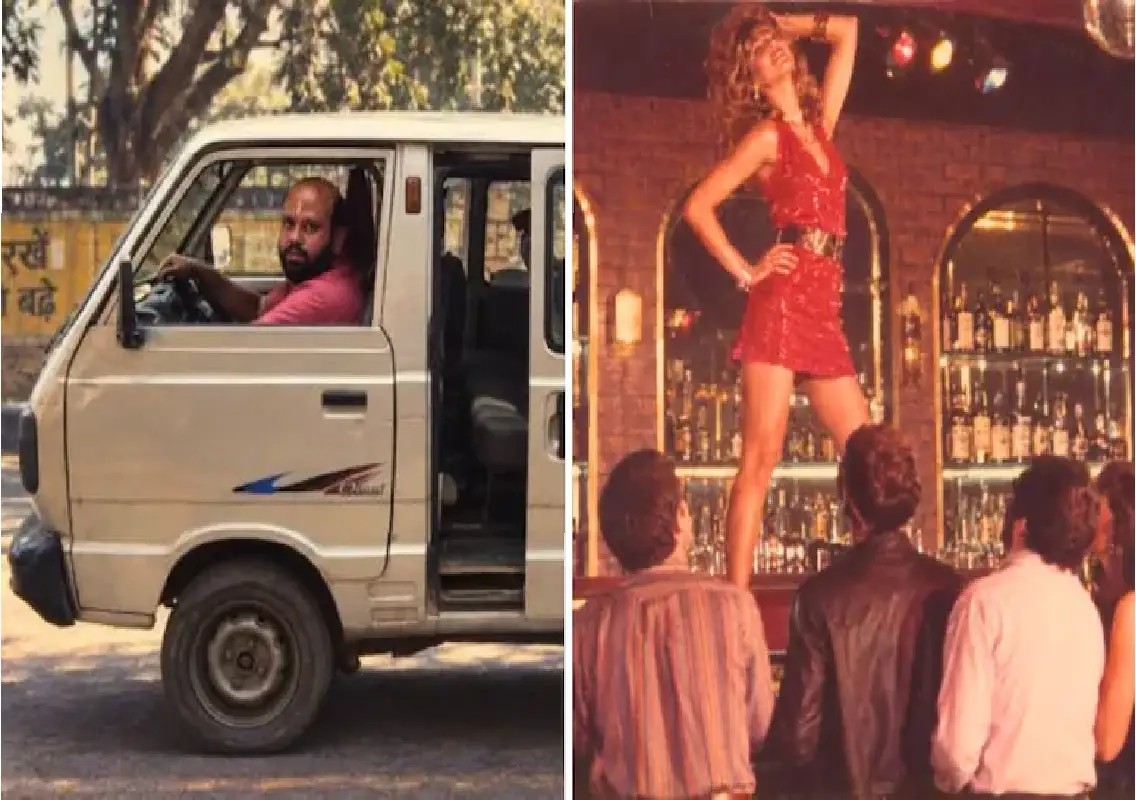
The Congress party’s Kerala unit posted an AI-generated photograph showing a bald man seated in the front passenger seat of a Maruti Suzuki Omni. The image carried the caption, “A Gujarat street in the 80s.”
The post triggered considerable discussion among social media users, with several commenters interpreting it as a political reference aimed at the party’s rivals from Gujarat.
The choice of the Maruti Suzuki Omni also added another layer to the post’s apparent message. The vehicle, which was first manufactured in India in 1984, has over the years acquired a strong presence in popular culture and Bollywood films.
In several films, the van was frequently portrayed as the vehicle used by gangsters and villains, leading to its enduring internet meme association as a “kidnapping van”.
The Congress post appeared to draw on that popular cultural image while placing it against a Gujarat setting.
BJP responds with Sonia Gandhi reference
The BJP’s response came from its Telangana unit, which posted another AI-generated photograph.
The image showed a woman in a red dress dancing on a table inside what appeared to be a bar. Several people were shown watching the performance, while glass cabinets in the background contained numerous liquor bottles.
The BJP shared the image while reposting the Congress post and described it with the caption, “Lusiana, Italy. Circa-1970s.”
The reference was interpreted as a dig at former Congress president Sonia Gandhi, who was born in Lusiana, Italy.
The BJP post did not explicitly name Sonia Gandhi, but the location reference and the imagery appeared designed to convey a political message without directly mentioning her.
AI trend becomes political weapon
The exchange illustrates how generative artificial intelligence tools are increasingly being incorporated into political communication on social media.
The original 1980s trend was largely driven by nostalgia. Users typically asked AI tools to recreate photographs with elements associated with the period, including colourful clothing, film-grain effects, faded backgrounds and the appearance of photographs taken with analogue cameras. Date stamps and other details are often added to make the images appear more authentic.
However, the ability of generative AI to alter more than just colour and texture has made such trends particularly suited to political messaging. Images can be constructed around specific locations, periods, clothing and situations, allowing political parties and their supporters to create suggestive visual narratives.
In the latest exchange, neither side needed to explicitly name the political figure or group being targeted. The visual references and captions were sufficient to invite social media users to make their own connections.
The BJP-Congress exchange also demonstrates how political messaging is evolving beyond conventional posters, videos and edited photographs. AI-generated content can now reproduce a particular era or construct entirely fictional scenes within seconds, making it easier for political organisations to participate in fast-moving online trends.
The development has also raised questions about the growing use of AI-generated imagery in political discourse, particularly because such photographs can appear realistic despite depicting scenes that never actually occurred.
For now, the 1980s nostalgia trend has taken an unmistakably political turn, with the BJP and Congress using the same AI-powered format to trade barbs and appeal to their respective social media audiences.