







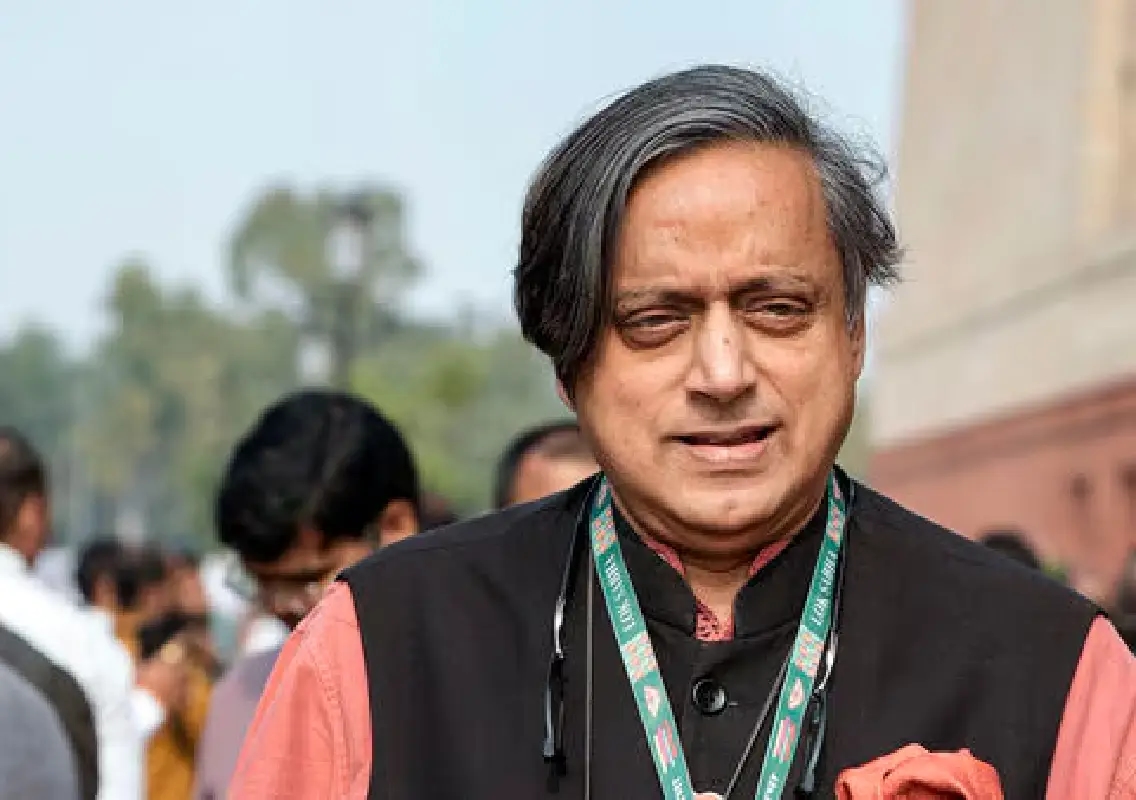


The BJP on Sunday seized upon Congress MP Shashi Tharoor’s remarks on the meeting between US President Donald Trump and newly elected New York City mayor Zohran Mamdani, turning what Tharoor described as an example of “democratic maturity” into a political swipe at the Congress leadership. The interaction between Trump and Mamdani — bitter opponents during the election campaign — drew praise from Tharoor for its rare display of civility, but the BJP used the opportunity to revive questions about internal discord within the Congress.
Tharoor praises civility in US politics
Shashi Tharoor, a senior Congress leader known for his independent streak, took to social media on Saturday to highlight the significance of Trump and Mamdani setting aside campaign-time hostility to meet respectfully after the elections. He called it an ideal example of democratic conduct, one that places governance above electoral bitterness.
“This is how democracy should work,” Tharoor wrote on X, emphasising that political rivals must learn to cooperate once the electorate has delivered its verdict. He added that he hoped to see more of such conduct in India and was doing his part to contribute to that culture.
Tharoor’s comments, which focused solely on the conduct of American leaders, were nevertheless perceived by some as a subtle commentary on India’s political climate.
BJP turns praise into a nudge at Congress
BJP spokesperson Shehzad Poonawalla was quick to pick up on Tharoor’s remarks, interpreting them as an indirect message for Congress leaders, particularly Rahul Gandhi. Posting on X, Poonawalla said Tharoor had once again reminded the Congress to “put India first, not Parivar”, suggesting that the party leadership prioritised family interests over national ones.
Accusing the Congress of “sore loser” behaviour, Poonawalla questioned whether Rahul Gandhi would “get the message”. In a characteristic jibe, he added that another “fatwa” might soon be issued against Tharoor, referring to recurring criticism the MP faces from within his own party.
Congress–Tharoor tensions resurface
Tharoor’s public comments have frequently sparked friction within the Congress, especially when they appear to align with positions flattering to the BJP or its leaders. Over the years, he has faced internal criticism for praising former deputy prime minister LK Advani and, at times, Prime Minister Narendra Modi.
Just days before the current episode, Tharoor had appreciated Modi’s Ramnath Goenka lecture, prompting a strong reaction from a Congress leader who questioned why Tharoor remained in the party if he believed BJP-led governance models were more efficient.
The MP from Thiruvananthapuram also recently authored a piece analysing dynastic politics and its broader impact on meritocracy. In the article, he cited the Gandhi–Nehru family as an example, triggering internal pushback from Congress members who argued that dynastic politics was not unique to the party.
What prompted Tharoor’s latest comment
The meeting between Trump and Mamdani became a moment of symbolic significance in American politics. Both leaders had sharply criticised each other during the election campaign, and their decision to meet cordially soon after the polls was seen as an affirmation of democratic norms.
Tharoor praised the gesture as a reminder that political opponents, once elections are over, share the responsibility of governing for the public good. The BJP’s decision to latch onto this remark highlights how even neutral comments from Tharoor can trigger political ripples in India’s highly polarised environment.
BJP’s broader narrative
By amplifying Tharoor’s post, the BJP sought to reinforce its constant critique of the Congress leadership, particularly Rahul Gandhi. The party has long accused the Congress of being overly dependent on the Gandhi family and resistant to internal change — a narrative the BJP resurrects whenever internal disagreements, like those sparked by Tharoor, come to the fore.
Political observers note that the BJP often uses Tharoor’s candid remarks to exacerbate perceptions of disarray within the Congress, while simultaneously portraying itself as more open to ideological diversity.
Looking ahead
While Tharoor has repeatedly affirmed his commitment to the Congress, his willingness to publicly express nuanced or contrarian views continues to draw mixed reactions from within the party. Each such episode tends to reignite debate on the Congress’s internal cohesion, the role of dissent, and the space for differing political viewpoints.
For now, Tharoor’s comment on an American political event has once again become fodder for India’s domestic political tussle, with both parties using it to bolster their respective narratives.
Conclusion
Tharoor’s praise for democratic grace in US politics ended up fuelling fresh political sparring in India. Whether it sparks internal introspection within the Congress or remains another short-lived flashpoint remains to be seen.