







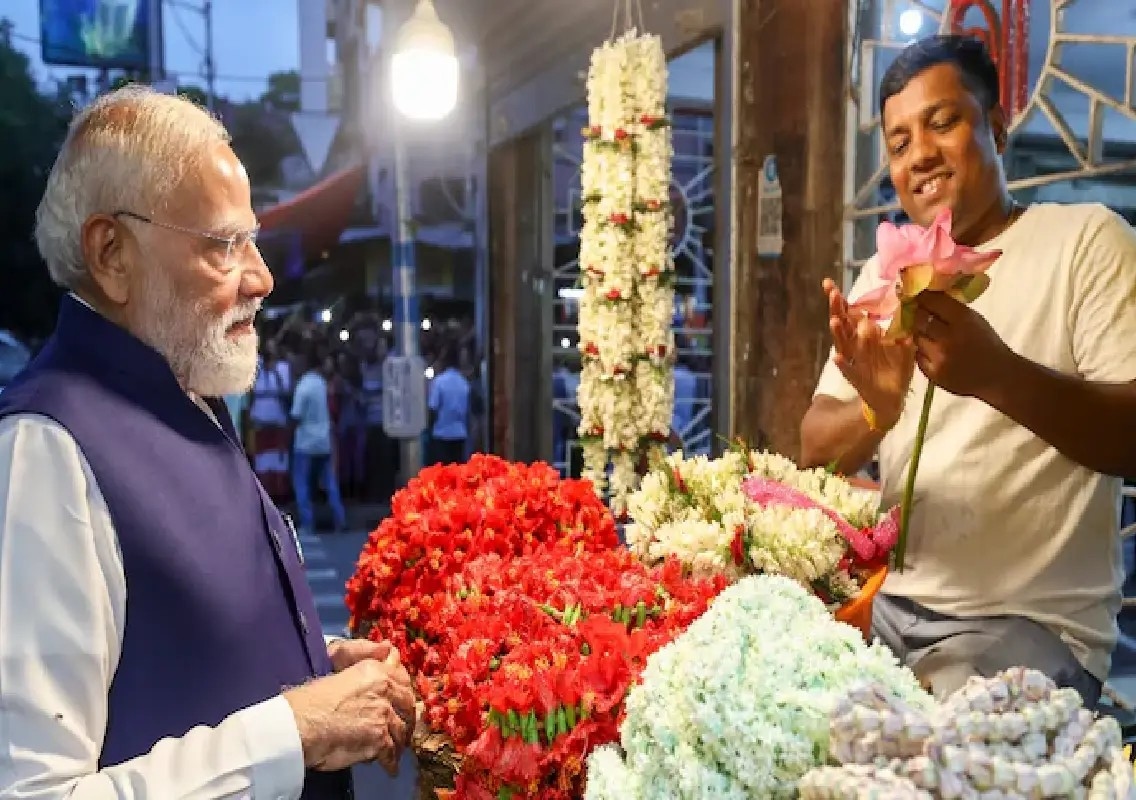


New Delhi: Prime Minister Narendra Modi congratulated party workers after the Bharatiya Janata Party (BJP) secured a decisive victory in the West Bengal Assembly elections, describing the outcome as historic and one that will be “remembered forever.”
In a message posted on social media, the Prime Minister said, “The lotus blooms in West Bengal,” referring to the BJP’s electoral symbol, and credited the win to the collective efforts of party workers and the support of the people.
Historic breakthrough in West Bengal
The BJP’s victory marks a significant political shift in West Bengal, a state where the party had struggled for decades to establish a strong presence.
From winning just three seats in the 2016 Assembly elections to emerging as the principal Opposition with 77 seats in 2021, the BJP has now gone on to secure a commanding mandate in 2026, reshaping the state’s political landscape.
The result also adds West Bengal to the list of states governed by the BJP, strengthening its national footprint.
PM credits party workers
In his posts, Modi acknowledged the contribution of “countless karyakartas over generations,” stating that their dedication and perseverance played a crucial role in the party’s success.
He noted that party workers had continued to promote the BJP’s development agenda despite facing challenges over the years, calling them the backbone of the organisation.
Assurance to people of Bengal
Addressing the people of the state, the Prime Minister assured that the new government would work towards fulfilling their aspirations.
He emphasised that the BJP would strive to provide governance focused on opportunity, development and dignity for all sections of society.
The statement comes as expectations rise regarding the party’s plans for administration and policy implementation in the state.
Decline of incumbent leadership
The election results indicate a significant setback for the All India Trinamool Congress (TMC), led by Chief Minister Mamata Banerjee.
Trends suggest that anti-incumbency played a role in shaping voter sentiment, with reports indicating dissatisfaction among sections of both rural and urban voters.
The TMC had centred its campaign on regional identity, positioning the BJP as an outsider. However, the results suggest that the BJP was able to expand its support base across regions.
Changing voter dynamics
The BJP appears to have consolidated its position in traditional strongholds such as North Bengal while also making gains in areas previously considered TMC strongholds.
Analysts point to shifting voter preferences and broader outreach efforts by the BJP as key factors behind its performance.
Conclusion
The 2026 West Bengal Assembly election results mark a major turning point in the state’s political history. With a strong mandate, the BJP now faces the task of translating electoral success into governance, while the opposition reassesses its strategy in a rapidly evolving political environment.