







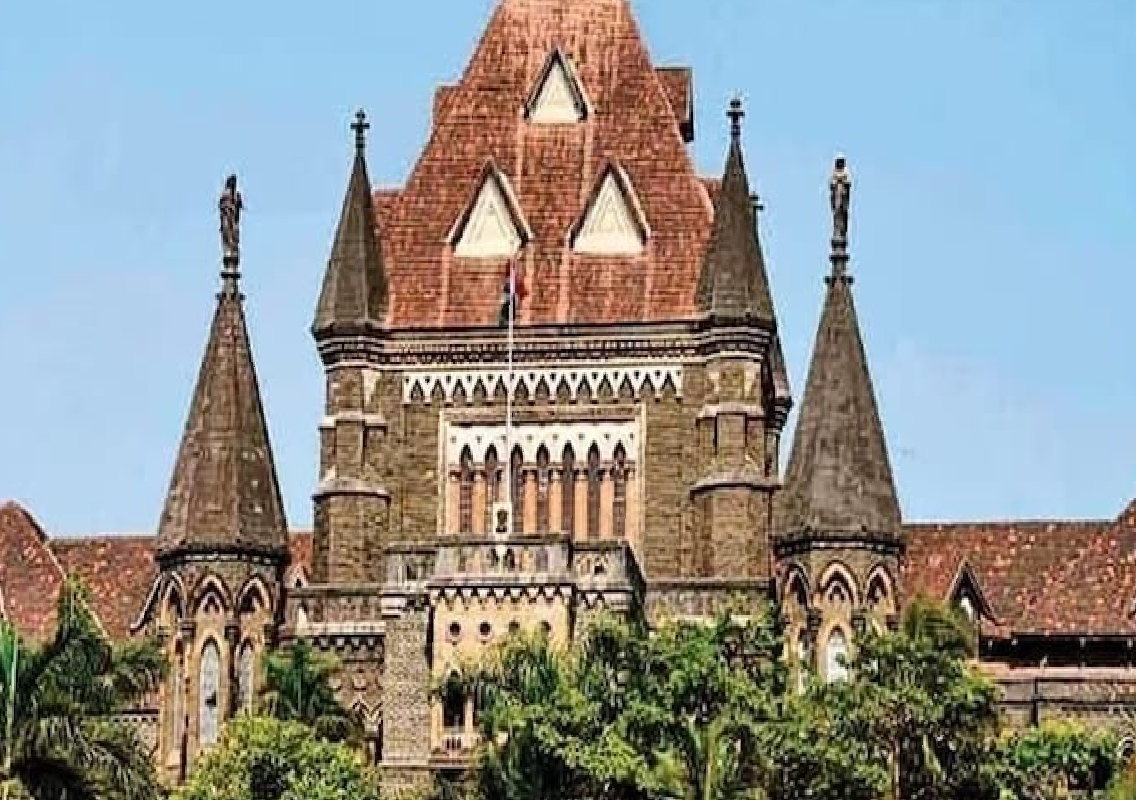


The Bombay High Court has dismissed a Public Interest Litigation (PIL) seeking to prohibit public functionaries in Maharashtra from attending or inaugurating religious rituals in their official capacity. The court found the petition vague and legally unsubstantiated, stating that it lacked concrete legal grounds and contributed to the waste of judicial resources.
Petition Details
The PIL, filed by a trust and its activist Bhagwanji Rayani in 2020, sought a court order barring state officials from participating in religious ceremonies or rituals in their official roles. The petition further called for preventing the use of public premises for religious purposes, including installing any deity’s idol or performing pujas. It proposed that only images of the Father of the Nation, the President, and the Prime Minister be permitted on public premises.
Additionally, the petition sought a directive to dissolve state-managed temple trusts and boards, urging that these religious institutions be transferred to trusts managed by the followers of the respective faiths. The petitioner argued that the participation of state functionaries in religious activities violated the secular principles enshrined in the Indian Constitution.
Court’s Ruling
The bench, led by Chief Justice DK Upadhyaya and Justice Amit Borkar, dismissed the PIL, observing that it lacked substantial legal backing and was largely based on personal views rather than enforceable law. The court noted that the petition contained generalised and vague assertions, offering no specific legal grounds for the requested actions.
In its ruling, the court stated, “Such petitions do not serve any purpose; rather, they contribute to the wastage of precious judicial time.” It expressed regret over the increasing number of similar petitions from Rayani, which the court said did not offer concrete legal arguments but instead presented broad, omnibus assertions.
The High Court acknowledged the petitioner’s concerns about the secular nature of the Indian Constitution but emphasised that the legal system could not entertain petitions based solely on personal opinions or generalised concerns.
Secularism and the Role of State Officials
The PIL highlighted the complex balance between secularism and the public conduct of state officials in a country as religiously diverse as India. Secularism, as outlined in the Indian Constitution, calls for the state to maintain neutrality between different religions and avoid the promotion of any particular faith. However, the petition’s request to prohibit public officials from participating in religious events was viewed by the court as too sweeping and without solid legal precedent.
The High Court noted that the petition was an attempt to invoke the court’s advisory powers to suggest amendments to existing laws, such as the Representation of People Act, 1951. This law governs the conduct of elected representatives, but the court ruled that the petition offered no legitimate legal basis for such a broad advisory role.
Previous PILs and Rayani’s Role
The court also took note of the fact that Bhagwanji Rayani had previously filed similar PILs, most of which were dismissed for similar reasons. In this case, the court specifically remarked, “We regret to note that this is yet another petition in the series of such petitions, where Rayani has been appearing in-person and making absolutely vague, generalised and omnibus assertions.”
Rayani, in his petitions, has repeatedly raised concerns about the perceived defiance of secular principles by state functionaries, but the court has consistently found his arguments lacking in specificity and legal substance.
Implications of the Ruling
The dismissal of this PIL underscores the court’s reluctance to intervene in matters that involve broad, generalised claims without clear legal grounds. While secularism remains a cornerstone of the Indian political system, the judiciary has made it clear that petitions addressing these concerns must be based on concrete legal issues rather than sweeping, personal assertions.
The court’s refusal to entertain the petition also sends a message about the boundaries of judicial intervention in the day-to-day functions of public officials. By dismissing the plea, the High Court reinforced the idea that secularism in India allows for a nuanced approach, where public functionaries may participate in religious activities as long as such participation does not compromise the neutrality of the state.
Conclusion
The Bombay High Court’s ruling in this case serves as a reminder that while India’s secularism remains a fundamental principle, the courts are cautious about entertaining petitions that seek overly broad changes without substantive legal backing. As the judicial system continues to balance individual rights, state neutrality, and religious diversity, this case highlights the need for well-reasoned legal arguments when challenging the conduct of public officials.