









Philippine immigration authorities have confirmed that the father and son accused of carrying out the deadly Bondi shooting in Sydney, which left 15 people dead, had visited the Philippines in November and travelled on Indian passports. The disclosure adds a new international dimension to investigations into the attack, which Australian authorities have said was inspired by the ideology of the Islamic State terror group.
According to a report by news agency Bloomberg, Philippine Bureau of Immigration officials said the two accused, Sajid Akram, 50, and his son Naveed Akram, 24, arrived in the country together on November 1 on a flight from Sydney. They stayed in the Philippines for nearly four weeks before departing on November 28.
Travel details revealed by Philippine authorities
A spokesperson for the Philippine Bureau of Immigration said both men declared Davao as their final destination upon arrival. However, records showed that they later travelled onward and eventually exited the country on a connecting flight from Davao to Manila, from where they flew back to Sydney.
The authorities confirmed that both Sajid and Naveed Akram travelled using Indian passports. The revelation has prompted questions about their movements and activities in the weeks leading up to the attack in Australia.
Bloomberg reported that India’s Ministry of External Affairs has been approached for comment regarding the use of Indian passports by the accused, though no official response had been issued at the time of reporting.
Focus on movements before the Sydney attack
The disclosure has intensified scrutiny of the suspects’ international travel patterns in the run-up to the mass shooting at Sydney’s Bondi area. Investigators are seeking to establish whether the Philippines visit had any connection to the planning, motivation or radicalisation behind the attack.
Australian authorities have already stated that preliminary investigations indicate the shooting was motivated by extremist ideology linked to the Islamic State. Officials are examining whether the accused had contact with radical networks or individuals during their overseas travel.
The Philippines, particularly parts of Mindanao including Davao, has long been on the radar of international security agencies due to the historical presence of extremist groups, though authorities have not suggested any direct link between local groups and the suspects at this stage.
Australia continues probe into terror links
In Australia, the Bondi shooting has shocked the nation and triggered an extensive counter-terrorism investigation. Prime Minister Anthony Albanese earlier said there were “clear indicators” that the attack was driven by extremist ideology, and security agencies are working closely with international partners to piece together the suspects’ background and movements.
Australian police and intelligence agencies are coordinating with counterparts in the Philippines and other countries to verify travel records, financial transactions and communication data related to the accused.
Officials have stressed that investigations are ongoing and that it is too early to draw conclusions about whether the Philippines visit played a direct role in the attack.
India seeks clarity on passport use
The fact that the accused travelled on Indian passports has drawn attention in New Delhi as well. While Indian authorities have not yet issued a formal statement, sources said verification of the passport details and citizenship status would be a priority, particularly to rule out misuse, forged documents or dual nationality complications.
Diplomatic and security channels between India, Australia and the Philippines are expected to remain active as more details emerge.
Mourning and security concerns in Sydney
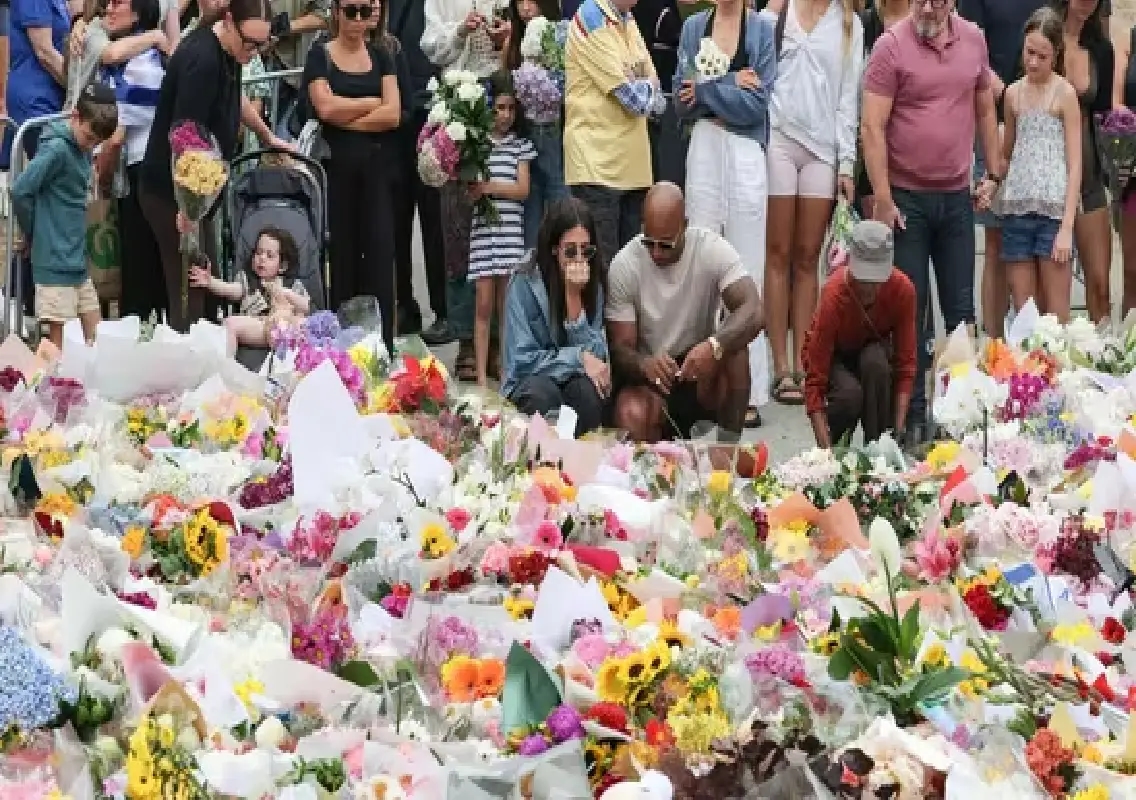
Meanwhile, Sydney continues to mourn the victims of one of the deadliest attacks in recent Australian history. Floral tributes have been laid outside the Bondi Pavilion, where mourners gathered on December 16 to honour those who lost their lives.
The attack has also reignited debate in Australia over radicalisation, online extremism and the challenges faced by security agencies in detecting lone-wolf or family-based terror plots before they turn violent.
Conclusion
The confirmation that the Bondi shooting suspects visited the Philippines weeks before the attack and travelled on Indian passports has added a critical layer to the international investigation. As authorities across three countries work to trace the suspects’ movements and possible connections, officials have emphasised that cooperation and information-sharing will be key to understanding how the attack was planned and whether warning signs were missed. Further disclosures are expected as the probe continues