







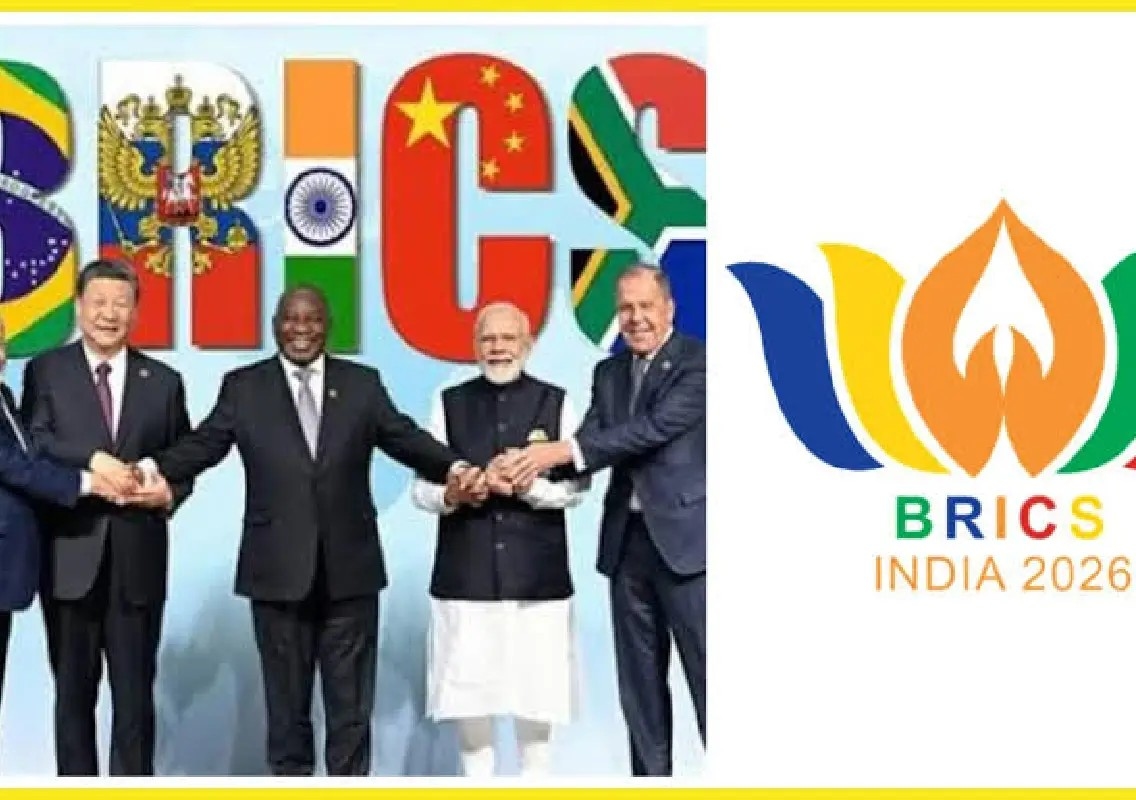


New Delhi : BRICS is entering a significant phase of its evolution as its members prepare to meet in New Delhi for the annual summit amid rising geopolitical tensions, disruptions in energy markets, shipping and global trade.
The acronym BRIC was coined in 2001 by Goldman Sachs Chief Economist Jim O’Neill to describe the growth potential of Brazil, Russia, India and China. The four countries formally came together as a bloc in 2009, while South Africa joined in 2011, creating BRICS.
The grouping expanded further in 2024 with the entry of Egypt, Ethiopia, Iran and the UAE, followed by Indonesia in 2025. Saudi Arabia has also been invited but has not formally accepted membership.
A growing challenge to the old world order
BRICS was established to challenge a global order dominated by the United States and its Western allies. Its members now represent more than 40 per cent of the world’s population and almost a quarter of the global economy.
The bloc focuses on political and security cooperation, economic and financial cooperation, and people-to-people exchanges. Its growing membership has also strengthened its importance in discussions on global economic governance.
One of its major achievements is the New Development Bank, established in 2015 to fund infrastructure and sustainable development projects in emerging markets. The bank has approved 139 projects worth nearly $43 billion, according to its website.
Unity remains the biggest test
Despite its growing influence, BRICS faces serious challenges. Russia and China view the grouping as a counterweight to the West, while India and Brazil place greater emphasis on economic cooperation and reform.
The expansion has made consensus more difficult because members have differing foreign-policy interests. These divisions were evident when BRICS foreign ministers failed to issue a joint statement in New Delhi in May.
The bloc is also exploring alternatives to dollar-based transactions through national currencies, digital currencies and the proposed BRICS Pay system. However, the idea of a common BRICS currency has been dropped after being floated during Brazil’s chairmanship.
BRICS therefore stands at a crossroads: its expanding membership gives it greater global weight, but maintaining unity among countries with competing strategic interests will determine how effectively it can translate that influence into action