







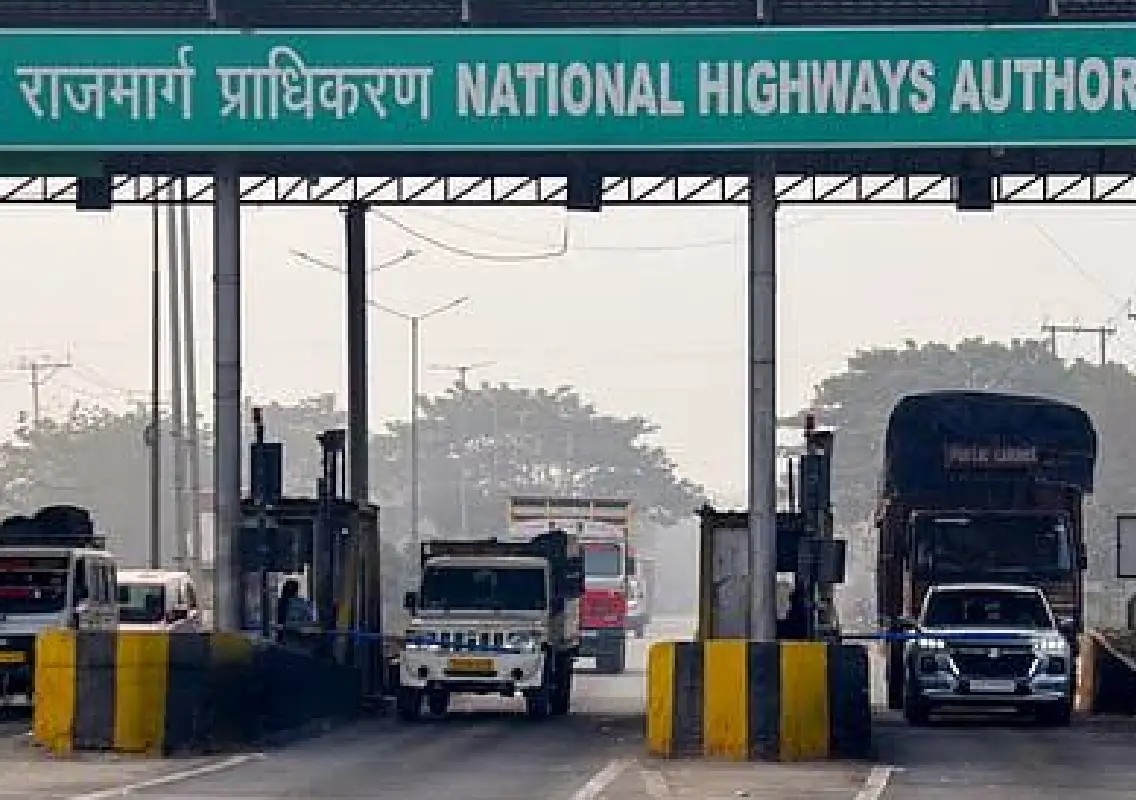


New Delhi : Motorists who pay cash at highway toll plazas after a FASTag failure may unknowingly be contributing to a large-scale toll collection scam, according to findings by the Enforcement Directorate (ED).
The agency has found that certain toll operators allegedly used unauthorised mobile applications to generate counterfeit receipts for vehicles paying toll charges in cash. The money collected through these transactions was allegedly diverted outside the official accounting system of the National Highways Authority of India (NHAI).
The investigation has raised concerns particularly for drivers of older vehicles, trucks and commercial fleets that have not completely shifted to FASTag. Even motorists with valid FASTags can be affected when scanners or barriers malfunction and toll staff ask them to make cash payments.
Unauthorised apps used to generate receipts
According to the ED, toll operators used unauthorised applications, including apps identified as “Mobdata” and “Any”, to create receipts for cash transactions.
The receipts allegedly made the transactions appear legitimate to motorists while allowing the collections to remain outside NHAI’s official records. Investigators believe the practice was not limited to a single toll plaza but was operating across multiple locations in several states.
The findings have highlighted a vulnerability in traditional cash-based toll collection, where a payment made directly to an operator may not necessarily be reflected in the official electronic system.
FASTag was introduced to reduce such manual transactions by automatically deducting toll charges from a linked account when a vehicle passes through a toll plaza. The system also provides motorists with transaction records, making payments easier to track.
Probe spread across several states
The ED conducted searches on September 2 at locations in West Bengal, Uttar Pradesh, Madhya Pradesh, Maharashtra and Rajasthan as part of a money-laundering investigation.
The case originated from a complaint in Lucknow concerning alleged large-scale fraudulent toll collection at the Atraila toll plaza in Mirzapur and other toll plazas across the country. An FIR was registered on January 1, 2025, followed by an Enforcement Case Information Report on May 19 of the same year.
The investigation has brought intermediaries and certain toll collection entities entrusted with operating plazas on behalf of NHAI under scrutiny.
Atraila toll plaza case provided an early lead
Investigators have traced part of the alleged operation to the Atraila Shiv Gulam toll plaza in Uttar Pradesh.
In January 2025, the Uttar Pradesh Police had reportedly detected the use of an illegal application at the plaza. The application was allegedly being used to collect toll payments from vehicles that did not have sufficient FASTag balances while concealing the collections from NHAI.
The latest ED investigation indicates that the technique may have been used on a much wider scale.
Forensic examination of electronic devices seized during the investigation reportedly showed that unauthorised applications had been deployed at around 100 toll plazas. Digital records also pointed to unauthorised receipts involving amounts running into crores.
Cash-paying motorists particularly vulnerable
The alleged scam highlights the risks faced by motorists who continue to rely on cash payments.
Older vehicles, trucks and commercial fleets that have not fully transitioned to FASTag are considered particularly vulnerable. However, the problem can also affect motorists who normally use FASTag but are asked to pay cash because a scanner fails or a barrier does not operate correctly.
In such circumstances, motorists may assume that the cash payment and receipt are part of the normal toll process.
The ED’s findings suggest that drivers should be particularly cautious when asked to make cash payments at a toll plaza and should retain any receipt issued to them.
₹1.03 crore cash recovered
The ED has so far recovered approximately ₹1.03 crore in cash during searches connected with the investigation.
The agency is examining digital records, devices and financial transactions to establish the flow of money and identify those involved in the alleged diversion of toll collections.
The investigation is also looking into the role of intermediaries and toll collection entities operating under contracts entrusted by NHAI.
The recovery of cash and digital evidence is expected to help investigators establish the scale of the alleged operation and determine how much revenue may have been kept outside the official toll collection system.
What motorists should remember
The findings serve as a reminder for motorists to prefer electronic toll payments wherever possible.
FASTag provides an electronic transaction trail and allows users to check their toll deductions. When a FASTag transaction is successfully processed, the amount is automatically deducted from the linked account rather than being handed directly to a toll operator.
If a motorist is asked to pay cash because of a FASTag or scanner problem, keeping the receipt and noting the toll plaza, date and time can provide useful evidence if the transaction later needs to be questioned.
Motorists should also check their FASTag transaction history after completing their journey and report any suspicious or inconsistent deductions through the appropriate channels.
Investigation continues
The ED’s investigation is still underway, and the allegations against individual toll operators and other entities will have to be established through the legal process.
The case nevertheless highlights the importance of transparent toll collection systems as India continues its transition towards electronic payments.
For motorists, the immediate lesson is simple: a cash payment at a toll booth may appear routine, but authorities are now warning that some such transactions could potentially be diverted through unauthorised systems.
As the investigation expands across multiple states and toll plazas, the ED’s findings could lead to greater scrutiny of manual toll collection practices and strengthen efforts to ensure that every toll payment reaches the authorised system.