







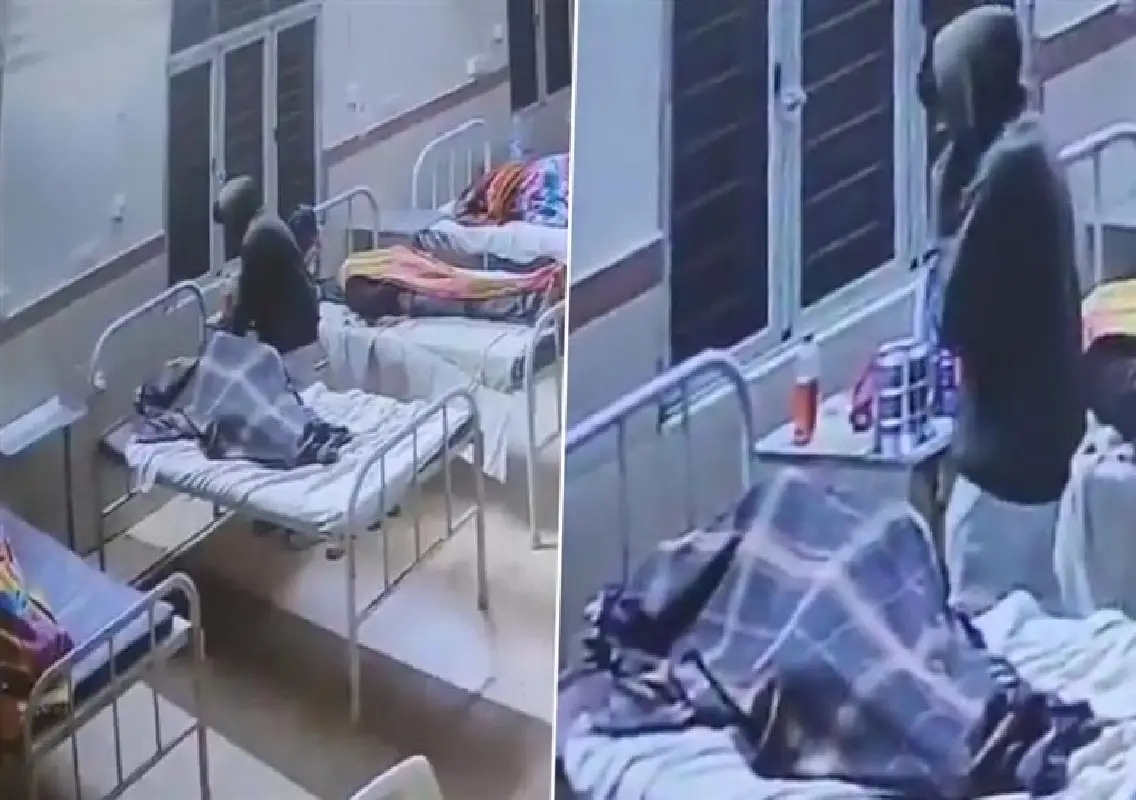


A shocking case of theft inside a hospital in Andhra Pradesh’s Alluri Sitharama Raju district has sparked public outrage after CCTV footage surfaced showing a man allegedly stealing mobile phones from sleeping patients. The incident, which occurred around midnight at a hospital in Araku Valley, has raised serious questions about the security and surveillance standards within medical facilities in the region.
CCTV footage exposes shocking theft inside hospital
The viral CCTV footage shows a man wearing a black hoodie and white trousers moving stealthily between the beds of unsuspecting patients. As seen in the clip, the suspect quietly picks up mobile phones kept beside sleeping patients before calmly walking out of the ward — all without alerting anyone or facing any resistance from staff.
The chilling video, widely circulated on social media platforms, has alarmed netizens, who have expressed concern over how easily the man managed to gain entry into the hospital premises. Many users criticised the lack of proper night-time security and questioned how the intruder could move about freely in a sensitive area meant for patient care.
Patients wake up to find phones missing
According to hospital authorities, the theft came to light early Wednesday morning when multiple patients reported their phones missing. Staff members immediately reviewed CCTV footage, which revealed the suspect’s movements inside the ward. The visuals reportedly captured the thief entering and exiting the premises unnoticed, indicating a possible security lapse at the facility.
A hospital staff member said, “We were shocked to see how confidently the man moved through the ward. He seemed to know there were no guards around. We have increased patrolling in and around the building following this incident.”
Police launch investigation
Local police have begun investigating the incident after being alerted by hospital officials. Officers are currently analysing the CCTV footage frame by frame to identify and trace the accused. Authorities suspect the thief may have conducted a prior reconnaissance of the hospital before carrying out the theft.
An officer from the Araku Valley Police Station said, “We are examining the CCTV footage from nearby areas as well to determine the suspect’s escape route. Teams have been deployed to track the individual based on his appearance and movement patterns seen in the video.”
Public outrage and calls for stricter security
The incident has provoked widespread public anger online, with users demanding accountability from hospital administrators. Many have argued that the theft exposes a deeper security negligence within public healthcare institutions, particularly during night shifts when patient supervision tends to be minimal.
One social media user commented, “He seems more active during the night than the hospital staff. This is a major security failure.” Another wrote, “If hospitals aren’t safe even for sleeping patients, what can the public expect elsewhere?”
Hospital promises enhanced vigilance
In response to growing criticism, the hospital management has assured the public that security protocols are being reviewed and that additional personnel will be deployed during night hours. Authorities also plan to install more CCTV cameras and restrict access to certain wards after visiting hours.
A senior administrator said, “We deeply regret the incident and are fully cooperating with the police investigation. We are ensuring such lapses do not recur.”
A wake-up call for hospital security
The incident serves as a stark reminder of the need for stronger security measures in public hospitals across India, particularly in rural and semi-urban regions where resources and monitoring systems are often limited. Experts have urged hospitals to implement 24-hour surveillance systems, ID-based entry protocols, and frequent night-time patrols to ensure patient safety.
As the investigation continues, the CCTV footage remains viral, amplifying the urgent demand for better vigilance and accountability in healthcare facilities.