


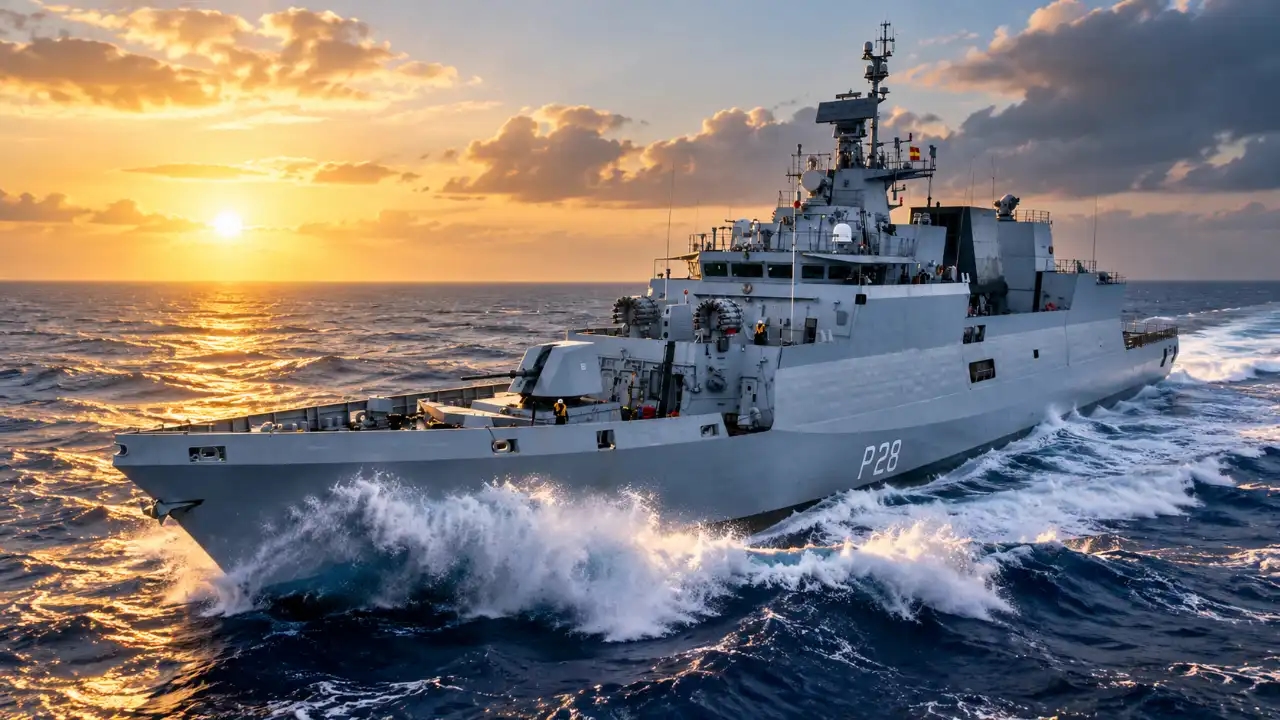


New Delhi: The Centre has approved a defence project worth more than Rs 40,000 crore to build eight Next-Generation Corvettes (NGCs) for the Indian Navy, marking a major step in the country’s efforts to strengthen its maritime capabilities and expand indigenous warship manufacturing.
The Cabinet Committee on Security (CCS), chaired by Prime Minister Narendra Modi, cleared the project on Wednesday. The eight warships will be constructed by two public-sector shipyards — Garden Reach Shipbuilders and Engineers (GRSE) in Kolkata and Goa Shipyard Limited (GSL) in Goa.
According to sources, the contracts with the two shipyards are expected to be signed in the coming days. The programme is being seen as a significant addition to the Navy’s fleet modernisation plans and one of the major defence projects to receive high-level clearance in recent times.
The warships will be designed as high-speed, multi-role surface combatants with advanced stealth features, weapons and sensors. Their construction in India, with more than 70 per cent indigenous content, is also expected to strengthen the domestic defence manufacturing ecosystem.
What are Next-Generation Corvettes?
Corvettes are relatively small and fast warships designed primarily for coastal defence, surveillance and maritime patrol. Although smaller than frigates and destroyers, they can carry sophisticated weapons and sensors, allowing them to undertake a range of combat and security missions.
The eight Next-Generation Corvettes planned for the Indian Navy will be approximately 2,000-tonne vessels, with a projected top speed of around 30 knots.
Unlike conventional patrol vessels, these warships are being developed as highly capable surface combatants. Their design will incorporate advanced stealth technologies intended to reduce their detectability by enemy surveillance systems.
The new design has been developed in-house by the Indian Navy, drawing on modern shipbuilding technologies and operational requirements.
The vessels are expected to offer a combination of speed, manoeuvrability, advanced sensors and weapons systems. These features will allow them to operate across different maritime environments and respond to a variety of security situations.
Multiple warfare capabilities
The Next-Generation Corvettes will be designed to undertake several types of maritime operations.
Their expected capabilities include:
- Anti-surface warfare: Operations against hostile surface vessels.
- Anti-submarine warfare: Detecting, tracking and countering underwater threats.
- Anti-air warfare: Responding to aerial threats, including hostile aircraft and missiles.
- Maritime surveillance: Monitoring sea routes and identifying potential security threats.
- Coastal and regional security: Supporting patrol, protection and other naval missions.
The multi-role design is expected to give the Navy greater flexibility when deploying the vessels.
The combination of stealth characteristics, advanced weapons and sensors is intended to improve their ability to operate in contested maritime environments. Their high speed and manoeuvrability could also help them respond quickly to emerging threats.
The final operational capabilities will depend on the weapons, sensors and other systems incorporated into the vessels during construction.
More than 70% indigenous content
A major feature of the programme is its emphasis on domestic manufacturing.
The project is expected to have more than 70 per cent indigenous content, supporting the government’s Atmanirbhar Bharat initiative and its efforts to reduce dependence on imported defence equipment.
Building the warships through Indian shipyards will also create opportunities for domestic manufacturers supplying components, equipment, electronics, weapons-related systems and other specialised products.
The programme is expected to involve a broad network of micro, small and medium enterprises (MSMEs), along with engineering firms and defence equipment suppliers.
The scale of the order could provide thousands of direct and indirect employment opportunities during the construction period. It is also expected to strengthen the technical capabilities of Indian shipbuilders and their supply chains.
The programme aligns with the government’s broader efforts to increase domestic participation in defence production and develop India as a manufacturing base for advanced military platforms.
GRSE and Goa Shipyard to build eight warships
The construction work will be divided between two major public-sector shipyards.
Garden Reach Shipbuilders and Engineers (GRSE), headquartered in Kolkata, is one of India’s established naval shipbuilding companies. It has experience in constructing a range of vessels for the Indian Navy and Coast Guard.
Goa Shipyard Limited (GSL), based in Goa, is another important defence shipbuilding organisation. Its work includes the construction of naval and coast guard vessels.
The allocation of the eight-corvette programme between the two shipyards is expected to provide long-term order visibility and support their manufacturing plans.
The project will also involve suppliers and subcontractors across the country. The demand for specialised equipment, engineering services and shipbuilding components could provide additional business opportunities for Indian companies participating in the defence supply chain.
For the two shipyards, the programme represents a substantial addition to their existing work and an opportunity to expand their experience in building advanced surface combatants.
First corvette targeted for delivery by 2030
The construction of the first Next-Generation Corvette is expected to begin within a year, according to the project timeline outlined by sources.
The first vessel is targeted for delivery by 2030. The remaining ships will be delivered as the programme progresses.
The timeline will require coordination between the Navy, shipyards, equipment manufacturers and other suppliers involved in the programme.
Warship construction is a complex process involving hull fabrication, installation of propulsion systems, integration of weapons and sensors, and extensive testing before a vessel can enter operational service.
The use of indigenous components and systems is also expected to require close coordination among domestic suppliers to ensure that the ships meet the Navy’s technical and operational requirements.
Once inducted, the corvettes are expected to add to the Navy’s ability to conduct surveillance, protect maritime interests and respond to surface, underwater and aerial threats.
Why the project matters for Indian Ocean security
The approval comes at a time when the Indian Navy is continuing to expand and modernise its fleet to address evolving maritime security challenges.
The Indian Ocean Region is strategically important because it contains major international shipping routes and connects several important economic and military centres. India also has significant maritime interests to protect, including trade routes, offshore infrastructure and coastal security.
The growing presence of other naval powers in the region, including China, has added to the importance of maintaining a capable and modern fleet.
The Next-Generation Corvettes are expected to strengthen the Navy’s ability to monitor maritime activity and undertake operations across its areas of responsibility.
Their multi-role capabilities could make them useful for a range of missions, from coastal security to operations against hostile surface and underwater threats.
The project is part of a wider effort to ensure that the Navy has access to modern platforms suited to the changing security environment.
Part of a wider naval modernisation programme
The new corvette project adds to the Indian Navy’s ongoing warship-building programme.
Other major programmes include the Nilgiri-class frigates, next-generation destroyers and fleet support ships. Together, these projects are intended to strengthen different elements of the Navy’s operational capabilities.
While frigates and destroyers provide larger platforms for extended operations and fleet protection, corvettes can offer greater flexibility for specific regional and coastal missions.
The addition of eight advanced corvettes will therefore expand the range of platforms available to the Navy.
The programme also reflects the increasing role of Indian shipyards in building complex military vessels for domestic requirements.
A major boost to indigenous warship manufacturing
The CCS clearance for the eight Next-Generation Corvettes represents a significant investment in India’s naval capabilities and domestic defence industry.
With a project value exceeding Rs 40,000 crore, more than 70 per cent indigenous content and construction shared between GRSE and Goa Shipyard Limited, the programme is expected to support both military modernisation and industrial development.
The first vessel is targeted for delivery by 2030, with construction expected to begin within a year. The coming contract agreements will provide greater clarity on the allocation of work and the implementation schedule.
As the Indian Navy continues to expand its fleet, the new corvettes are expected to contribute to maritime surveillance, regional security and multi-domain naval operations.
The project also underlines India’s broader effort to develop advanced defence platforms domestically while strengthening the shipbuilding ecosystem and reducing reliance on foreign suppliers.