







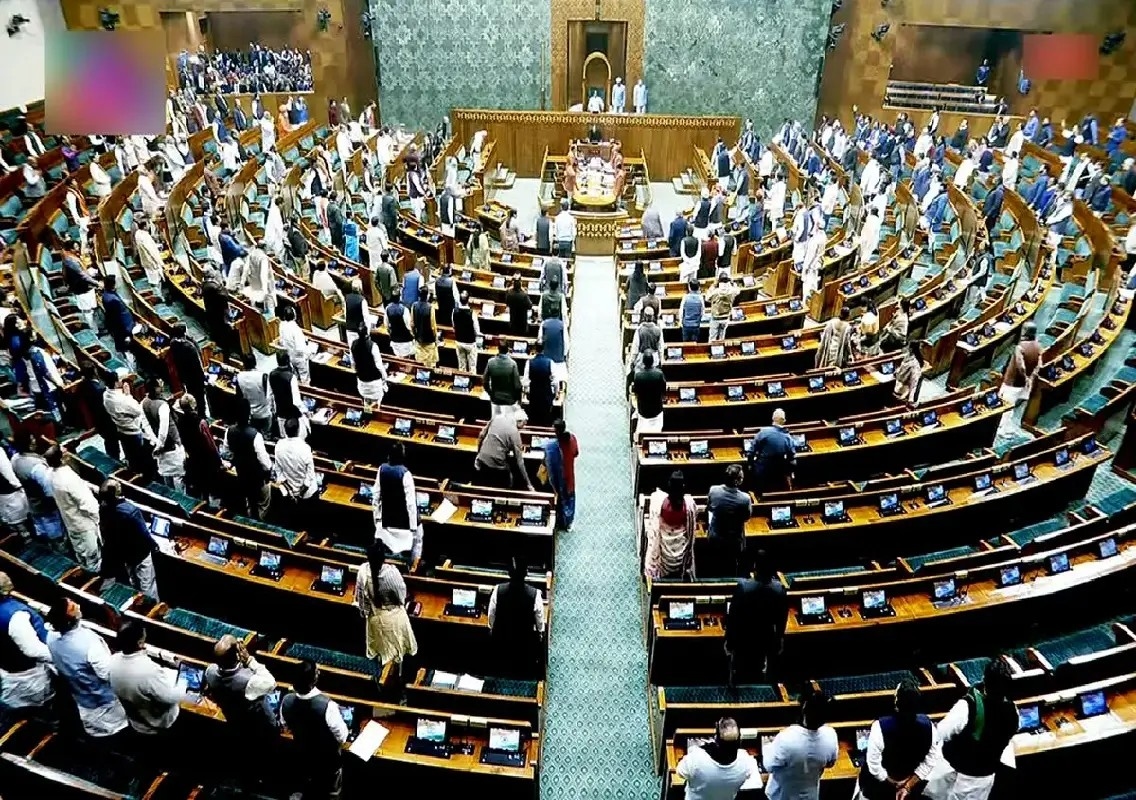


New Delhi: The Union government is set to introduce the Prevention of Insults to National Honour (Amendment) Bill in the Lok Sabha during the Monsoon Session of Parliament beginning on July 20. The proposed legislation seeks to make insulting or obstructing the singing of Vande Mataram a punishable offence, placing the national song on a similar legal footing as the National Anthem, the National Flag and the Constitution.
The Bill, which has already received Union Cabinet approval, is among several key pieces of legislation scheduled for introduction during the upcoming session. If passed by both Houses of Parliament and receiving Presidential assent, the amendment will expand the scope of the existing law governing respect for national symbols.
Bill aims to protect national song
The proposed amendment to the Prevention of Insults to National Honour Act seeks to criminalise acts considered insulting to or obstructing the singing of Vande Mataram.
Currently, the law provides legal protection against insults to national symbols such as the National Anthem, the National Flag and the Constitution. The amendment proposes extending similar legal protection to the national song.
The exact definition of what would constitute an “insult” or “obstruction” under the proposed law is expected to become clearer when the Bill is formally introduced and debated in Parliament.
Cabinet approval precedes introduction
The Bill was cleared by the Union Cabinet before being included in the legislative agenda for the Monsoon Session.
Its introduction follows guidelines issued by the Ministry of Home Affairs making the playing or singing of Vande Mataram mandatory at official functions where the National Anthem, Jana Gana Mana, is played.
If enacted, the legislation would provide statutory backing to measures aimed at ensuring respect for the national song during official events.
Political backdrop
The proposed amendment comes amid continuing political debate over the status and observance of Vande Mataram.
The Bharatiya Janata Party (BJP) has maintained that previous governments did not accord the national song the recognition it deserved despite its association with India’s freedom movement.
The party has also referred to recent instances in which Vande Mataram was allegedly not accorded due respect at certain events organised by Opposition-ruled state governments or groups representing minority communities.
These issues have periodically led to legal disputes and political controversy, making the proposed amendment a subject of wider public discussion.
Other key Bills in Parliament
The legislative agenda for the upcoming session also includes several other important Bills.
Among them is the Registration of Births and Deaths (Amendment) Bill, which proposes stricter norms for delayed registration. Under the proposed amendment, births or deaths reported more than two years after the event could be registered only with the approval of a Judicial Magistrate First Class, replacing the existing provision that permits approval by a District Magistrate, Sub-Divisional Magistrate or Executive Magistrate.
Another significant proposal is the Supreme Court (Number of Judges) Amendment Bill, which seeks Parliament’s approval for increasing the sanctioned strength of Supreme Court judges from 33 to 37, in line with an ordinance issued earlier.
Parliament is also expected to consider the Foreign Contribution (Regulation) Amendment Bill, which has generated political debate over its potential impact on non-governmental organisations, as well as the Viksit Bharat Shiksha Adhishthan Bill, aimed at reforming higher education regulation. The education Bill is currently under examination by a parliamentary committee.
Delimitation Bill not on current list
Despite speculation that the government might reintroduce legislation relating to delimitation and the implementation of women’s reservation in the Lok Sabha and State Assemblies from 2029, the list of Bills scheduled for introduction does not include such a proposal.
Government sources have indicated that the timing of any such legislation would be decided after the commencement of the Parliament session.
Conclusion
The proposed amendment to the Prevention of Insults to National Honour Act marks a significant legislative step towards extending legal protection to Vande Mataram. As the Bill is introduced and debated in Parliament, discussions are expected on its scope, the definition of punishable acts and its implications for public observance of the national song.