







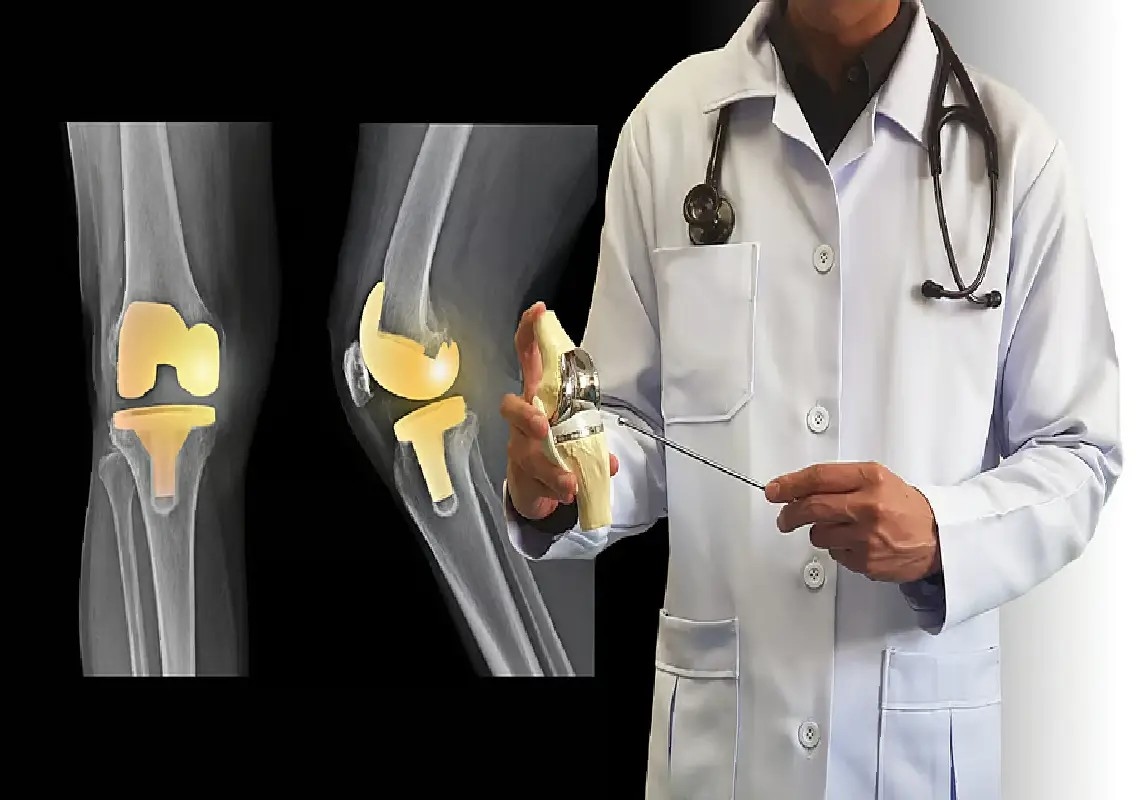


Chennai: Chennai-based orthopaedic surgeon Dr Ragunanthan Narayanaswamy has been invited to present his innovation in personalised knee replacement surgery at the annual meeting of the Personalised Arthroplasty Society (PAS) in Montreal, Canada, in September 2026.
The founder and chief orthopaedic surgeon of Rathimed Speciality Hospital will showcase a surgical technique developed for patients suffering from advanced arthritis. The innovation focuses on restoring a patient’s natural knee anatomy and achieving precise implant positioning, particularly in cases where severe arthritis has caused deformity and bone loss.
Research began in 2016
Dr Narayanaswamy and his team began their research in 2016 after being inspired by the philosophy of Dr Stephen Howell, who advocated restoring the natural anatomy of the knee rather than relying entirely on conventional mechanical alignment methods.
While the approach showed promise, the team identified a particular challenge among Indian patients.
Many patients seek medical treatment only after arthritis has progressed significantly. By this stage, the knee may have developed severe deformity, bone loss and changes to its original anatomy.
These changes can make it difficult for surgeons to accurately recreate the patient’s natural joint structure during knee replacement surgery.
Recognising this unmet clinical need, Dr Narayanaswamy and his team began working on a solution that could provide greater precision during surgery.
Indigenous instruments developed for precision
Over several years of research, the team designed and developed specialised surgical instruments aimed at accurately recreating the patient’s original joint surface.
The instruments are intended to assist surgeons in positioning knee implants precisely in three dimensions.
The innovation was developed through collaboration between clinicians and engineers, combining medical expertise with engineering solutions to address the challenges associated with advanced arthritis.
According to the team, the technique is designed to restore the natural kinematics of the knee, potentially allowing the replaced joint to move in a manner that more closely resembles the patient’s original anatomy.
The development is also being presented as an example of indigenous medical innovation, with Indian clinicians and engineers working together to address a clinical challenge specific to patients who often present with advanced-stage arthritis.
Focus on natural knee movement
Traditional knee replacement techniques have often relied on standard alignment principles to position implants.
The personalised kinematic approach instead seeks to understand and restore the individual anatomy of each patient’s knee.
By recreating the original joint surface and placing the implant according to the patient’s anatomy, the technique aims to achieve more natural movement after surgery.
Clinical experience reported by the team has shown encouraging outcomes among patients who underwent personalised kinematic knee replacement.
These outcomes have included reduced pain, lower blood loss, faster rehabilitation and improved functional mobility compared with conventional approaches, according to the team.
However, individual surgical outcomes can vary depending on factors such as the extent of arthritis, overall health, bone quality and rehabilitation.
Patients at centre of innovation
Dr Narayanaswamy said the technique initially faced questions because it challenged conventional approaches to knee replacement.
“When we introduced kinematic knee replacement in 2016, many questioned the approach because it challenged conventional thinking,” he said.
He added that the team’s continued experience showed encouraging recovery among patients, including reduced pain and blood loss and improved functional outcomes.
According to the surgeon, the primary objective behind the team’s research has been to improve mobility and quality of life for patients undergoing knee replacement.
70-year-old patient’s recovery recalled
Dr Narayanaswamy recalled the case of a 70-year-old man who recently underwent his second knee replacement surgery.
The patient was reportedly sitting comfortably and moving both knees without pain about three and a half hours after the procedure.
For the surgical team, such experiences have reinforced the importance of continuing research into techniques that can potentially improve recovery following joint replacement.
Early mobilisation following knee replacement is generally considered an important component of rehabilitation, although the pace of recovery differs from patient to patient.
International recognition
The invitation to present the innovation at the PAS annual meeting in Montreal marks another international platform for the research.
The team’s work has also been accepted for presentation at an international arthroplasty conference in China later in 2026.
The two international presentations are expected to provide opportunities for the team to share its research and clinical experience with specialists in joint replacement surgery from different countries.
The growing international interest also reflects the increasing focus on personalised approaches in orthopaedic surgery, where implant positioning and surgical planning are tailored more closely to individual patient anatomy.
Potential significance for advanced arthritis
Advanced arthritis can present surgeons with complex challenges because prolonged disease may lead to deformity, bone loss and substantial changes to the joint.
For such patients, accurately restoring the original anatomy can be more difficult than in cases where arthritis is identified and treated earlier.
The instruments developed by Dr Narayanaswamy’s team are intended to address this challenge by allowing more precise recreation of the patient’s joint surface and implant positioning.
While the reported clinical experience is encouraging, larger studies and continued evaluation will be important to establish the effectiveness and long-term outcomes of the technique compared with established knee replacement approaches.
The presentation in Montreal will provide the Chennai-based team with an opportunity to share its work with an international audience and contribute to discussions on personalised arthroplasty.