







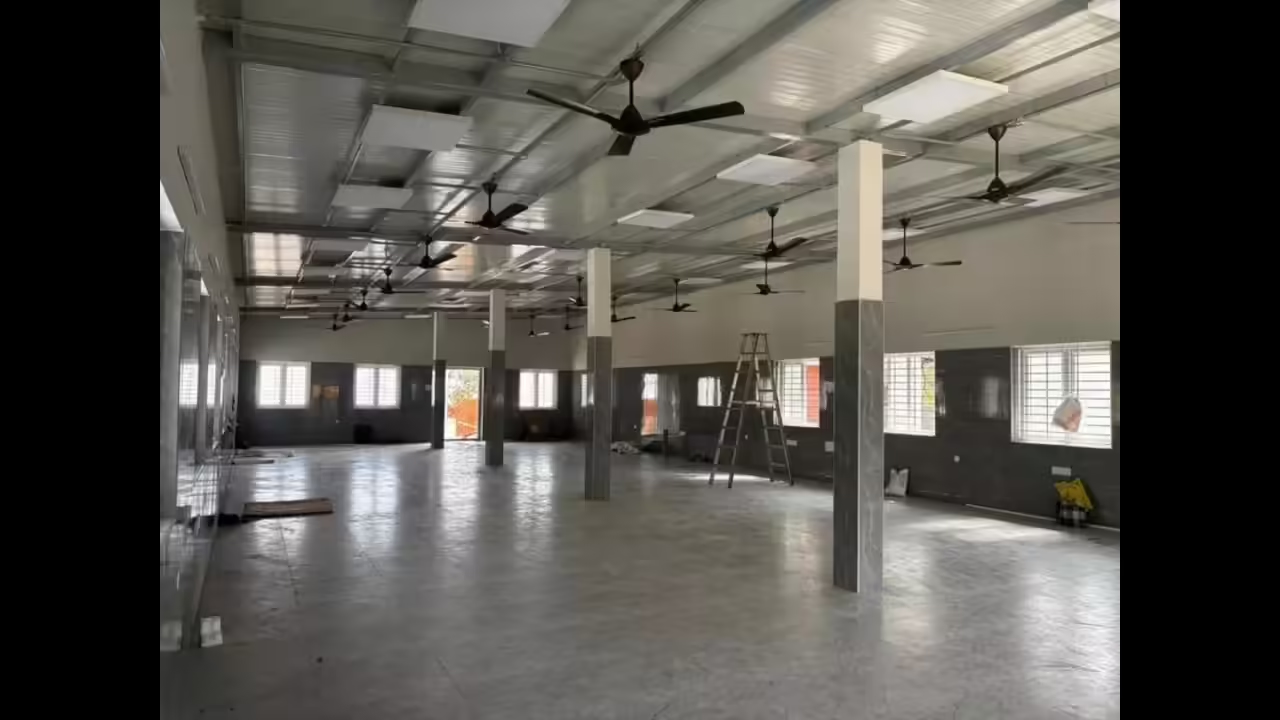


Shelter planned for Narikuravas and other semi-nomadic groups
Semi-nomadic families, including Narikuravas who often take refuge beneath statues along Marina Beach, will soon have access to a dedicated night shelter being built by the Greater Chennai Corporation (GCC) near the Anna Swimming Pool at Navalar Nagar, Triplicane. The facility is expected to be ready by December 25.
Constructed at a cost of ₹86 lakh, the 2,100 sq ft shelter will be able to accommodate around 80 people. It will be equipped with fans, RO drinking water, toilets, mattresses, and a children’s playground, addressing both comfort and basic dignity.
Inclusive design and winter focus
Unlike many shelters that cater to specific groups, this facility is designed to accommodate all genders and age groups. GCC Commissioner J Kumaragurubaran said the initiative was prioritised with winter approaching. “During the day, many of them move around the city selling beads or accessories they make. The need is primarily for a safe night shelter,” he explained.
Overall maintenance and hygiene will be managed by a Tiruvallur-based NGO. The civic body also plans to provide food services through a tie-up with a cloud kitchen supplying GCC schools, likely to begin early next year.
Plans for a larger shelter along the beach
While the Triplicane shelter will initially house nomadic families, the GCC has plans for a larger facility to serve the wider homeless population along Marina Beach. A recent GCC survey identified 215 homeless persons in the area—95 individuals and 120 people living in families.
“Our survey categorised the homeless into three groups: gypsies, beach stall workers, and people who work elsewhere but sleep on the beach,” said P Banukumar, Zonal Officer, Teynampet. “We are planning a bigger shelter that can accommodate all of them.”
Location guided by social research
The shelter’s proximity to Marina aligns with recommendations from a joint Madras School of Social Work (MSSW)–GCC survey conducted earlier this year, which mapped 13,529 homeless individuals across 2,837 locations in Chennai. One key finding was that shelters should be located within 2–3 km of where people work.
“Many homeless residents earn their livelihood through daily sales of handmade items. Shelters close to work locations help sustain their income,” said MSSW Professor M Antony Stephen.