







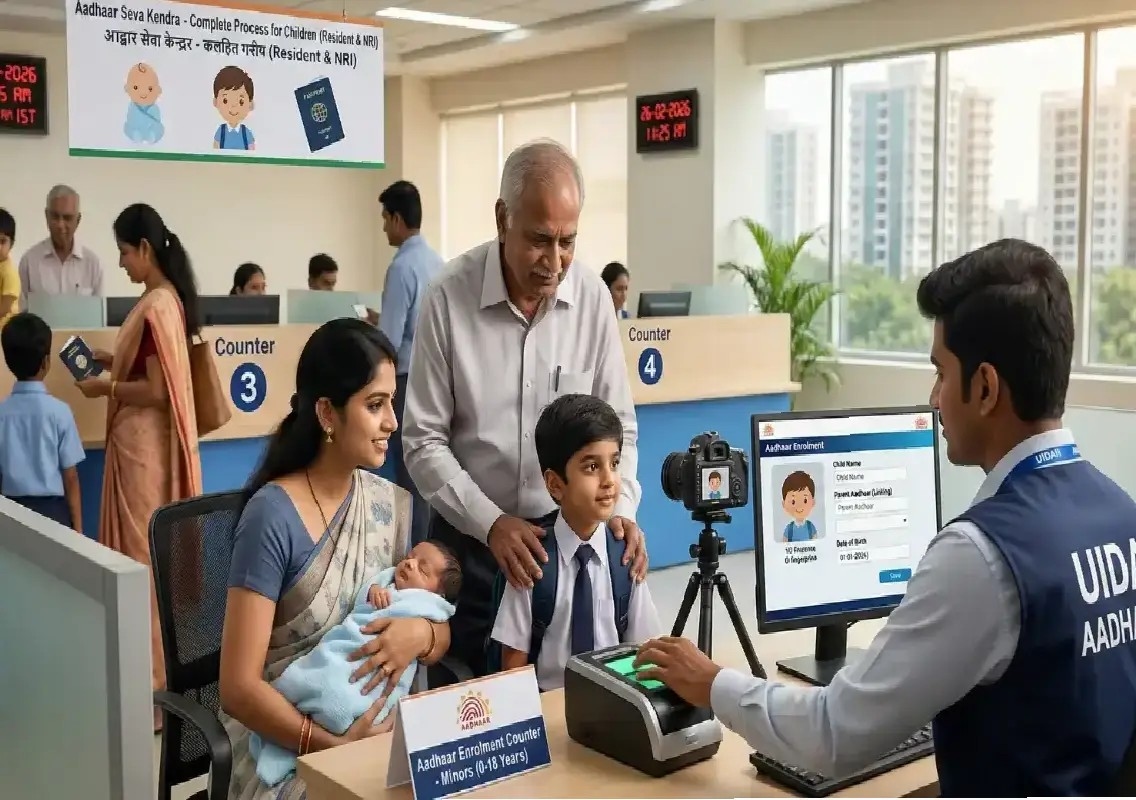


A child’s Aadhaar journey changes significantly after the age of five. Children below five are issued a blue-coloured Baal Aadhaar, which does not include fingerprints or iris biometrics because these are still developing.
Once the child turns five, parents need to ensure that the Aadhaar is updated with biometric information. This process is known as the Mandatory Biometric Update (MBU).
What changes when a child turns five?
At the first MBU, the child’s fingerprints and iris scans are captured, along with an updated photograph. The Aadhaar number itself remains unchanged.
The update is important because children’s biometric characteristics develop as they grow. Keeping the information updated helps ensure that Aadhaar authentication continues to work reliably.
Parents can take their child to an Aadhaar enrolment or update centre for the process.
There is another biometric update at 15
The Aadhaar biometric update does not end at five. A second mandatory update is required when the child reaches the age of 15.
Under the current regulations, the first Aadhaar update after turning five or 15 must include biometric information. If the required biometric update is not completed within two years of reaching the relevant age, the Aadhaar number can be deactivated until the biometric information is updated.
The Aadhaar number itself is not deleted because of the missed update.
MBU is currently free for children aged 5 to 17
There is also a useful window for parents at present. UIDAI says the Mandatory Biometric Update is free for children aged five to 17 until September 30, 2026.
UIDAI has urged parents and guardians to complete the update on time, as updated Aadhaar biometrics can help children access services where Aadhaar authentication is required, including certain educational and government services.
For parents, the key takeaway is simple: a blue Aadhaar issued before the age of five needs a biometric update after the child turns five, and another update at 15.