







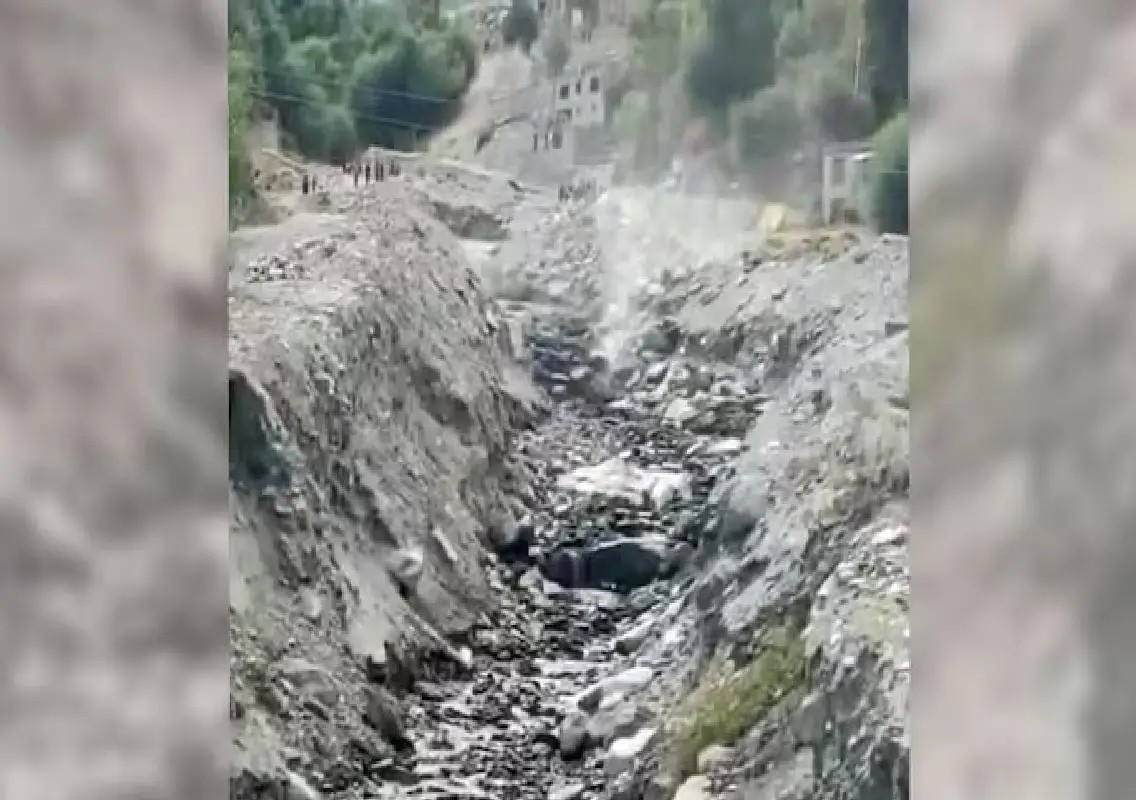


Kargil: A cloudburst over the Stakpa Sankoo area of Kargil triggered a sudden surge of water in a stream on Sunday, sending mud, boulders and other debris downstream with considerable force.
The sudden rise in water levels resulted in debris-laden floodwaters moving through the area, highlighting the continuing risk of flash floods in mountainous regions following intense rainfall.
Further details regarding the extent of damage, disruption to infrastructure or possible casualties were awaited at the time of reporting.
Sudden surge sends debris downstream
The cloudburst led to a rapid increase in the volume of water flowing through a local stream in Stakpa Sankoo.
The water carried mud, rocks, boulders and other debris downstream, creating a potentially dangerous situation for areas located along the watercourse. In mountainous terrain, cloudbursts can cause streams and small water channels to swell rapidly, leaving little time for people in vulnerable locations to respond.
Visuals and reports from the area showed the force with which the debris-laden water moved downstream.
Authorities are expected to assess the situation and determine whether homes, roads, bridges or other infrastructure have been affected.
Damage and casualties yet to be confirmed
At the time of reporting, there was no confirmed information regarding casualties or the full extent of damage caused by the flash flood.
The immediate priority is expected to be assessment of affected areas and checking whether residents or travellers have been stranded or require assistance.
Mountainous regions such as Kargil can be particularly vulnerable to sudden flooding because steep terrain allows rainwater to accumulate and flow rapidly through streams and valleys.
Even a short spell of intense rainfall can therefore trigger sudden flooding and landslides, particularly where loose soil, rocks and other material are present.
Nepal disaster highlights Himalayan flood risks
The Kargil incident comes amid heightened attention to extreme weather and flash-flood risks across the Himalayan region following a devastating disaster in Nepal.
A glacial collapse near the China border triggered a massive surge of water and debris through the Bhotekoshi and Trishuli river systems in Nepal. According to the latest figures cited in the report, the disaster has killed at least 788 people, while around 2,500 remain missing.
The floods swept away homes, roads and bridges and caused extensive damage to infrastructure across several districts.
The scale of the Nepal disaster has underscored the vulnerability of Himalayan communities to sudden changes in water flow, intense rainfall and other extreme weather events.
Downstream areas in India remain alert
The impact of the Nepal disaster has also raised concerns in downstream parts of India.
In Uttar Pradesh, rising water levels in the Narayani-Gandak river have prompted authorities to remain alert in flood-prone villages. Several bodies have also reportedly been recovered from the Gandak river in Maharajganj and Kushinagar after being swept downstream from Nepal.
Bihar is facing heightened flood concerns as well, with water levels rising in major rivers including the Ganga, Gandak, Kosi and Burhi Gandak following heavy rainfall in Nepal.
According to the latest flood monitoring data cited in the report, the Burhi Gandak at Khagaria, the Gandak at Dumariaghat and the Punpun at Sripalpur were flowing above danger levels. The Ganga at Sahibganj was also above the danger mark.
The developments have kept authorities in downstream states on alert as they monitor river levels and vulnerable settlements.
IMD warns of heavy rainfall
The India Meteorological Department has also forecast heavy to very heavy rainfall in several parts of the country.
On Sunday, the weather agency forecast isolated heavy to very heavy rainfall over Gangetic West Bengal and Jharkhand. Heavy to very heavy rainfall was also expected over Odisha and Chhattisgarh, with isolated extremely heavy rainfall forecast in parts of Odisha and Chhattisgarh.
Continued rainfall can increase the risk of flash floods, particularly in mountainous and hilly terrain, while sustained rainfall over river catchment areas can contribute to rising water levels downstream.
Authorities in vulnerable regions are therefore expected to maintain close watch over rivers, streams and low-lying areas.
Flash-flood risk remains elevated
The cloudburst in Stakpa Sankoo is another reminder of the unpredictable nature of weather in the Himalayan region. Unlike prolonged rainfall, cloudbursts can release large quantities of rain over a relatively small area within a short period, resulting in rapid runoff.
When such rainfall occurs in mountainous terrain, the resulting water flow can pick up rocks, mud and other debris and transform a normally small stream into a destructive torrent.
With rainfall continuing in several parts of the country and river levels rising in some regions, authorities are monitoring vulnerable locations for possible flooding and related disruptions.
The full impact of the Stakpa Sankoo incident will become clearer after an assessment of the affected area. Until then, the sudden flash flood serves as a warning of the continuing risks posed by intense rainfall and cloudbursts across the Himalayan region.