







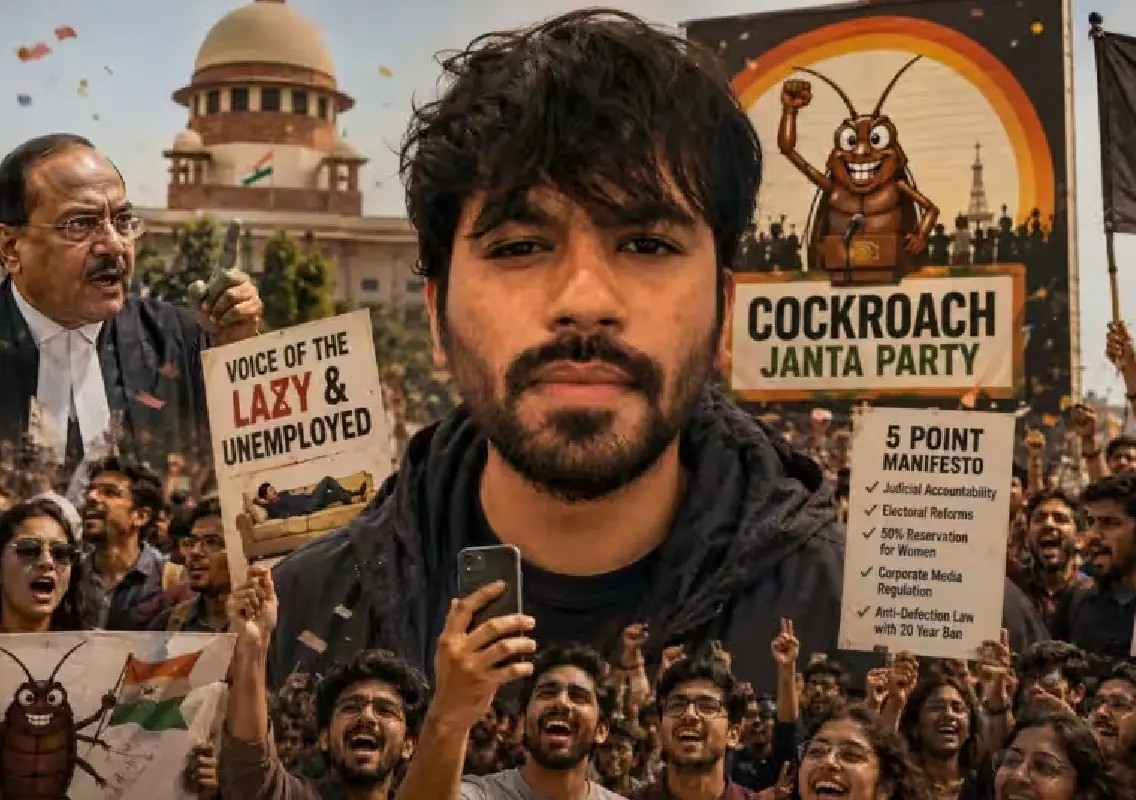


India’s bizarre world of political satire on social media has found a new rivalry after the viral Cockroach Janta Party was challenged by another online outfit calling itself the National Parasitic Front.
The online face-off has quickly gained traction across social media platforms, blending humour, political frustration, and satire in response to recent controversial remarks linked to unemployed youth.
Viral remarks spark online backlash
The latest wave of memes and satirical “political movements” reportedly intensified after remarks attributed to Surya Kant comparing unemployed youth to “cockroaches” and “parasites” triggered widespread criticism online.
The comments sparked heated debates on unemployment, economic pressures, and how young people feel increasingly disconnected from political and institutional systems.
Soon after, satirical pages and meme communities began turning the controversy into mock political campaigns filled with slogans, posters, fake manifestos, and exaggerated election-style propaganda.
Satire reflects real frustrations
While the movements are clearly satirical, many users say the humour resonates because it reflects genuine frustration over unemployment, rising living costs, and social inequality.
The creator associated with the Cockroach Janta Party, Abhijeet Dipke, has become a viral figure online, with supporters treating the parody movement almost like a digital protest campaign.
The newly emerged National Parasitic Front has now added another layer to the online satire battle, with both sides competing through memes, sarcastic speeches, and mock political messaging.
Social media divided over viral trend
The viral trend has drawn mixed reactions online.
Some users view the satire as a creative form of political expression and youth frustration, while others argue that such campaigns trivialise serious national issues.
Supporters say the humour reflects public anger and economic anxieties, especially among unemployed youth and struggling middle-class families.
Critics, however, have called for responsible online discussions and warned against misinformation and social media polarisation.
The growing popularity of these satirical movements once again highlights how memes and digital culture are increasingly shaping political conversations among young Indians.