







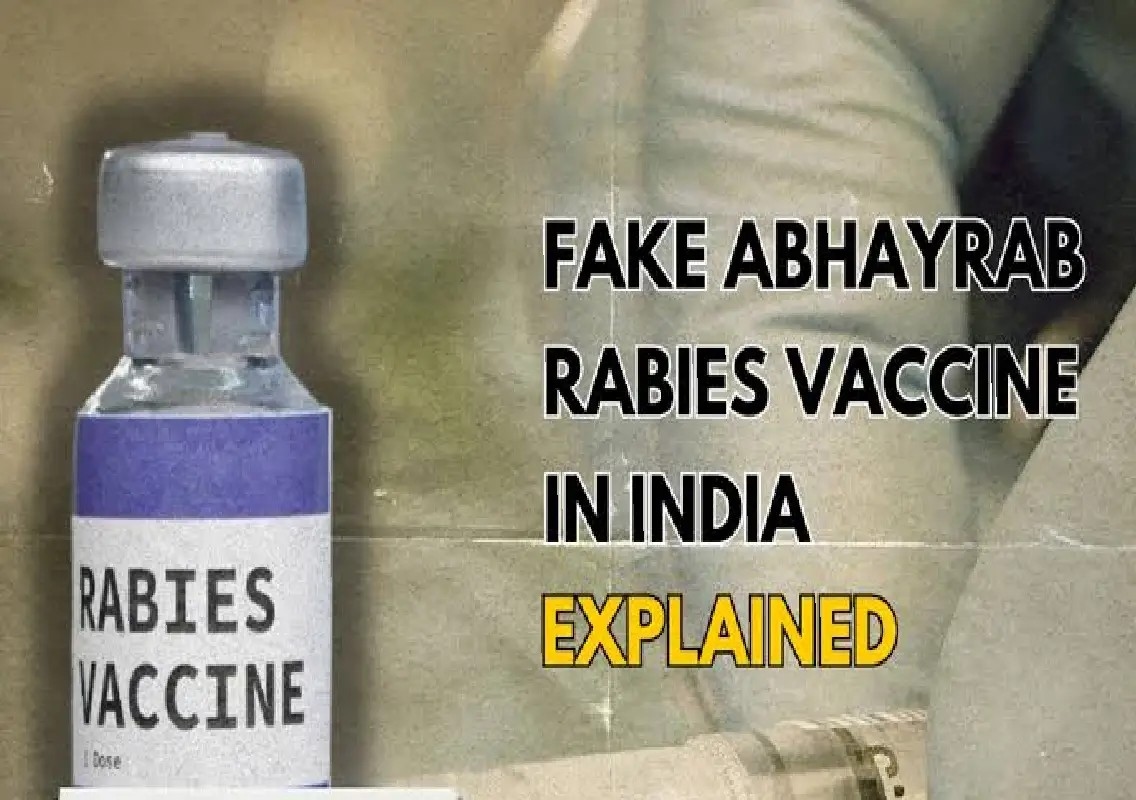


A batch of Abhayrab rabies vaccine has come under regulatory scrutiny after vials seized during a raid in Delhi were found to be “Not of Standard Quality” and misbranded by the Central Drugs Laboratory, Kasauli.
The vials, labelled as batch KE25012, were seized from a residential premises in Mukherjee Nagar in April and sent for laboratory testing. The sample failed the potency test, while the laboratory also identified differences between the seized vials and genuine reference samples of the same batch.
17 differences raise serious questions
Indian Immunologicals Ltd (IIL), which manufactures Abhayrab through its Human Biologicals Institute division, said the government laboratory report recorded 17 differences between the seized vials and its genuine retention samples.
The differences reportedly involved labelling, artwork, QR-code verification, cap colour, licence details, packaging text, fonts and the company logo. The seized sample passed tests for sterility, moisture and identity but failed the potency requirement.
IIL said the seized vials were not manufactured by its Human Biologicals Institute.
CDSCO orders strict vigilance
The Central Drugs Standard Control Organisation (CDSCO) has asked state drug controllers to maintain strict vigilance over the movement, distribution and availability of batch KE25012 and take appropriate regulatory action. Four people have been arrested by Delhi Police, with further investigation underway.
CDSCO also confirmed that no part of the concerned batch was exported to another country.
Genuine batch remains under scrutiny
IIL said the genuine KE25012 batch was independently tested and released by the Central Drugs Laboratory under a batch release certificate dated November 7, 2025. The company said 83,370 genuine vials were supplied only through authorised distribution channels and that no market complaint had been received regarding the batch.
The development is particularly significant because rabies is almost invariably fatal once clinical symptoms appear, making timely and effective vaccination crucial after possible exposure.
The latest case follows an earlier counterfeit Abhayrab episode involving batch KA24014, which prompted health alerts in the US, UK and Australia.