







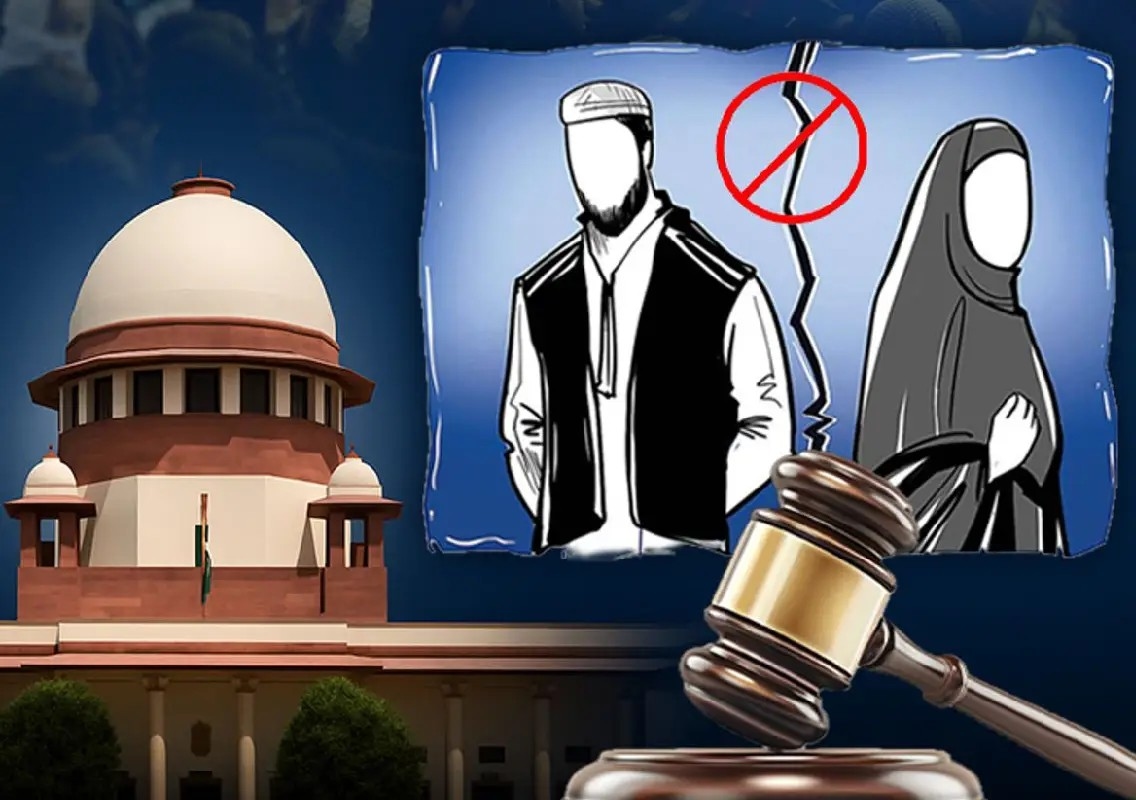


New Delhi : A court has observed that Talaq-e-Hasan, a form of divorce under Muslim personal law involving talaq pronouncements over successive periods, is not banned in India.
The case came before the court after a husband approached it, arguing that there was no legal prohibition against Talaq-e-Hasan and that he had followed the prescribed procedure. According to the report, the husband said he had pronounced talaq three times over a period of three months.
The legal question before the court was therefore different from that surrounding instant triple talaq, which was declared illegal by Parliament through the Muslim Women (Protection of Rights on Marriage) Act, 2019.
Talaq-e-Hasan differs from instant triple talaq
Talaq-e-Hasan involves pronouncements made at intervals rather than declaring divorce instantaneously. The petitioner argued that the practice remained legally permissible because there was no specific statutory prohibition against it.
The distinction between different forms of talaq has become an important issue in legal discussions following the Supreme Court’s 2017 judgment on instant triple talaq and the subsequent legislation.
The court’s observation in the present matter concerns the legal status of Talaq-e-Hasan and should not be understood as a blanket endorsement of every form of unilateral divorce.
Case highlights continuing legal debate
The proceedings highlight the continuing interaction between personal law, statutory legislation and constitutional principles in matters concerning marriage and divorce.
Questions surrounding Talaq-e-Hasan have previously reached Indian courts, with petitioners seeking clarity over whether the practice should also be prohibited.
The latest observation adds to the legal discussion surrounding Muslim personal law and divorce practices, while the precise implications of the ruling depend on the facts and legal issues considered in the case.