







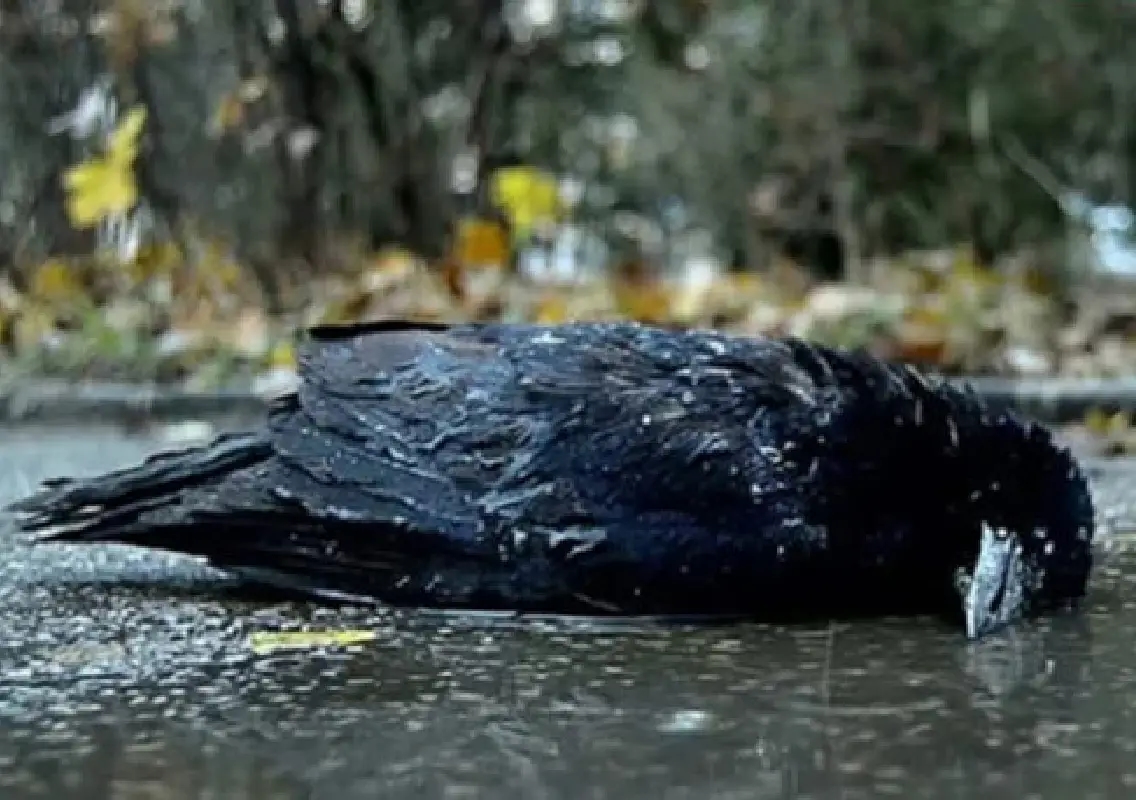


Residents of Malvarpatti village in the Vedasandur union of Dindigul district, long known for protecting birds and banning hunting, are gripped by fear after crows began dying in alarming numbers over the past 10 days.
Over 100 crows found dead daily
Villagers said more than 100 crows are being found dead every day, often seen falling suddenly from trees at the village’s common ground. What has deepened the mystery and anxiety is that other bird species remain unaffected.
Malvarpatti’s common ground is home to tamarind, peepal and neem trees, where over 3,000 birds — including crows, mynas, cuckoos and sparrows — usually roost each night. For decades, the village has woken up to the sound of birds at dawn, a routine residents say is now marked by silence and distress.
Village known for protecting birds
The villagers had earlier put up boards declaring the area a bird sanctuary, warning against hunting or shooting birds. “We always took pride in protecting them. That is why these deaths are so worrying,” residents said, pointing out that only crows are dying while other species appear healthy.
With no clear guidance on whom to approach, local youth have been collecting the dead birds daily, digging pits and burying them to prevent further health risks.
Fears over health and environment
The repeated deaths have left the village in shock, with residents and people from nearby areas expressing concern. Parents, in particular, fear possible health implications for children if the cause remains unidentified.
Villagers have urged the district administration to intervene immediately, investigate the cause of the deaths, and take steps to protect both public health and the village’s bird population.
Health department plays down bird flu fears
Amid public concern, the Directorate of Public Health and Preventive Medicine issued an advisory on February 5, stating that avian influenza largely affects birds and rarely spreads to humans.
The department said bird flu is usually detected through surveillance and testing of dead or infected birds, adding that the likelihood of transmission to humans is very low and there is no cause for public alarm.
However, villagers insist that clarity is urgently needed to explain why only crows are being affected and to ensure the safety of the community.