







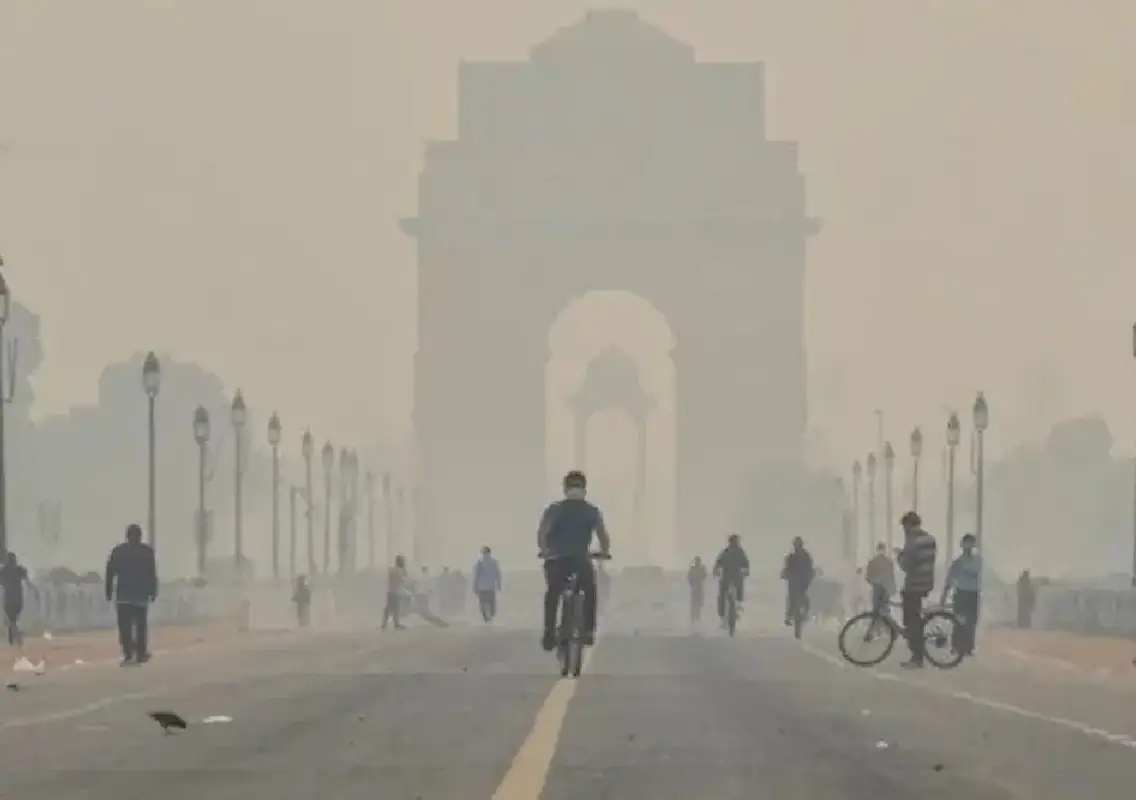


Union Minister for Road Transport and Highways Nitin Gadkari on Tuesday flagged the alarming severity of air pollution in the national capital, stating that Delhi’s toxic air is so hazardous that he develops infections after spending just two days in the city.
Speaking at the book launch of My Idea of Nation First – Redefining Unalloyed Nationalism, Gadkari said the transport sector was a major contributor to Delhi’s worsening air quality and took responsibility for its role in the crisis.
Transport sector key contributor
“I stay in Delhi for two days and get an infection, it is so polluted,” Gadkari said, linking the capital’s smog directly to India’s dependence on petrol and diesel. He stated that nearly 40 per cent of Delhi’s pollution comes from the transport sector, driven largely by fossil fuel usage.
“As the transport minister, I admit that 40 per cent of the pollution is because of us. Why is there pollution everywhere in Delhi? It is because of fossil fuels like petrol and diesel,” he remarked.
Clean mobility as nationalism
Gadkari described the shift towards electric and hydrogen-based mobility not just as an environmental necessity but as an act of nationalism. He questioned India’s continued reliance on imported fossil fuels, which he said imposed a heavy economic and ecological burden.
“Today, we are spending nearly ₹20 lakh crore every year on fossil fuel imports. What kind of nationalism is this? We are importing pollution,” he said, calling for a decisive move towards domestic clean energy alternatives.
Farmers as energy providers
Highlighting India’s growing capacity to produce cleaner fuels, Gadkari pointed to the evolving role of farmers in the energy ecosystem. He said farmers were no longer limited to food production alone but were emerging as energy and fuel providers, including aviation fuel.
EVs and hydrogen now viable
The minister said electric and hydrogen-powered vehicles were now economically practical. He cited falling battery costs as a major driver of electric vehicle adoption, noting that lithium battery prices had dropped from $150 per kilowatt hour to $55.
He also referred to emerging innovations such as sodium and aluminium-based fuel technologies, stating that Indian innovators were leading breakthroughs in clean mobility.
Delhi air quality remains severe
Gadkari’s remarks come as air quality across Delhi remained in the severe category, with AQI levels crossing 450 in areas such as Anand Vihar. In response, authorities invoked Stage IV of the Graded Response Action Plan across Delhi-NCR, including emergency dust-control measures.