







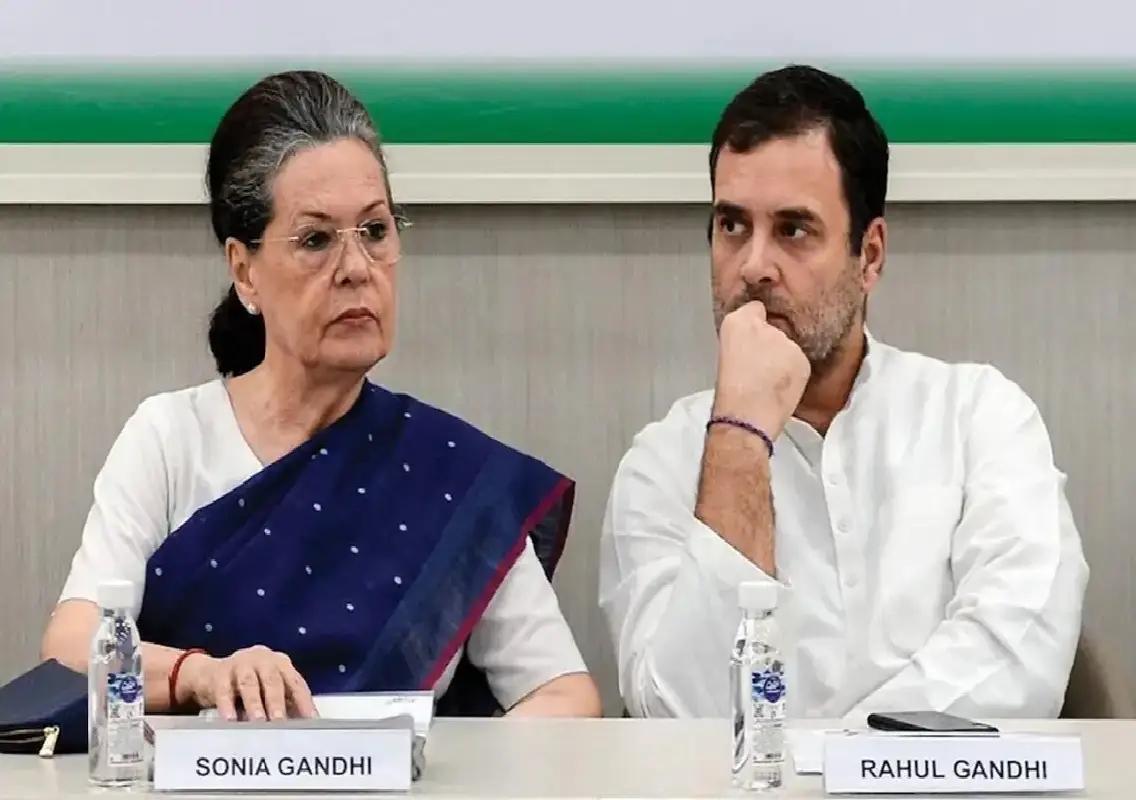


New Delhi: In a significant legal relief to Congress leaders Sonia Gandhi and Rahul Gandhi, a Delhi court on Tuesday refused to take cognisance of the Enforcement Directorate’s (ED) money laundering chargesheet in the long-running National Herald case. The order has been seen as a setback to the central agency and a major boost for the Congress, which has consistently alleged political vendetta behind the probe.
Special Judge (Prevention of Corruption Act) Vishal Gogne of the Rouse Avenue Court held that the complaint filed by the ED under the Prevention of Money Laundering Act (PMLA) was not maintainable in its present form. The court observed that the case was based on a private complaint and not on a First Information Report (FIR), a key procedural requirement under the law for initiating a money laundering prosecution.
Court’s observations on ED complaint
While refusing to take cognisance of the chargesheet, the court made it clear that the ED could explore legal remedies if it believed the order was erroneous. However, the judge underlined that the absence of an FIR struck at the very root of the agency’s complaint.
The ED had named Sonia Gandhi, Rahul Gandhi, Congress leaders Suman Dubey and Sam Pitroda, as well as Young Indian, Dotex Merchandise and businessman Sunil Bhandari as accused in the case. The agency has alleged that assets belonging to Associated Journals Limited (AJL), the publisher of the National Herald newspaper, valued at over ₹2,000 crore, were illegally taken over through a conspiracy involving Young Indian.
The court’s refusal to take cognisance means that, for now, the trial cannot proceed on the basis of the chargesheet filed by the ED.
Background of the National Herald case
The National Herald case originated from a private complaint alleging financial irregularities in the takeover of AJL by Young Indian, a company in which Sonia Gandhi and Rahul Gandhi are majority shareholders. The complaint alleged cheating, criminal breach of trust and misappropriation of funds.
Based on this, the ED initiated a probe under the PMLA, claiming that the transaction amounted to money laundering. The Congress, however, has maintained that there was no transfer of property or proceeds of crime, and that AJL’s assets remained with the company.
Congress terms order a vindication
Reacting strongly to the court’s order, the Indian National Congress said “truth has triumphed” and accused the Modi government of misusing investigative agencies to target the opposition.
In a post on X, the party stated that the court had found the ED’s actions against Sonia Gandhi and Rahul Gandhi to be unlawful and motivated by malice. It claimed that the absence of an FIR meant the case was beyond the ED’s jurisdiction and should never have been pursued.
The Congress further asserted that allegations of money laundering, proceeds of crime and illegal transfer of property were baseless. The party reiterated that it would continue to fight what it described as an atmosphere of political vendetta and intimidation.
Singhvi questions basis of allegations
Senior Congress leader and MP Abhishek Manu Singhvi, who has argued the case, said the order validated the party’s stand from the beginning. He told reporters that there had been “not a millimetre movement of money” and “not a millimetre movement of immovable property” in the entire transaction.
Singhvi said that AJL continued to hold its properties and that the only change was a shareholding arrangement, which, according to him, could not amount to money laundering. He accused the BJP of creating a “superstructure of exaggeration” over an issue that, in his view, did not even merit judicial cognisance.
ED likely to challenge ruling
Sources in the Enforcement Directorate indicated that the agency is likely to appeal against the Rouse Avenue Court’s order. According to sources, the ED’s legal team will study the detailed judgment before deciding the next course of action.
The sources said the agency believes the private complaint in question was not a “simple” private complaint, as cognisance of the offence had already been taken earlier. They also suggested that the court may have overlooked relevant portions of the Supreme Court’s judgment in the Vijay Madanlal Choudhary case, which upheld the constitutional validity of key provisions of the PMLA.
Separate ruling on FIR disclosure
In a related development, the Delhi court also ruled that Sonia Gandhi, Rahul Gandhi and other accused are not entitled to be given a copy of the FIR registered by the Delhi Police in connection with the National Herald matter. The court, however, said that the accused could be informed about the registration of the FIR.
This aspect of the order has also drawn attention, as it touches upon the rights of the accused at the pre-trial stage.
Conclusion
The Delhi court’s refusal to take cognisance of the ED’s chargesheet marks a crucial moment in the politically sensitive National Herald case. While the Congress has hailed the order as a vindication and proof of political misuse of agencies, the ED appears set to challenge the ruling. With the possibility of an appeal, the legal battle is far from over, but the latest order has, for now, provided significant relief to Sonia Gandhi, Rahul Gandhi and other accused in the case.