







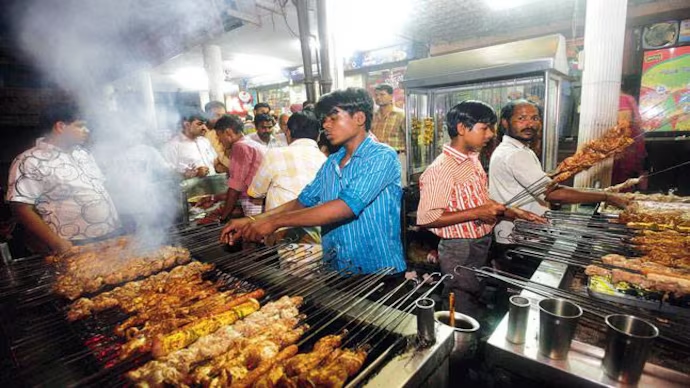


As Delhi’s air quality slips deeper into the ‘poor’ category, the city’s food industry is confronting one of its most significant shifts yet. A stringent government directive banning the use of coal and firewood tandoors across restaurants, hotels and street-side eateries has forced businesses into urgent discussions on how to reinvent menus and preserve flavours without their traditional heat source.
The ban, in effect since December 9, aims to reduce particulate emissions from eateries operating in open or semi-open spaces. While environmental experts emphasise its necessity, for thousands of kitchens across the Capital, it represents an operational and cultural challenge.
Such policy-driven changes have been mirrored in Karnataka as well, particularly in urban environmental management efforts noted in recent public-safety initiatives and local governance responses to pollution concerns.
Struggling to preserve signature flavours
At MI Food Centre in Meharchand Market, Lodi Colony, the impact is immediate. With tandoori dishes forming the backbone of their menu, Mohammad fears a major overhaul. “Humare toh sabse popular dishes hi tandoor ki hain. Ab agar tandoor band hoga, toh humein poora menu sochna padega,” he says. Customers expect the smoky flavour that only traditional coal-fired tandoors deliver—recreating that overnight, he adds, is nearly impossible.
At Oberoi Dhaba in Malviya Nagar, acceptance comes with caution. Manager Ashok acknowledges the difficulty but supports the environmental reasoning behind the ban. “Haan, mushkil toh hoga but zaroori bhi hai… If shifting away from coal helps improve Delhi’s air even a little, then we should contribute,” he says. The kitchen has begun experimenting with alternative grills, though the team anticipates slight changes in taste.
The conversation reflects a broader trend in food cultures globally, where traditional cooking methods are increasingly reshaped by environmental regulations. More background on such shifts can be found on Wikipedia’s page on tandoori cooking.
Smaller eateries face bigger hurdles
While larger establishments explore adjustments, the transition is far tougher for small eateries operating out of extremely limited spaces. At Aslam Kitchen near Jama Masjid, Shadab says installing an indoor tandoor or an electric alternative is simply not feasible. “Hamare paas andar jagah hi nahi hai… Electric tandoor bhi fit nahi hoga,” he explains. Dropping tandoori items altogether is now a likely scenario, forcing them towards tava-based snacks and gravies.
For these businesses, the ban is not merely a technical change but one that threatens identity, customer expectations and revenue streams. Many of them depend heavily on outdoor tandoors, which also serve as visual markers for hungry evening crowds.
Renovations, redesigns and rising costs
Some restaurants are considering structural modifications instead of major menu changes. At a north Delhi diner, manager Vishesh Nijhawan says they are assessing whether adding indoor space or switching to gas or electric tandoors would be feasible. “It means renovation, extra expense, and also a change in taste of our food. But there is no other option,” he notes.
Industry representatives highlight that the financial burden of such transitions—new equipment, energy costs and construction—could be especially heavy for mid-range restaurants still recovering from pandemic losses.
Yet many restaurateurs agree that the health cost of Delhi’s air crisis leaves little room for resistance. The city’s food businesses, known for their resilience and innovation, are now banking on creativity, customer loyalty and kitchen ingenuity to navigate the shift.
A city adjusting to cleaner air
While the ban disrupts longstanding culinary practices, policymakers insist that reducing emissions from small sources is essential in a metropolis where winter pollution routinely breaches hazardous levels. Officials argue that cleaner alternatives, once adopted, could set new standards for urban dining.
For now, Delhi’s kitchens are engaged in a delicate balancing act—preserving taste, staying compliant, and continuing to serve a city that loves its tandoori food. The coming months will show how far innovation can go in safeguarding tradition while protecting public health