







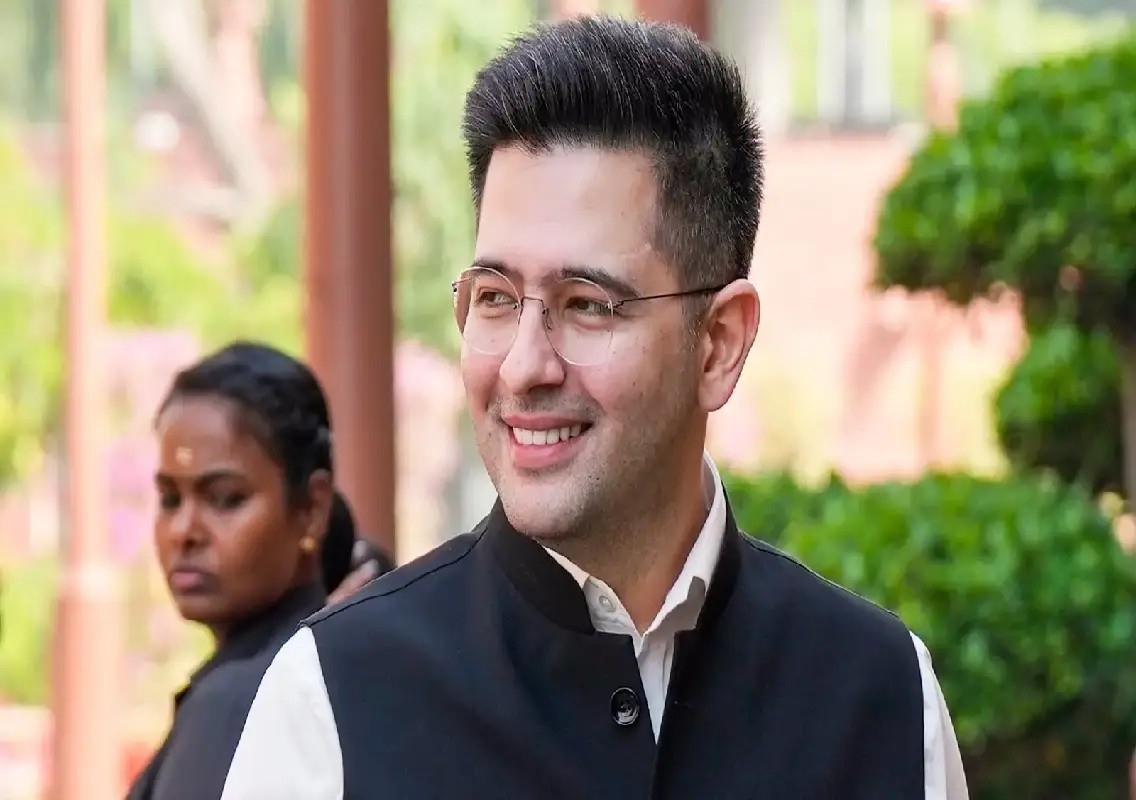


New Delhi: The Delhi High Court has directed the removal of certain defamatory online content targeting Rajya Sabha MP Raghav Chadha while clarifying that the case does not involve any issue relating to personality rights.
The order was passed by Justice Subramonium Prasad while hearing Chadha’s civil suit alleging that a coordinated social media campaign had damaged his reputation. The court observed that only some of the content identified by the petitioner was defamatory and ordered its removal, while holding that the remaining content did not warrant similar action.
Court grants partial relief
While pronouncing the order on Wednesday, Justice Prasad stated that directions had been issued to take down specific content considered defamatory.
The court, however, declined to order the removal of the remaining material, observing that it did not amount to defamation.
The judge also clarified that the proceedings were confined to allegations of defamation and did not concern personality rights, narrowing the scope of the case.
Earlier observations on criticism and satire
The latest order comes weeks after the same court had declined to grant interim relief to Chadha.
During the hearing on May 21, Justice Prasad observed that criticism, satire and cartoons directed at political figures cannot be restrained merely because they may be unpleasant or critical.
The court had remarked that the social media posts in question related to criticism of decisions taken in the political sphere and noted that there is a “thin line between defamation and criticism.”
At that stage, the court had also observed that there appeared to be no prima facie violation of personality rights.
Suit arose over social media posts
The case stems from social media posts that allegedly criticised Chadha’s reported political switch from the Aam Aadmi Party to the Bharatiya Janata Party.
In his suit, Chadha alleged misuse of his image and public persona through online content that he claimed was defamatory and intended to damage his reputation.
The High Court examined whether the disputed posts crossed the legal threshold of defamation while balancing the constitutional right to free speech and criticism.
Lawyers welcome ruling
Following the order, Chadha’s counsel, Satatya Anand and Nikhil Aradhe, welcomed the decision.
According to the lawyers, the ruling reinforces that freedom of speech cannot be used as a shield for organised campaigns aimed at defaming individuals.
They described the order as an important step towards enabling prompt action against coordinated online defamation while protecting the dignity of public discourse.
Allegations of coordinated campaign
During the proceedings, Chadha’s legal team argued that a coordinated and allegedly paid social media campaign had been orchestrated to tarnish his public image.
The lawyers contended that material placed before the court suggested multiple social media accounts and influencers had published content through influencer marketing agencies.
They further claimed that similar posts were circulated across numerous social media platforms within minutes, indicating an organised effort to amplify allegedly false narratives and cause reputational harm.
The court, however, confined its findings to determining whether specific content amounted to defamation.
Conclusion
The Delhi High Court’s order provides partial relief to Raghav Chadha by directing the removal of certain defamatory content while reaffirming that political criticism, satire and free expression remain protected unless they cross the legal threshold into defamation.