


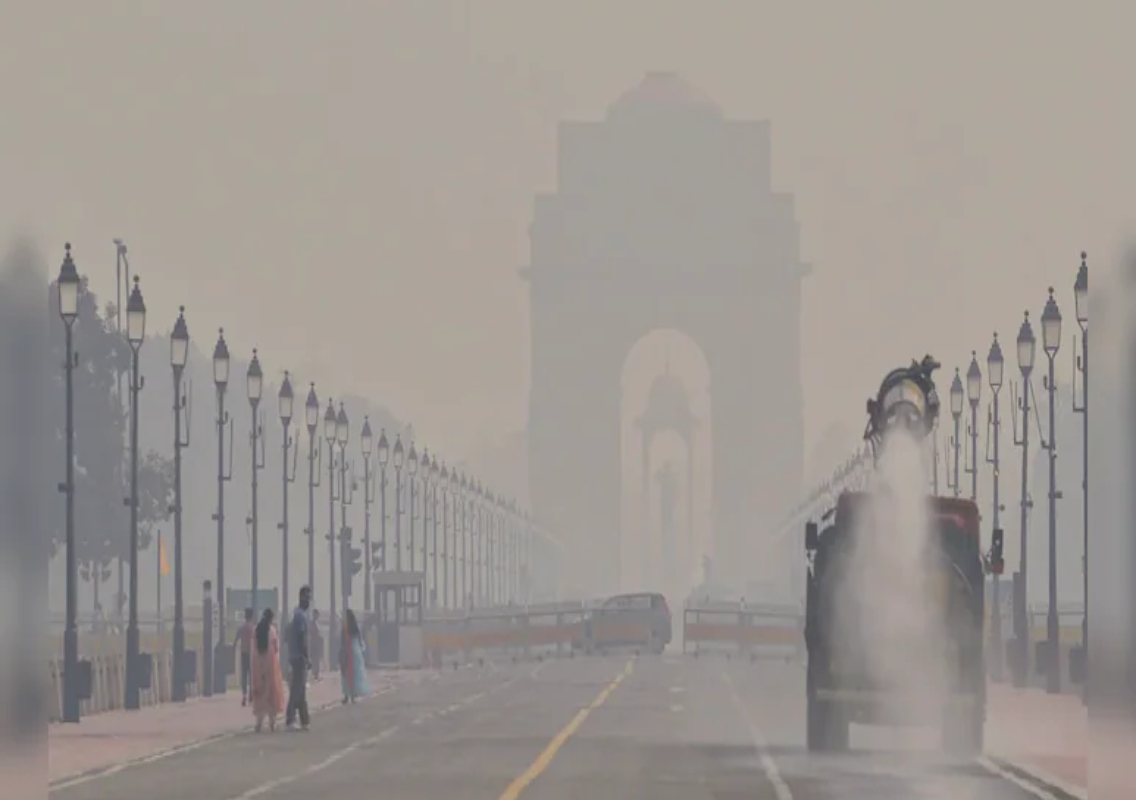


New Delhi: The Commission for Air Quality Management (CAQM) has ordered a temporary ban on dust-generating construction and demolition activities across the National Capital Region (NCR), alongside a 50% work-from-home arrangement in selected areas, from November 5 to 20, 2026.
The preventive measures are intended to reduce emissions before air pollution typically intensifies in Delhi and neighbouring districts during November. The order, dated October 30, directs the Delhi government and NCR state governments to implement the restrictions for the specified period.
The measures cover construction and demolition activities across the entire NCR. The work-from-home requirement applies to government and private offices in Delhi and five neighbouring districts: Gurugram, Faridabad, Sonipat, Ghaziabad and Gautam Buddha Nagar.
The CAQM has issued the directions under Section 12 of the Commission for Air Quality Management in National Capital Region and Adjoining Areas Act, 2021.
Construction and demolition activities to stop
Under the first measure, dust-generating demolition and outdoor construction activities must remain suspended across the NCR between November 5 and November 20.
The restriction is intended to prevent construction-related dust from adding to the region’s existing pollution burden during a period when atmospheric conditions can make pollutant dispersion difficult.
However, the order provides exemptions for several categories of projects considered essential or nationally important. These include projects associated with:
- Railways and metro services.
- Airports and inter-state bus terminals.
- Hospitals.
- Water supply and sanitation.
- National security and defence.
- Projects classified as being of national importance.
The restrictions also cover linear public infrastructure projects, including highways, roads, flyovers, overbridges, power transmission lines, pipelines and telecommunication works.
The exemptions mean that the restriction is not a blanket shutdown of every infrastructure project. Activities falling within the specified categories can continue subject to the applicable provisions of the order.
50% work from home in six areas
The second measure requires government and private offices in Delhi, Gurugram, Faridabad, Sonipat, Ghaziabad and Gautam Buddha Nagar to operate with up to 50% of their staff attending physically.
The remaining workforce is expected to work from home during the November 5–20 period.
The direction applies to offices in the identified areas and is intended to reduce commuting-related emissions by limiting the number of employees travelling to workplaces.
Industrial establishments and essential services where working from home is not feasible have been exempted.
The arrangement is therefore not a region-wide closure of offices or a compulsory shutdown of all commercial activity. Organisations covered by the order will need to plan staffing in line with the specified attendance limit while maintaining essential operations.
Why CAQM has announced the restrictions
The CAQM said its analysis of daily Air Quality Index data from November 2018 to 2025 showed a recurring pattern of elevated pollution during early and mid-November.
The analysis found that AQI levels had reached the ‘Severe’ and ‘Severe+’ categories on some days during this period.
Several factors contribute to the seasonal deterioration in air quality. Local emissions from vehicles, construction and other activities combine with crop-residue and biomass burning in and around the region.
Weather conditions can further worsen the situation. Low wind speeds, a shallow atmospheric boundary layer and reduced vertical mixing limit the dispersal of pollutants. As a result, emissions can accumulate closer to the ground.
The CAQM has described the November restrictions as preventive measures, limited by time and geographical coverage. Their purpose is to reduce emissions at source and limit the build-up of pollutants before seasonal pollution reaches more serious levels.
How the measures differ from GRAP restrictions
The latest directions are separate from the revised Graded Response Action Plan (GRAP), dated September 29, 2026.
GRAP measures are generally activated when the AQI crosses specified thresholds. Restrictions can therefore change depending on the prevailing pollution level and the stage declared by the authorities.
The new CAQM order, by contrast, specifies a fixed implementation period from November 5 to 20. The measures are scheduled to apply during those dates regardless of the AQI recorded on an individual day.
This makes the latest directions a preventive intervention rather than a response triggered only after pollution crosses a particular threshold.
There is also a recent precedent for limiting office attendance in the capital region. Last November, the Delhi government had mandated 50% work from home in government and private offices under Stage III of GRAP.
The latest order brings a similar workplace arrangement forward as part of a pre-planned seasonal response.
Delhi’s recent air quality and the November outlook
The preventive restrictions come even as Delhi has recorded relatively cleaner air in recent days.
According to the report, the city’s AQI was 60 on Friday, October 30, marking its cleanest October day in four years. The reading rose to 95 on Saturday morning, October 31.
Although these readings were substantially below the severe pollution levels often recorded during the winter season, the CAQM’s analysis indicates that the coming weeks remain a period of heightened seasonal risk.
The authority is seeking to prevent the improvement from being reversed as weather conditions change and pollution sources intensify.
What residents, offices and contractors should know
The November restrictions will have implications for employers, construction companies, infrastructure agencies and residents across the affected areas.
Offices in the six specified areas will need to organise physical attendance within the 50% limit and make arrangements for the remaining employees to work remotely. Employers should also identify whether their operations fall under the exemptions for industrial establishments or essential services.
Construction and demolition contractors across the NCR will need to review their activities and determine whether their projects fall within the exemptions listed in the order. Infrastructure agencies handling roads, flyovers, pipelines and other linear public works should pay particular attention to the specific provisions.
For residents, the measures could mean fewer construction-related dust emissions and reduced office commuting during the restricted period. However, their overall impact will depend on implementation and on other pollution sources, including transport emissions and regional crop-residue burning.
The CAQM’s November 5–20 restrictions form part of a preventive effort to manage the capital region’s seasonal pollution challenge. The effectiveness of the measures will depend on coordinated implementation by the Delhi government, NCR state authorities, employers and project agencies.