







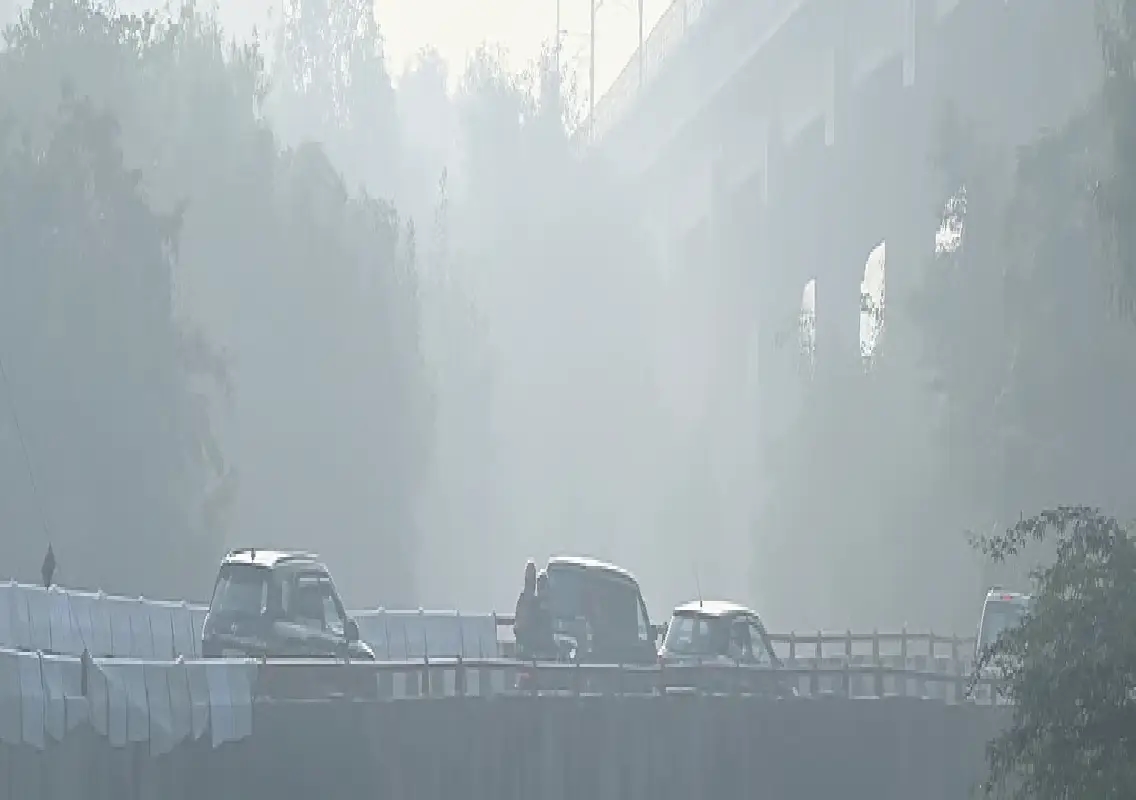


New Delhi: Delhi continues to battle some of the country’s worst air pollution levels, with a new nationwide satellite-based assessment revealing that the crisis extends far beyond the capital. A report released on Tuesday by the Centre for Research on Energy and Clean Air (CREA) has found that Delhi now ranks as India’s most polluted state, recording annual pollution-weighted PM2.5 levels of 101 µg/m³—two-and-a-half times higher than the national standard and 20 times the World Health Organization (WHO) guideline.
Report shows alarming exposure across Delhi
The CREA report states that all 11 districts of Delhi appear among India’s top pollution hotspots, indicating that residents face severe and persistent exposure irrespective of locality or season. The data highlights that the pollution challenge is not restricted to winter smog episodes but reflects sustained, year-round health risks for the capital’s population.
Officials and researchers note that the trends point to both local and regional contributors, including vehicular emissions, industrial activities, biomass burning and secondary pollutants that accumulate in stagnant winter air.
Pollution crisis extends beyond Delhi
The report stresses that India’s air pollution problem cannot be addressed through city-centric policies alone. Satellite-based PM2.5 analysis across 749 districts shows that 60% of districts breach the annual national limits, while none meet the more stringent WHO guideline. Districts in Delhi and Assam account for nearly half of the top 50 most polluted districts, followed closely by regions in Haryana and Bihar.
CREA researchers argue that the persistence of high PM2.5 levels across states underscores the need for regional airshed-level strategies, coordinated emission controls and stronger enforcement mechanisms.
Seasonal trends reveal emerging regional risks
Seasonal analysis from the report reveals stark disparities across India’s airsheds. The Indo-Gangetic Plains remain the most polluted region in every season except the monsoon, when rainfall temporarily reduces particulate concentrations. However, the Northeast has emerged as a new zone of concern, with several districts showing persistently elevated pollution levels even during rain-heavy months.
According to researchers, this indicates that baseline emissions—rather than weather patterns—are increasingly responsible for poor air quality in the Northeast, likely driven by rapid urbanisation, industrial growth and biomass burning.
Capital wakes up to another hazy morning
Delhi began Tuesday amid a haze-filled sky and an unusually cold morning, with only marginal improvement in air quality after almost two weeks of severe pollution. Meteorologists expect minor fluctuations in the coming days but warn that without significant emission reductions, relief will remain temporary.
Health experts continue to urge residents to limit prolonged outdoor exposure, use protective masks and adopt indoor air purification measures, especially for children, the elderly and those with respiratory conditions.
Conclusion
The latest satellite assessment reiterates that India’s pollution crisis is widespread and systemic, requiring a shift from city-focused interventions to comprehensive national and regional solutions. For Delhi, the findings reaffirm the urgent need for sustained, multi-sectoral action to safeguard public health.