


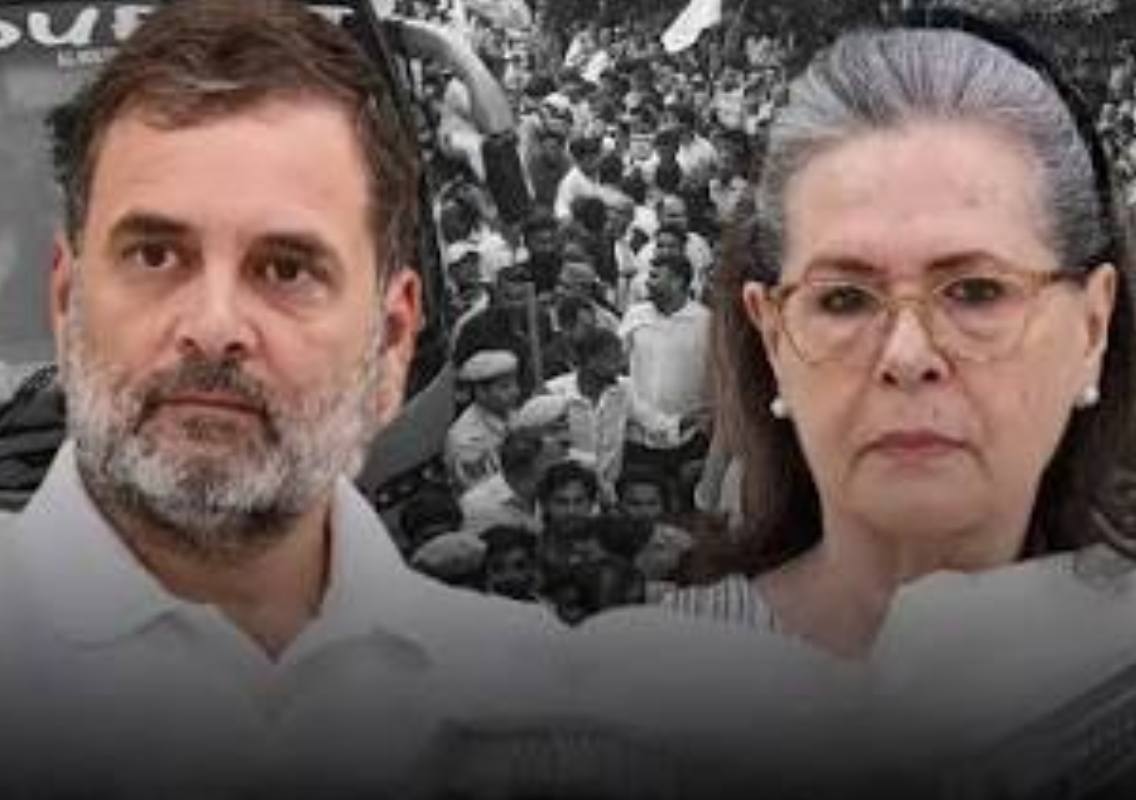


New Delhi: The Chamber of Trade and Industry (CTI), a traders’ body in Delhi, has appealed to Congress Parliamentary Party chairperson Sonia Gandhi to postpone the INDIA bloc’s proposed November 1 rally at Ramlila Maidan, warning that traffic disruption could put daily business worth Rs 10,000 crore to Rs 12,000 crore across major markets at risk during the Diwali shopping season.
In a letter dated October 30, CTI chairman Brijesh Goyal urged Sonia Gandhi to intervene after the organisation’s earlier appeals to Leader of Opposition Rahul Gandhi did not result in a change to the proposed schedule. The traders’ body said the rally could attract around 10 lakh people and 15,000 to 20,000 vehicles, potentially restricting access to wholesale and retail markets in central and Old Delhi. The appeal comes just days before Dhanteras on November 6 and Diwali on November 8. Traders say November 1 is an important day for moving festive stock, receiving deliveries and preparing shops for the expected increase in customer demand.
CTI has stressed that it is not opposing the political rally but wants the organisers to consider the impact on businesses and livelihoods during the peak festive period.
Why traders want the November 1 rally postponed
According to CTI, around 20 major wholesale and retail markets are located within a five-kilometre radius of Ramlila Maidan. The organisation estimates that these markets collectively account for daily business worth Rs 10,000 crore to Rs 12,000 crore.
The traders’ body fears that the arrival of a large number of rally participants and vehicles could cause severe congestion on roads connecting the venue to nearby commercial areas.
Goyal said the appeal was intended to protect traders during a particularly important period for business.
“We are not opposing the rally; we are making a heartfelt plea to protect our livelihoods during the peak Diwali season,” he said.
The organisation has warned that if roads become inaccessible, the impact could extend beyond shops and customers to transporters, wholesalers, suppliers and businesses that depend on daily movement of goods.
The estimate of Rs 10,000 crore to Rs 12,000 crore represents the daily turnover CTI says is associated with the affected markets. It is the trade body’s assessment of the business potentially disrupted, rather than a confirmed estimate of losses that will necessarily occur.
Which Delhi markets could be affected?
CTI has identified several prominent wholesale and retail markets around Ramlila Maidan that it believes could face disruption if traffic restrictions and congestion affect central Delhi.
The markets listed by the organisation include:
- Chandni Chowk and Sadar Bazar
- Connaught Place, Palika Bazar and Janpath
- Bhagirath Palace and Khari Baoli
- Kashmere Gate and Lajpat Rai Market
- Naya Bazar, Chawri Bazar and Kinari Bazar
- Dariba Kalan, Ballimaran and Fatehpuri
- Tilak Bazar and Karol Bagh
- Jama Masjid, Nabi Karim and Gaffar Market
- Ajmeri Gate-Paharganj and Daryaganj
These commercial areas serve customers from Delhi as well as traders and buyers from other parts of the country.
CTI said the markets depend on a substantial daily movement of goods. According to the organisation, around 5,000 trucks and tempos bring merchandise from 56 industrial areas, including Narela, Bawana, Okhla, Mayapuri, Mundka, Udyog Nagar and Mangolpuri.
The traders’ body has also said that approximately 3,000 vehicles transport goods from these markets to the National Capital Region and other states.
Any disruption to the movement of these vehicles could affect the availability and timely delivery of goods during the festive shopping period, it warned.
Parking shortage raises traffic concerns
The availability of parking for the expected rally participants is another major concern raised in the letter.
CTI questioned where the estimated 15,000 to 20,000 vehicles would be accommodated, arguing that Ramlila Maidan does not have sufficient parking capacity for such a large gathering.
The organisation claimed that the venue cannot accommodate even 200 large buses in its parking area.
It warned that vehicles could spill onto surrounding roads, affecting traffic movement towards commercial areas and creating difficulties for shoppers, traders and goods carriers.
The roads identified as potential congestion points include Jawaharlal Nehru Marg, Bahadur Shah Zafar Marg, Netaji Subhash Marg and routes connecting the markets around Chandni Chowk.
The traders’ body has described the possibility of severe congestion as a lockdown-like situation, although the actual impact will depend on the arrangements made by the police and rally organisers.
Traders fear disruption could begin on October 31
CTI has warned that the impact may begin before the rally itself, as vehicles carrying participants could start arriving in Delhi on October 31.
The organisation specifically mentioned the Singhu, Tikri, Ghazipur and Badarpur border points as possible entry routes for vehicles travelling towards central Delhi.
It also expressed concern that barricades and traffic restrictions could be introduced along important roads, including Bahadur Shah Zafar Marg and Jawaharlal Nehru Marg.
According to Goyal, transporters had already begun expressing reluctance to send vehicles to the markets from October 31 because of the possibility of restrictions and congestion.
For businesses preparing for Dhanteras and Diwali, even a temporary disruption to deliveries could affect the movement of inventory and the timing of sales.
CTI has therefore argued that rescheduling the event would reduce the risk of disruption during a period when traders depend on regular supplies and customer access.
Earlier traffic disruption cited by CTI
The traders’ body has also referred to an earlier gathering at Jantar Mantar to explain its concerns.
According to CTI, a gathering of approximately 5,000 to 7,000 people on October 10 resulted in traffic congestion in central Delhi for around eight hours.
The organisation has argued that a rally expected to attract around 10 lakh people could create a substantially larger challenge for traffic management.
However, the comparison is part of CTI’s appeal and does not establish the precise extent of disruption that will occur on November 1. The final traffic impact will depend on the number of participants and vehicles, parking arrangements, diversions and crowd-management measures.
The organisation wants the Congress leadership and authorities to consider these factors before proceeding with the event at the proposed venue.
CTI proposes postponement or a change of venue
The traders’ body has suggested two alternatives to avoid a clash with the festive shopping period.
Its first proposal is to postpone the rally until after November 10-11, when the main Diwali shopping period will have passed.
The second option is to shift the event to Burari Ground, which CTI says has parking capacity for approximately 15,000 vehicles.
The organisation believes either arrangement could help reduce the pressure on roads around central Delhi’s commercial districts.
The latest appeal to Sonia Gandhi follows earlier letters sent to Rahul Gandhi. CTI has said it also sought a meeting with him to discuss the concerns and explain how the rally could affect traders.
Goyal said the organisation had turned to Sonia Gandhi after its earlier requests did not secure the desired response.
As of October 30, the traders’ body was awaiting a response from the Congress leadership.
Why is the INDIA bloc organising the rally?
The November 1 gathering, described as the ‘Chalo Dilli Ramlila March’, has been organised by the opposition INDIA bloc as part of its campaign against alleged electoral irregularities.
Rahul Gandhi has said the rally is intended to oppose what the opposition describes as vote theft and to defend democracy and the Constitution. The campaign has also included demands concerning Chief Election Commissioner Gyanesh Kumar and the Special Intensive Revision (SIR) of electoral rolls.
Gandhi has appealed to people beyond individual political parties to participate, presenting the march as a broader political mobilisation.
The allegations of electoral irregularities are the opposition’s claims and remain a matter of political dispute.
The rally is therefore expected to bring together supporters of several opposition parties and participants from outside Delhi.
Rally permission and traffic arrangements
The scale of the proposed gathering has also placed attention on the arrangements required from the organisers and the authorities.
According to NDTV, Delhi Police granted conditional permission for the rally, scheduled between 10 am and 5 pm, with directions that vehicles be parked only at designated locations.
The parking arrangements and traffic-management plan will be important in determining how the event affects surrounding roads and commercial areas.
The concerns raised by CTI include not only the movement of rally participants but also access for customers, traders, delivery vehicles and transporters who need to reach the markets.
A large political gathering in a busy commercial district requires coordination between organisers, police, transport authorities and local businesses. The traders’ appeal has brought the economic implications of that planning into focus.
Traders await Congress response
With the November 1 rally approaching, CTI has made a direct appeal to Sonia Gandhi to consider either postponing the event or shifting it to a venue with more parking capacity.
The organisation maintains that its concern is the potential disruption to businesses during the run-up to Dhanteras and Diwali, rather than opposition to the INDIA bloc’s political programme.
The Congress leadership’s response will determine whether the proposed date and venue remain unchanged or whether any adjustments are considered.
For Delhi’s traders, the immediate concern is ensuring that the movement of goods and customers continues during one of the most important shopping periods of the year.
The dispute highlights the challenge of balancing the right to organise political gatherings with the need to maintain access to commercial areas and protect the livelihoods of businesses that depend on uninterrupted transport and customer movement.