







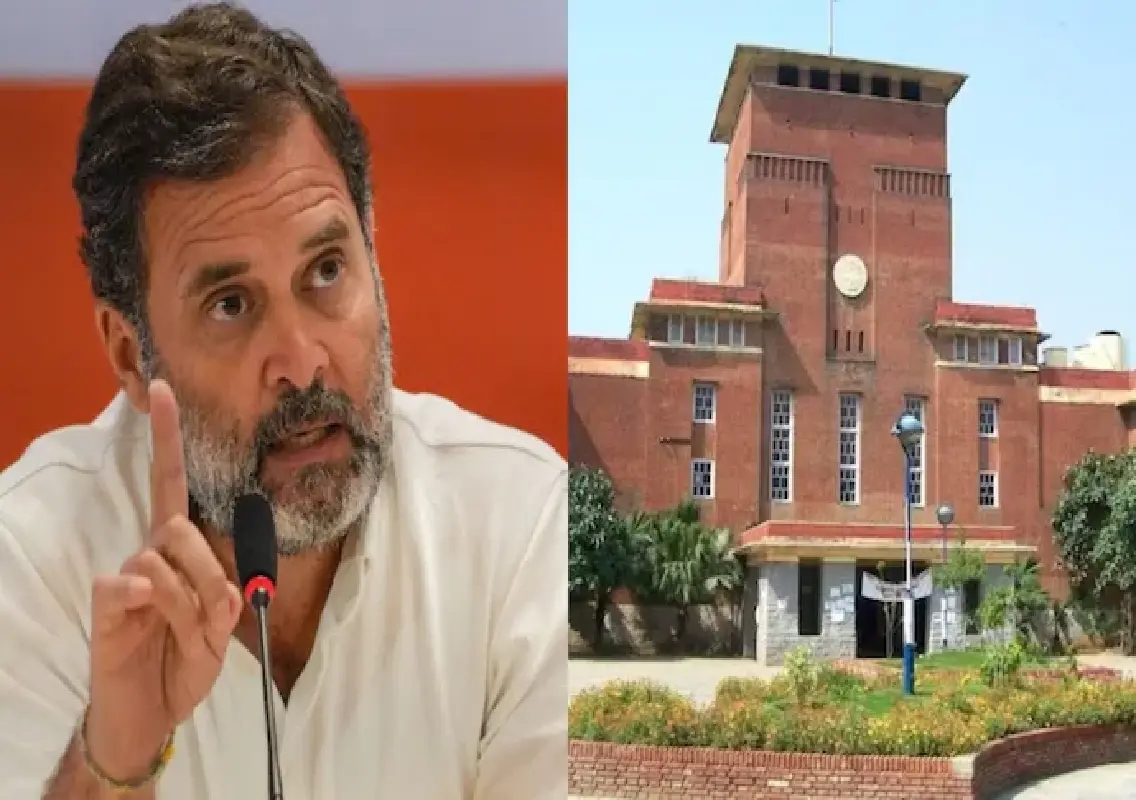


New Delhi: University of Delhi has rejected allegations made by Rahul Gandhi that university interviews are used to eliminate candidates based on caste, stating that its admissions process does not rely on interviews for most academic programmes.
In a statement issued late Friday, the university clarified that student admissions are primarily determined through scores obtained in the Common University Entrance Test. The institution emphasised that interviews are generally not part of the standard admission process for undergraduate and most postgraduate courses.
The university’s response came after remarks made by Gandhi during a public event in Lucknow.
Rahul Gandhi’s remarks at Kanshi Ram event
Gandhi made the comments while addressing a gathering organised to mark the birth anniversary of Kanshi Ram.
During his speech, the Congress leader alleged that interviews in universities were sometimes used as a tool to eliminate candidates based on caste identity.
“Interview is just a way to eliminate students. They ask what your caste is and then you fail in the interview,” he said while addressing the audience.
The remarks quickly drew attention and prompted a response from the university administration.
University clarifies admission process
In its official statement, the University of Delhi said that admissions to most undergraduate and postgraduate programmes are conducted through the national entrance examination system rather than interviews.
The university explained that applicants are evaluated mainly on their performance in the Common University Entrance Test, which is conducted across the country for admissions to several central universities.
According to the university, the reliance on entrance examination scores ensures a standardised and transparent admission process.
The statement also stressed that interviews are not part of the regular admission procedure for the majority of academic programmes offered by the institution.
Comments on faculty recruitment
The university also addressed the possibility that Gandhi’s remarks might have been referring to faculty recruitment rather than student admissions.
Officials said the university has recruited thousands of teachers in recent years across different categories.
The administration maintained that the recruitment process follows established rules and guidelines laid down by regulatory authorities.
“We strongly object to such comments as they create a non-conducive environment in the university,” the statement said.
It further urged the Leader of the Opposition to verify facts before making public claims regarding institutional processes.
Reactions within academic community
Gandhi’s remarks triggered discussions among members of the university community and faculty organisations.
The Indian National Teachers’ Congress and several professors from the university said there have been instances where concerns were raised about recruitment outcomes.
According to some faculty members, records from certain departments indicated that in some recruitment drives, posts reserved for Scheduled Castes, Scheduled Tribes and Other Backward Classes were advertised but remained unfilled after the interview stage.
In these cases, candidates from reserved categories were reportedly declared “not found suitable” despite meeting eligibility requirements.
These claims have contributed to ongoing debates about representation and recruitment practices in higher education institutions.
Broader political remarks
During the same speech in Lucknow, Gandhi also criticised the Rashtriya Swayamsevak Sangh, alleging that there is limited representation of OBC, Dalit and Adivasi communities among its senior pracharaks.
He described the situation as being inconsistent with constitutional values and emphasised the importance of social representation in public institutions.
The remarks added a political dimension to the debate surrounding his comments about university interviews.
Debate on representation in higher education
The issue has revived broader discussions about fairness and representation in recruitment and admissions within higher education institutions in India.
Universities across the country are expected to follow reservation policies and recruitment guidelines issued by regulatory bodies.
However, concerns occasionally emerge regarding the interpretation of eligibility criteria and the outcomes of selection processes.
While the University of Delhi has reiterated that its procedures follow established rules, discussions among academics and policymakers about transparency and representation are likely to continue.
The controversy underscores the sensitive nature of issues related to caste, recruitment and equality in India’s education system.