







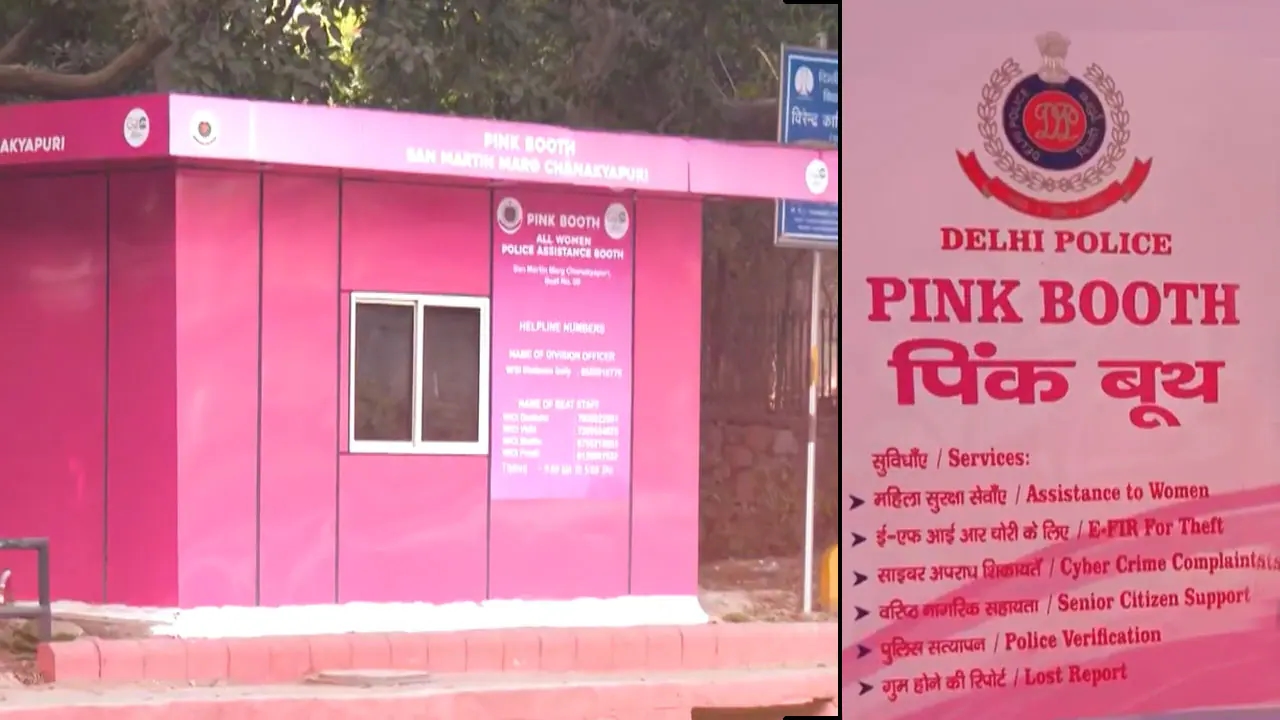


Delhi University’s North Campus has received its first Pink Booth at Miranda House, envisioned as a dedicated space offering round-the-clock assistance to women students by female police officers. While the move has been welcomed, a ground report has revealed deeper concerns about the overall effectiveness of the Pink Booth initiative across the capital.
What the Pink Booth aims to do
Pink Booths are designed as accessible safety points where women can seek immediate help, report harassment, or get guidance without hesitation. According to Delhi Police, around 120 such booths exist across Delhi, particularly near educational institutions and public spaces.
Ground reality tells a different story
However, a report by NDTV journalist Tanushka Dutta found that several Pink Booths at colleges in South and Central Delhi have remained locked or unused for years. Many students were unaware that these booths even existed, highlighting gaps in awareness and accessibility.
Police officials have acknowledged staffing shortages as a key reason behind the inactivity. With limited personnel, maintaining a 24/7 female presence has proven challenging. Authorities have said efforts are underway to revive and operationalise these booths in phases.
Why it matters for students
For thousands of women navigating campuses daily, visible and functional safety infrastructure plays a crucial role in building confidence. While the Pink Booth at Miranda House is a positive step, students and activists argue that isolated launches are not enough without consistent implementation citywide.
The road ahead
Experts stress that women’s safety initiatives must go beyond symbolic infrastructure. Regular staffing, clear signage, student outreach and accountability mechanisms are essential if Pink Booths are to fulfil their purpose.
As Delhi University expands safety measures, the contrast between a newly launched booth and long-defunct ones elsewhere serves as a reminder that sustained commitment is key.