







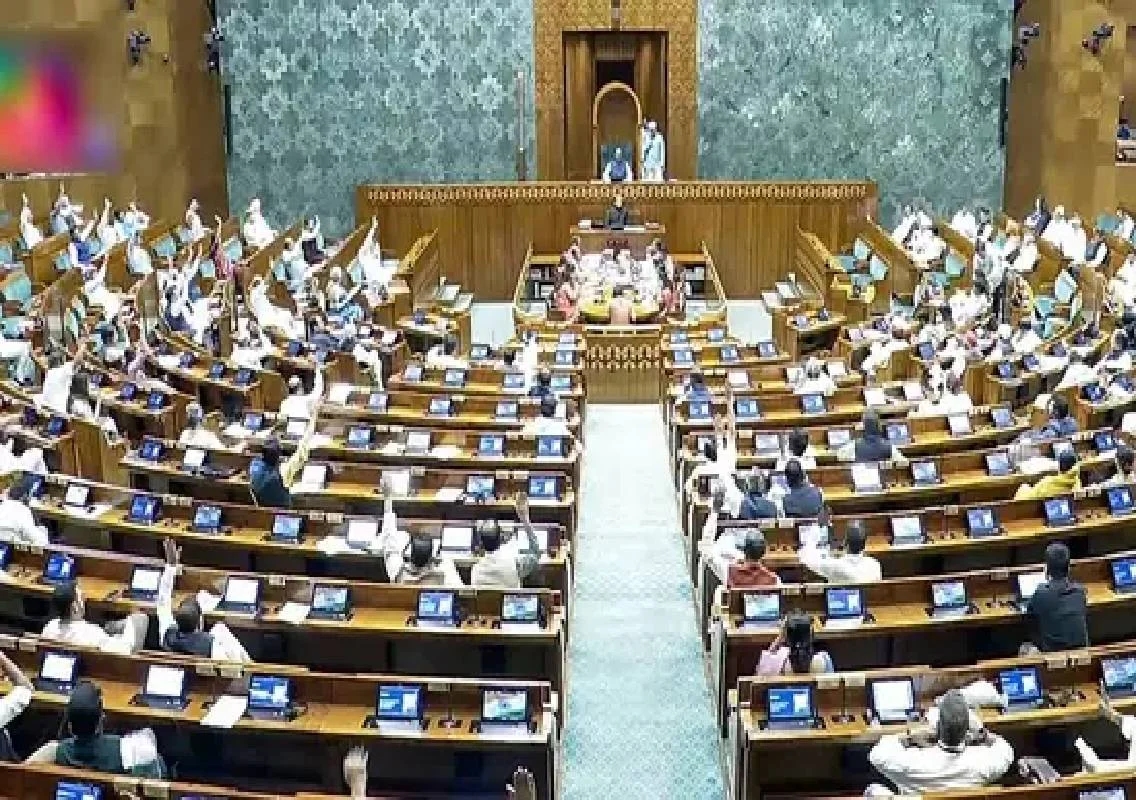


With the government planning to expand seats from 543 to a potential upper limit of 850, the move has triggered sharp reactions from Opposition parties and leaders of southern states.
What is delimitation?
Delimitation is the process of redrawing the boundaries of parliamentary and assembly constituencies based on population changes. It ensures that each elected representative reflects a roughly equal number of citizens.
In India, this task is carried out by a Delimitation Commission, whose decisions have the force of law. The last major exercise was conducted in 2002, but it only altered boundaries without increasing the number of seats.
The upcoming exercise will be the fifth such exercise and is expected to be based on the 2011 Census data. A new Delimitation Commission will be set up to carry out the process, likely to conclude before the 2029 General Elections.
Why is the exercise being proposed now?
The government has introduced bills, including a Constitution Amendment Bill and a Delimitation Bill, to facilitate the process. One of the key objectives is to enable the implementation of one-third reservation for women in Parliament.
Additionally, the exercise aims to reflect population growth over decades, ensuring fairer representation in the Lok Sabha.
While the proposed number of 850 seats is being discussed, sources indicate that this is only an upper cap, and the final number will be determined by the Commission.
Why is there a North vs South concern?
The biggest controversy surrounding delimitation is the fear that northern states will gain a disproportionate share of seats.
States in North India have experienced higher population growth compared to southern states, which have implemented more effective population control measures over the years.
If seat allocation is based purely on population, northern states could gain more representation in Parliament, while southern states may see their relative influence decline.
This has raised concerns among leaders in southern states that they are being “penalised” for successful governance in controlling population growth.
Opposition’s concerns and criticism
Several Opposition leaders have strongly criticised the proposed exercise, warning of political and constitutional consequences.
Tamil Nadu Chief Minister M. K. Stalin has termed the move a “conspiracy” and warned of large-scale protests if the state’s political weight is reduced.
Telangana Chief Minister Revanth Reddy has opposed a purely population-based approach and proposed a “hybrid model” that considers economic contribution and development alongside population.
From the Congress, Jairam Ramesh has criticised the bill as “mischievous” and “ill-timed”, alleging it could damage parliamentary democracy under the guise of implementing women’s reservation.
Leaders from Left parties have also expressed concern that the move could weaken India’s federal structure, while Sanjay Raut warned that it could significantly alter the country’s political balance.
Fear of gerrymandering and political impact
Another major concern is the possibility of gerrymandering—the manipulation of constituency boundaries to favour a particular political party.
Opposition leaders argue that without transparent safeguards, the delimitation process could be used to reshape electoral outcomes and consolidate political power.
They also fear that the exercise could shift the centre of political gravity towards northern states, potentially reducing the bargaining power of southern states in national decision-making.
Government’s stance
Prime Minister Narendra Modi has defended the move, stating that the exercise will strengthen democracy and enable effective implementation of women’s reservation.
Some regional parties, including AIADMK and BSP, have supported the proposal, indicating that the issue has not led to a uniform political response.
What happens next?
The bills are expected to be discussed during the extended Budget Session of Parliament. If passed, the Delimitation Commission will begin its work, including redefining constituency boundaries and determining seat allocation.
Given the scale and sensitivity of the exercise, it is likely to remain a key political issue leading up to the 2029 elections.
Conclusion
The delimitation exercise is intended to ensure fair representation in a growing democracy, but it has also opened up complex debates around federal balance, population policy, and political equity. As discussions intensify, the challenge will be to strike a balance between demographic reality and regional fairness while maintaining trust in the democratic process.