







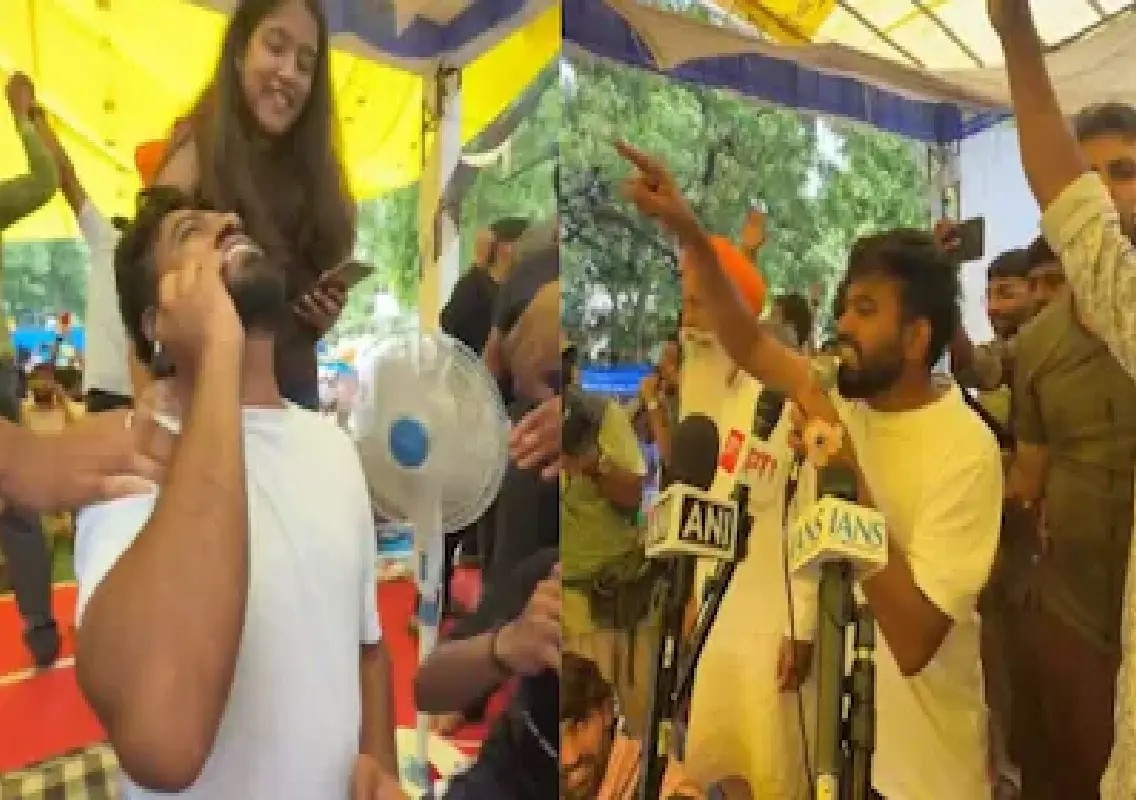


New Delhi: Demonstrators gathered at Jantar Mantar erupted in celebration after Union Education Minister Dharmendra Pradhan submitted his resignation to Prime Minister Narendra Modi, marking a significant development in the weeks-long protests over alleged irregularities in competitive examinations, including the NEET-UG paper leak controversy.
Thousands of students and protesters, who had been staging demonstrations demanding accountability and reforms in the examination system, cheered as news of the resignation spread across the protest venue. The announcement came shortly before scheduled talks between government representatives and members of the Cockroach Janta Party (CJP), one of the groups leading the agitation.
Videos shared on social media captured scenes of jubilation at Jantar Mantar, where participants raised slogans, applauded and celebrated what they described as a major milestone in their campaign for education reforms.
Protesters celebrate at Jantar Mantar
The atmosphere at the protest site turned jubilant as demonstrators welcomed the development, viewing it as a response to sustained public pressure over the handling of the alleged NEET-UG paper leak and other examination-related concerns.
Participants gathered near the main stage cheered, waved flags and congratulated one another after learning about the minister’s resignation. Many described the moment as a victory for peaceful democratic protest and student unity.
The demonstrations at Jantar Mantar had continued for several weeks, with students demanding greater transparency in national entrance examinations and reforms in the functioning of the National Testing Agency (NTA).
CJP calls resignation a victory for democracy
Addressing the gathering, Cockroach Janta Party (CJP) founder Abhijeet Dipke said the resignation reflected the strength of peaceful public movements.
He told supporters that the development demonstrated the impact of citizens standing together and demanding accountability through democratic means. His remarks were met with loud applause from thousands of protesters assembled at the venue.
The CJP, which emerged as a youth-led movement, has been at the forefront of protests over alleged examination irregularities, mobilising students through online campaigns and public demonstrations.
Minister cites students’ interests
In a statement shared after stepping down, Dharmendra Pradhan said his resignation was intended to ensure that students’ futures were not affected by continued political deadlock over the issue.
He also reiterated his commitment to education reforms and expressed hope that the ongoing discussions would help restore confidence in the country’s examination system.
The resignation comes amid mounting pressure from students, opposition parties and various organisations demanding accountability over the alleged NEET-UG paper leak and other concerns related to competitive examinations.
Talks scheduled after resignation
The announcement preceded scheduled discussions between government officials and representatives of the CJP regarding the protesters’ demands.
Student organisations have been seeking reforms aimed at improving transparency, strengthening examination security and ensuring equal opportunities for candidates appearing in national-level entrance tests.
The outcome of the proposed talks is expected to determine the next course of action for the protest movement and the government’s response to the demands raised by students.
CJP’s growing role in student protests
Formed on May 16, 2026, the Cockroach Janta Party began as a satirical movement before evolving into a prominent youth-led campaign focusing on examination reforms.
Led by Abhijeet Dipke, along with spokespersons Saurav Das and Ashutosh Ranka, the organisation has gained significant support through social media campaigns and nationwide demonstrations calling for accountability and systemic changes in the examination process.
The resignation of the Union Education Minister marks a significant moment in the ongoing protests, with student groups describing it as an important step while maintaining that broader reforms remain necessary to restore confidence in India’s competitive examination system.