







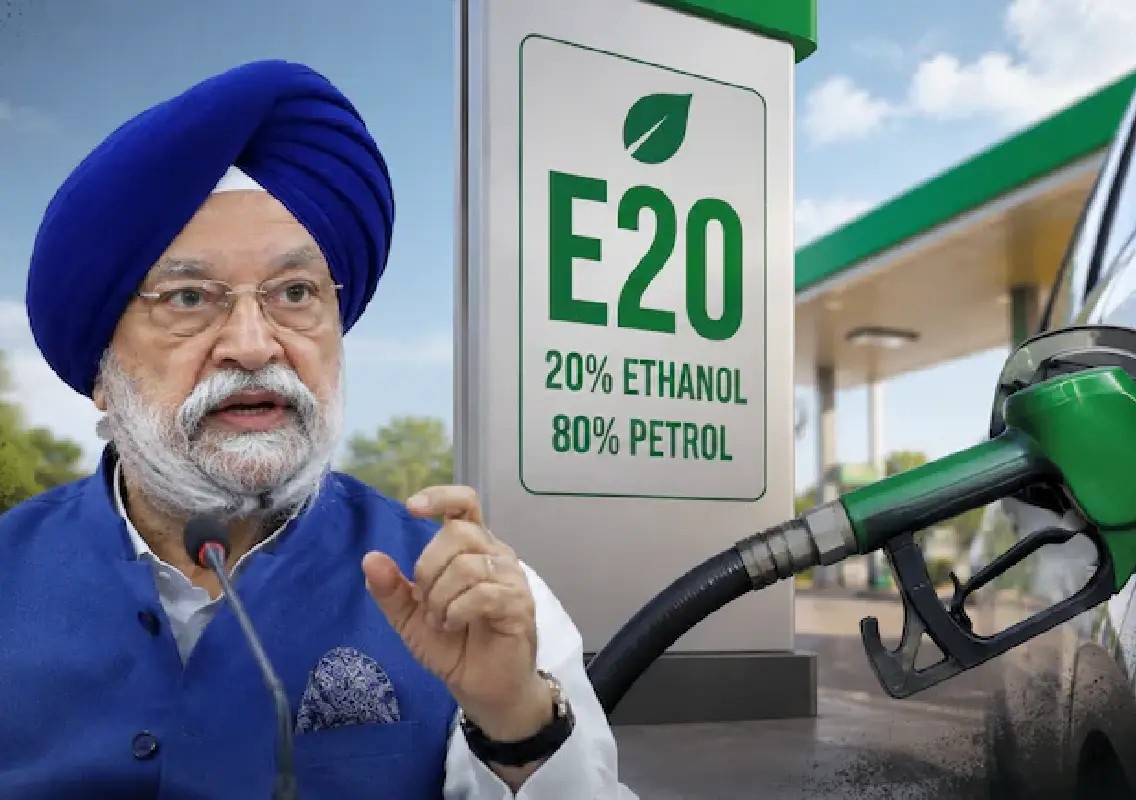


New Delhi: Union Petroleum and Natural Gas Minister Hardeep Singh Puri has dismissed the controversy surrounding E20 ethanol-blended petrol as “manufactured”, arguing that the debate gained momentum only after the launch of E85 flex-fuel vehicles in India.
Speaking to NDTV, Puri said E20 petrol has been available in the country for nearly two years, while E15 fuel had already been in use for over three years before that.
Minister questions timing of controversy
Puri questioned why concerns over ethanol-blended fuel surfaced only after Hero MotoCorp, Suzuki and Toyota introduced E85-compatible vehicles on June 5.
He suggested that doubts were being deliberately created to slow the adoption of flex-fuel vehicles, drawing parallels with previous concerns over LPG shortages that, according to him, later proved unfounded.
Responds to criticism over E20 programme
The minister rejected Karnataka Minister Priyank Kharge’s allegation that the ethanol programme amounted to “an experiment on 3.6 crore Indians.”
He clarified that remarks made by the Attorney General before the Supreme Court related to ethanol procurement quantities under a contractual clause and not to the percentage of ethanol blending in petrol.
Puri also noted that the Attorney General’s office had later clarified that the E20 programme had never been described as an “experiment” before the court.
Mileage impact acknowledged
The minister acknowledged that ethanol-blended fuel may lead to a slight reduction in mileage but said the extent varies depending on the vehicle, driving style and road conditions.
He also said some older vehicles might require replacement of components such as gaskets earlier than usual but insisted there was no widespread evidence of engine damage. According to him, Hero MotoCorp has serviced around 1.5 crore E20-compatible vehicles without receiving complaints related to the fuel.
Defends ethanol blending policy
Puri rejected demands to offer multiple ethanol-blending options at fuel stations, saying such a system would not be practical because of infrastructure limitations.
He added that the ethanol blending programme has helped India save approximately ₹1.9 lakh crore in foreign exchange by reducing crude oil imports and remains an important part of the country’s energy security strategy.