









New Delhi: The Election Commission of India has directed election authorities in states and Union territories where the Special Intensive Revision (SIR) of electoral rolls has been completed to launch a special drive to identify and enrol eligible voters whose names were left out of the revised rolls.
The drive will cover voters whose names appeared in pre-SIR electoral rolls but are missing from the current lists, along with young and first-time voters who have not yet been enrolled. The Election Commission said voter registration is a continuous process and that no eligible citizen should lose the opportunity to register merely because they were not included during the SIR enumeration.
The directive was issued following a meeting with state Chief Electoral Officers and comes amid political criticism of the SIR exercise and concerns over voters who may have been omitted during the revision.
BLOs asked to identify missing voters
Under the new instructions, Booth Level Officers will compare the current electoral rolls with the lists that existed before the SIR.
The purpose is to identify eligible electors whose names were present earlier but did not appear in the final electoral roll.
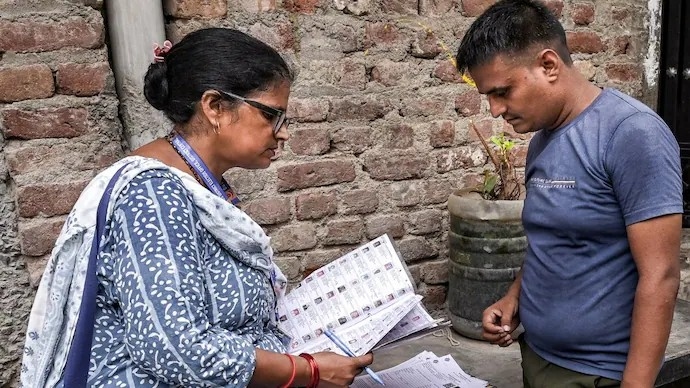
Once such names are identified, BLOs will conduct house-to-house verification to determine the status of the concerned voters and facilitate their enrolment where required.
The Commission has set a target for the field-level exercise. Each BLO will be expected to cover around 20 to 25 identified electors every week, with the verification process to be completed within one month.
BLOs will also collect Form 6 applications from eligible voters during their visits. Form 6 is the statutory application used for inclusion of a person’s name in the electoral roll.
Drive covers first-time and young voters
The special exercise is not restricted to people whose names were removed during the SIR.
The Election Commission has also directed officials to facilitate the enrolment of first-time and young eligible voters who have not yet registered.
This is part of the continuous updation process through which electoral rolls can be updated after a revision exercise has been completed.
The EC has specifically said that people whose names were left out during SIR or subsequently can approach the concerned Electoral Registration Officer for inclusion in the electoral roll. Chief Electoral Officers, District Election Officers and Electoral Registration Officers have been instructed to facilitate the process.
The move is therefore intended to provide a route for both existing voters who were left out and citizens becoming eligible to vote for the first time.
Political parties to receive lists
The Election Commission has also sought greater transparency in the field exercise.
Lists of voters identified as having been left out will be shared with Booth Level Agents of recognised political parties. This will allow political parties to monitor the identification and enrolment process at the local level.
The involvement of political parties is intended to provide an additional layer of scrutiny as officials verify names that appeared in earlier electoral rolls but are absent from the current lists.
The process will involve field verification rather than relying solely on the existing database.
Form 6 process changes after SIR
The Election Commission has also clarified the application process in areas where SIR has already been completed.
The additional declaration attached to Form 6 for the SIR exercise has been withdrawn in those states and Union territories. New applicants in these areas will use the regular statutory Form 6 under the Registration of Electors Rules, 1960.
The change is significant because the additional declaration was specifically linked to the SIR process.
According to the Election Commission’s clarification, the declaration requiring applicants to provide details connecting themselves or their parents or grandparents with earlier SIR electoral rolls will continue to apply in areas where the SIR is still underway.
In areas where the revision has been completed, applicants will instead follow the ordinary continuous-updation process.
Drive follows scrutiny over SIR deletions
The special drive comes after the SIR exercise triggered a political controversy over the scale of deletions and omissions from electoral rolls.
Opposition parties have alleged that the revision could result in eligible citizens being excluded from the electoral rolls. The Election Commission has rejected the suggestion that eligible voters should be prevented from registering and has repeatedly maintained that the SIR process is intended to clean up and update electoral rolls.
The latest initiative provides a mechanism to identify people who may have been left out and facilitate their inclusion.
The Commission’s decision also follows scrutiny of specific cases in which voters were omitted from final rolls despite earlier recommendations for their inclusion.
Goa case highlights issue
One such case emerged in Goa, where 97 electors were reportedly left out of the final electoral roll despite statutory officials recommending their inclusion during the SIR process.
The Election Commission said the Chief Electoral Officer in Goa had directed the concerned BLOs to collect enrolment forms from those voters. As of the latest reported update, 81 of the 97 electors had filled Form 6.
The Goa episode has become an example of the type of discrepancy that the broader special drive is intended to address.
Rather than waiting for individual voters to discover that their names are missing, the new instructions require officials to compare earlier and current electoral rolls and proactively identify potentially left-out electors.
EC says voter registration is continuous
A central point in the Election Commission’s latest instructions is that the electoral roll is not permanently closed once an SIR is completed.
The Commission has emphasised that voter registration remains a continuous process. Eligible citizens can therefore apply for inclusion even after the completion of the intensive revision, subject to the statutory requirements.
This distinction is particularly relevant for people who were unable to complete the SIR enumeration process or whose names were not carried forward into the final roll.
The new drive is designed to make that process more accessible by bringing BLOs directly into the verification and enrolment exercise.
What voters left out after SIR can do
Eligible voters whose names appeared in an earlier electoral roll but are missing from the current list can approach the relevant Electoral Registration Officer for inclusion.
The Election Commission has directed field officials to identify such cases themselves by comparing pre-SIR and post-SIR rolls. Where eligible voters are found, BLOs can facilitate the submission of Form 6 during house-to-house visits.
First-time voters who meet the eligibility requirements can similarly apply through the regular Form 6 process in states where SIR has been completed.
The move means that omission from the SIR enumeration does not, by itself, permanently prevent an eligible person from seeking inclusion in the electoral roll.
Special drive to run for one month
The Commission has given BLOs a target of covering 20 to 25 identified electors each week, with the exercise expected to be completed within one month.
The month-long field exercise will involve identifying names that disappeared between the pre-SIR and current electoral rolls, verifying those voters at their residences and collecting applications from eligible individuals.
The lists will also be made available to recognised political parties through their Booth Level Agents, allowing them to follow the process.
The Election Commission’s latest move is therefore both a corrective exercise for voters who may have been left out and an enrolment campaign for citizens entering the electoral system.
A corrective phase after electoral roll revision
The special drive represents a new phase following completion of the SIR in 20 states and Union territories.
While the SIR was designed to update and verify electoral rolls, the Election Commission has now directed officials to actively identify eligible voters who may not have appeared in the final lists.
The process will rely on comparisons between old and new electoral rolls, field verification and Form 6 applications.
With political parties continuing to scrutinise the SIR exercise, the effectiveness of the new drive will depend on how comprehensively officials identify missing voters and how quickly eligible applicants are added to the rolls.
For voters, the Commission’s latest clarification provides a clear route to seek inclusion through the continuous-updation process even after the intensive revision has concluded.