







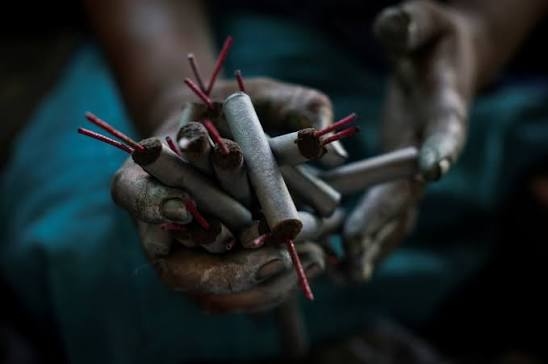


Kaushambi: A massive explosion at a firecracker manufacturing unit in Uttar Pradesh’s Kaushambi district has left a community grieving after 11 people, including eight children, were killed and five others injured. The blast destroyed the factory and damaged several nearby houses, turning what was reportedly an illegally operated unit into the scene of a devastating tragedy.
The explosion occurred on Monday morning in the Manauri area near the Kaushambi-Prayagraj border. The firecracker unit was reportedly being operated from a house surrounded by agricultural fields. The force of the blast was so severe that nearby homes were also damaged and several people were trapped beneath the debris.
A blast that left children among the victims
The human cost of the explosion became clearer as rescue teams recovered bodies from the wreckage.
Eight of those who died were children. The youngest victim was reportedly four-year-old Nanha, while other children killed in the blast included Ansh, aged six, Ravi, aged eight, and several children aged between 12 and 13.
Four members of one family were also among those killed, according to reports.
The victims were residents of the surrounding area, meaning the tragedy was not confined to workers inside the firecracker unit. Families living close to the facility were caught in the blast as the explosion tore through the building and neighbouring structures.
The loss of so many children has deepened the grief in the area, with families now facing the devastating task of mourning lives cut short.
The factory was operating from a house
According to preliminary information, the firecracker manufacturing activity was being carried out from a residential building located amid agricultural fields.
Police said the explosion damaged several houses around the unit. Earlier reports indicated that four to five nearby homes were affected, while subsequent assessments put the number of damaged structures even higher.
The location has raised serious questions about how explosive materials were being stored and handled so close to residential structures.
The incident also highlights the risks that arise when firecracker manufacturing takes place without adequate safety arrangements, particularly in densely occupied areas.
Licence and safety rules now under scrutiny
The circumstances surrounding the unit are likely to become a major focus of the investigation.
Reports indicate that the factory’s licence had been cancelled in 2024, raising questions about how operations continued afterwards. Officials are now examining whether the unit was being run illegally and whether required safety standards were ignored.
A case has been registered at Pipri police station against six people, including the alleged factory operator Adil, under relevant provisions of the Bharatiya Nyaya Sanhita and the Explosives Act. Charges under the Gangsters Act are also expected to be added, according to police.
The investigation will have to establish who was responsible for operating the unit and whether officials or others failed to act despite the reported licensing issues.
Rescue teams searched through the rubble
The intensity of the explosion left rescuers facing a difficult operation.
Police, fire personnel and other emergency teams rushed to the site after the blast. Earthmovers were used to clear debris and search for people who could have been trapped beneath collapsed structures.
Teams from the National Disaster Response Force (NDRF), State Disaster Response Force (SDRF), police, fire services and Air Force were also involved in the wider rescue and relief effort, officials said.
The powerful explosions reportedly continued for some time, creating panic among residents and making it difficult for people to approach the site immediately.
The injured were taken to hospitals in Prayagraj and Kaushambi for treatment.
Families now wait for answers
For the families of those killed, the immediate priority is mourning and supporting the injured.
The deaths have also raised questions about whether the tragedy could have been prevented.
Firecracker manufacturing involves explosive and highly combustible materials, making proper licensing, storage, ventilation, distance from residential areas and other safety measures particularly important.
When such activity is allegedly carried out without valid permission, the consequences can be catastrophic—not only for workers but also for families living nearby.
The Kaushambi tragedy demonstrates that the consequences of regulatory failures can extend far beyond the premises where hazardous materials are stored.
Government promises strict action
Uttar Pradesh Deputy Chief Minister Keshav Prasad Maurya visited injured victims at SRN Hospital in Prayagraj following the blast.
He directed hospital authorities to ensure that the injured received proper treatment and said strict action would be taken against anyone found responsible for the tragedy.
Police have begun investigating the circumstances surrounding the operation of the unit, including its reported licence status and the manner in which explosive material was stored.
The authorities will also have to determine whether there were previous warnings or enforcement action against the unit and why the alleged illegal operation continued.
A tragedy that raises a bigger question
The deaths of 11 people, including eight children, have once again brought attention to the dangers of unauthorised firecracker manufacturing.
For the families who lost loved ones, especially children as young as four, the tragedy is not simply a matter of licensing or enforcement. It is a devastating personal loss that will remain long after the debris has been cleared.
The investigation must now establish responsibility and ensure that those found guilty face the law.
But beyond punishment, the incident raises a crucial question for authorities: how many such unsafe units continue to operate unnoticed near homes and families?
The answer could determine whether the Kaushambi blast remains an isolated tragedy or becomes a warning that leads to stronger enforcement and safer practices across Uttar Pradesh.