







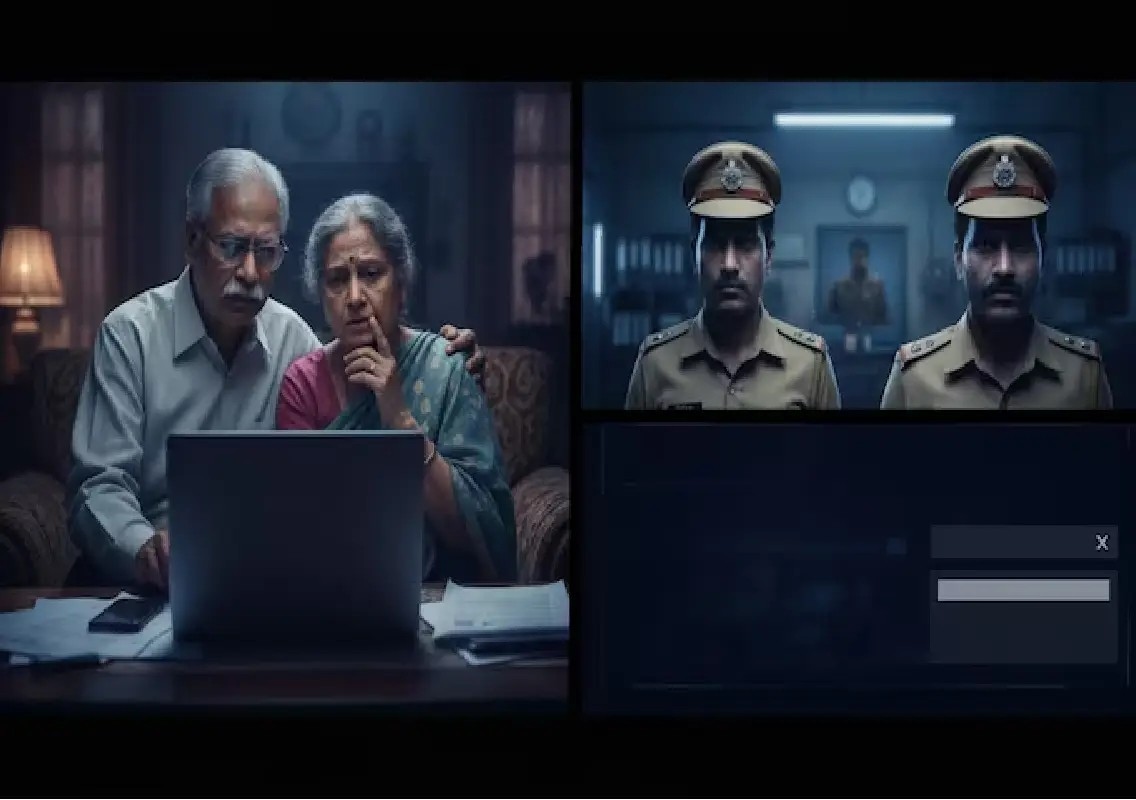


Rajkot: An elderly couple in Rajkot had a frightening encounter with cybercriminals who allegedly kept them under surveillance on a video call for nearly four hours and pressured them to pay Rs 25 lakh. Timely police intervention prevented the couple from losing the money.
Late-night call turned into terrifying ordeal
The ordeal reportedly began around 2.46 am when a 75-year-old man received a call from a woman claiming to be an official of the Telecom Regulatory Authority of India.
The call was later transferred to another man, who allegedly claimed that the couple’s Aadhaar details had been misused to open a bank account involved in a Rs 2 crore fraud.
The couple were instructed to sit together and remain on a video call. The callers allegedly warned them that they were under surveillance and could be arrested.
Fraudsters demanded Rs 25 lakh
The scammers reportedly intensified the pressure by claiming that Rs 25 lakh connected with the alleged fraud had reached the couple’s account.
They allegedly instructed the couple to lock their doors, keep the phone connected to a charger and avoid contacting anyone. Threats of imprisonment were also reportedly used to frighten them.
The couple remained on the call for almost four hours before the elderly man managed to contact the 112 emergency service.
Police intervention saves couple’s money
Cybercrime police reached the couple’s residence after receiving the alert and explained that there is no legal provision for a “digital arrest”.
The intervention prevented the couple from transferring the demanded Rs 25 lakh. Police subsequently recorded details of the incident and began further action.
The case is another warning that criminals are increasingly using fake identities, fabricated allegations and threats of arrest to target vulnerable people. Government agencies do not place people under arrest through video calls or demand money to avoid criminal proceedings.
Senior citizens and their families should immediately disconnect suspicious calls, avoid sharing Aadhaar or banking details and contact police or the cybercrime helpline 1930 if they suspect fraud.