


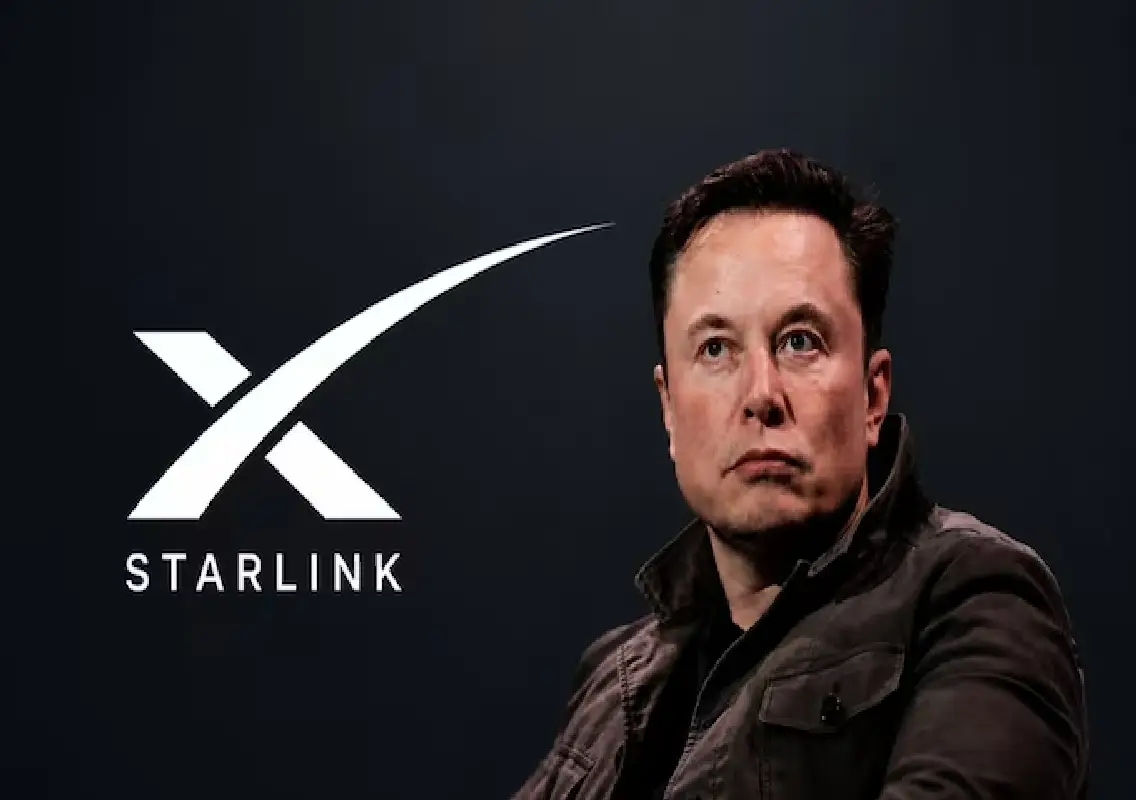


New Delhi: Elon Musk has intensified his criticism of India’s regulatory process for satellite internet services, directly questioning Reliance Industries chairman Mukesh Ambani over the delay in launching his Starlink service in the country.
In his latest post on X, Musk asked whether Ambani was the “real boss of India” and questioned why Starlink had yet to receive all the necessary approvals despite years of engagement with Indian authorities. His remarks came hours after the government rejected his earlier allegation that powerful business interests were preventing the satellite internet company from entering the Indian market.
The public exchange has brought renewed attention to India’s satellite communications sector, where Starlink, Reliance Jio’s satellite venture and Bharti Airtel-backed Eutelsat OneWeb are awaiting the completion of regulatory requirements before commencing commercial services.
Musk has argued that Starlink could help bridge India’s digital divide by providing internet access to remote and underserved communities. The government, however, has maintained that security assessments and other regulatory requirements apply equally to all satellite communication operators.
Musk questions Ambani over Starlink’s India entry
Musk questioned the continued delay in Starlink’s commercial launch despite the company’s operations in numerous countries and its efforts to meet India’s regulatory requirements.
“Starlink is licenced in over 165 countries and has spent five years complying with every single law and requirement of the government of India, so why still no licence? Is Ambani the real boss of India?” Musk wrote on X.
He shared the comment while responding to a social media post alleging that the government was protecting the interests of powerful business groups rather than prioritising consumers.
The remarks followed an earlier accusation in which Musk claimed that certain oligarchs were using their influence to prevent Starlink from entering India.
“Unfortunately, we are being blocked by certain oligarchs in order to maintain their monopolistic chokehold on the Indian people,” he wrote in his earlier post, alleging that the situation was harming Indian consumers.
Musk subsequently published several posts highlighting Starlink’s potential role in expanding internet connectivity, particularly in areas where conventional telecommunications infrastructure remains limited.
His comments have brought the regulatory delay and competition in India’s emerging satellite internet market into sharper focus.
Indian government rejects Musk’s allegations
The Indian government firmly rejected Musk’s allegation that the country’s regulatory framework was unfair or designed to favour particular companies.
In a statement, the Ministry of Communications described the suggestion that the framework or its application was discriminatory as “baseless and misconceived”.
The government pointed out that three satellite communication operators — Starlink, Reliance Jio’s satellite venture Jio Satcom and Bharti-backed Eutelsat OneWeb — had received licences. However, the companies still needed to complete the applicable security assessments and obtain other necessary approvals before starting commercial services.
According to the ministry, security assessments were under way for all three licensees.
The government’s position is that the delay is linked to the completion of the regulatory process rather than a decision to prevent one particular company from operating in India.
Minister of State for Communications Chandra Sekhar Pemmasani also addressed the issue on the sidelines of the India Mobile Congress in New Delhi.
“The Department of Telecom has issued licences to all satcom companies as well as provisional spectrum. Now the issue is pending with MHA for security clearance. As soon as it is cleared, they will get it. It has nothing to do with one company,” Pemmasani told reporters.
His remarks indicated that Starlink’s pending approvals were part of a wider process affecting multiple satellite communication providers.
Jio and OneWeb are also awaiting approvals
Starlink is not the only satellite internet operator seeking to establish commercial services in India. Reliance Jio’s satellite communications venture and Eutelsat OneWeb, backed by the Bharti group, are also progressing through the regulatory process.
The involvement of these companies highlights the growing competition to provide satellite-based connectivity in one of the world’s largest telecommunications markets.
Reliance Jio is working on developing an end-to-end indigenous technology stack for its satellite communication services. The company has indicated that progress is being made, although it has not announced a specific timeline for launching its first fleet of low Earth orbit (LEO) satellites.
Speaking to India Today TV on the sidelines of the India Mobile Congress, Reliance Jio Infocomm chairman Akash Ambani declined to comment directly on Musk’s allegations.
“No comments. We want to be heads down and deliver value to our Indian consumers,” Akash Ambani said.
He reiterated that Jio was making progress on its satellite communications technology but did not provide a launch date.
Bharti Airtel chairman Sunil Bharti Mittal also said his company’s satellite venture was waiting for regulatory approvals.
“We are waiting for our own approvals,” Mittal told news agency PTI when asked about Musk’s allegations.
The statements from Jio and OneWeb reinforce the government’s position that the approval process extends beyond Starlink.
Musk says Starlink could connect underserved communities
Beyond his criticism of India’s regulatory process, Musk has repeatedly highlighted the potential benefits of satellite internet for people living in areas with inadequate connectivity.
In one post, he said Starlink would help the least-served communities in India. In another, he argued that people opposing the service would primarily hurt those who lacked reliable internet access.
Musk maintained that residents of large cities and wealthier households generally had better access to existing internet infrastructure, while remote communities faced greater challenges.
“Starlink will be of great help to areas of India that have bad or no Internet and even no mobile coverage,” he wrote in another post.
His argument centres on the limitations of conventional broadband infrastructure. Most internet connections in India rely on mobile towers, fibre-optic cables and other ground-based networks. Although these systems provide connectivity across large parts of the country, extending them to remote villages, mountainous areas and isolated settlements can be difficult and expensive.
Satellite internet offers a different approach by using satellites in orbit to connect with user terminals installed at homes or other locations. This can potentially provide connectivity in places where laying fibre cables or building mobile towers is challenging.
For India, where expanding digital access remains important for education, healthcare, business and public services, satellite connectivity could complement existing telecommunications networks.
However, the actual reach and affordability of any service will depend on factors such as pricing, equipment costs, coverage, capacity and regulatory permissions.
What happens next for Starlink in India?
The immediate question is when Starlink and its competitors will complete the outstanding regulatory requirements and begin commercial operations.
Although the government has stated that licences have been issued to the three operators, the pending security assessments and other approvals remain critical steps before services can be launched.
Musk’s public criticism has added a political and business dimension to the debate, particularly through his direct reference to Mukesh Ambani. However, the allegations of preferential treatment have been rejected by the government, while representatives of Jio and OneWeb have also indicated that their own ventures are awaiting approvals.
The dispute ultimately highlights the challenge of balancing competition, consumer access and national security in India’s satellite communications market.
Starlink’s entry could provide another connectivity option for Indian consumers, particularly in underserved regions. Whether it can begin operations soon will depend on the completion of the required approvals, rather than the public exchange between Musk and India’s leading business groups.