







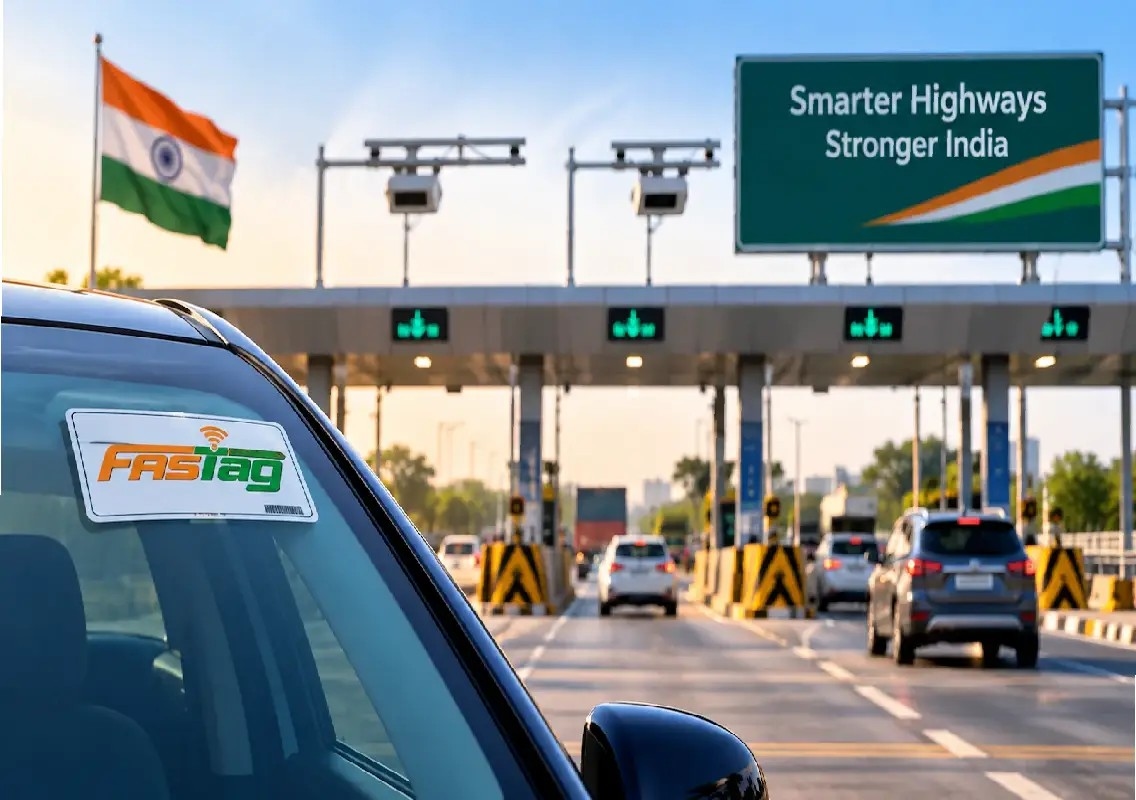


Mumbai: Full implementation of the electronic toll collection system FASTag could generate an annual benefit of up to Rs 25,000 crore for the Government of India, Union Road Transport and Highways Minister Nitin Gadkari said on Friday.
Speaking at the Global Fintech Fest in Mumbai, Gadkari said the Centre is moving towards making all toll booths on national highways barrier-free by March 2027.
FASTag could significantly boost toll revenue
Gadkari said the wider use of FASTag has already helped increase toll collection revenue by about 10 per cent, from around Rs 7,000 crore to more than Rs 82,000 crore.
He said the complete implementation of the system could provide an additional benefit of Rs 20,000 crore to Rs 25,000 crore annually to the government.
The minister also said that the barrier-free tolling system currently being piloted could add another 10 per cent to collections, translating into an estimated Rs 7,000 crore to Rs 8,000 crore.
Barrier-free tolling to expand across highways
According to Gadkari, more than 70 per cent of toll booths are expected to become barrier-free by the end of December 2026, with the target of reaching 100 per cent by March 2027.
The system is also expected to reduce waiting time for motorists and lower fuel consumption caused by vehicles queuing at toll plazas. Gadkari cited studies estimating that motorists could save more than Rs 5,250 crore annually in fuel costs.
He said operational expenses associated with toll booths have also fallen significantly, from around 12 per cent earlier to 2-3 per cent.
Minister seeks technology to tackle truck overloading
Gadkari also urged technology companies and fintech experts to develop reliable systems to identify overloaded trucks, which can damage roads and affect road safety.
He said greater transparency is needed in the country’s freight sector and promised government action on the issue. The minister also mentioned that one of the operators had been booked by the Central Bureau of Investigation.
The expansion of FASTag and barrier-free tolling marks another step towards technology-driven highway management, with the government expecting benefits for both public revenue and road users.