







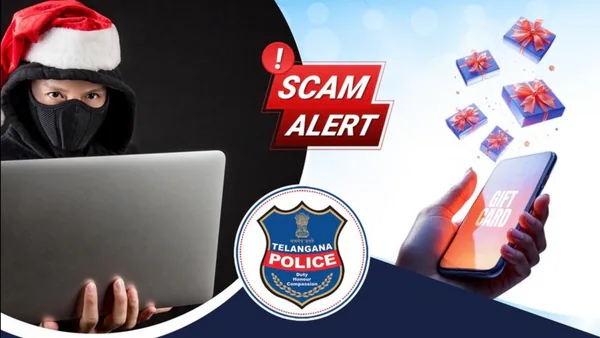


The Bengaluru City Police (BCP) and the Karnataka Criminal Investigation Department (CID) have issued a strong public advisory urging citizens to remain vigilant against cyber scams disguised as festive greetings.
Malicious APKs disguised as celebrations
Police officials said cybercriminals are increasingly circulating malicious third-party Android Package Kits (APKs) camouflaged as celebratory images, videos or greeting messages. These fraudulent files often claim to offer festival wishes, refunds, gift vouchers or urgent account updates, prompting users to download them.
Once installed, such APKs can silently gain access to mobile devices and steal sensitive personal and financial information, including banking credentials, passwords and contact data, a senior BCP official warned.
Common platforms used by scammers
According to the advisory, fake links are being shared widely via WhatsApp, Telegram and Instagram, as well as through email and SMS messages. In many cases, users receive greetings in document format or links attached to photos and videos — formats that may conceal malware.
Officials cautioned that even messages received from known contacts should not be trusted blindly, as compromised accounts are often used to spread such scams further.
Simple precautions can prevent losses
The police advised citizens to avoid clicking on unsolicited links, refrain from downloading celebratory images or videos sent as documents, and never install apps from unknown or unofficial sources. Users are encouraged to rely only on trusted app stores and to keep their devices updated with the latest security patches.
Any suspicious messages or incidents of cyber fraud should be reported immediately to the cybercrime helpline or the nearest police station.
Rising awareness during festive seasons
Authorities noted that festive periods often see a spike in online fraud attempts, as scammers exploit goodwill and excitement. Citizens are urged to stay alert, verify information before acting, and spread awareness among family members, especially senior citizens and first-time smartphone users.
For more context on how malicious apps operate, readers may refer to the Wikipedia page on Android malware.