




Bengaluru: A Flipkart customer has caught the attention of social media users after discovering an unusual message inside a delivered parcel, in which the seller reportedly pleaded with the buyer not to return the product, citing financial losses.
The note, found alongside a T-shirt in the package, has triggered a discussion on social media platform X about the challenges faced by online sellers, particularly smaller businesses dealing with product returns, shipping costs and the financial risks of selling through e-commerce platforms.
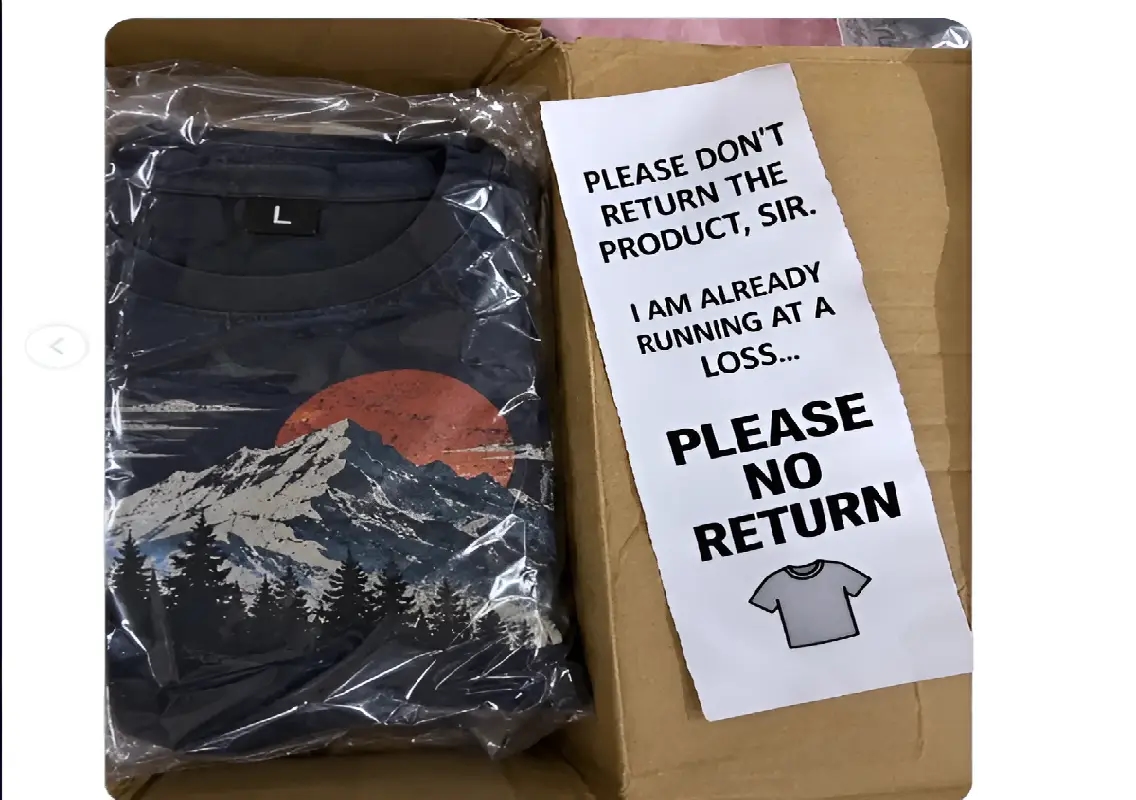
The incident came to light after an X user, @dev_kalpeshkk, shared a post about the order. An image accompanying the post showed a small white slip placed inside the cardboard package, with a message that appeared to have been printed by the seller.
The note read: “Please don’t return the product, sir. I am already running at a loss… PLEASE NO RETURN.”
The direct appeal surprised the customer and prompted social media users to discuss the pressures that online sellers may face when buyers return products.
Seller’s emotional appeal catches attention
According to the post, the parcel contained a T-shirt that appeared to have been ordered in size L. A small white slip placed against one side of the cardboard box carried the seller’s request.
Rather than a conventional promotional message or product information, the note made a personal appeal to the customer to keep the purchase.
The message quickly drew reactions from users who interpreted it as a sign of the financial strain that some sellers may experience when orders are returned.
However, the circumstances behind the seller’s note, including the actual losses involved and whether the product had any issues, were not established in the information shared online.
The incident nevertheless opened up a broader conversation about the economics of online shopping, where customers often expect convenient delivery, easy exchanges and hassle-free refunds, while sellers must manage the costs associated with fulfilling orders.
Social media users highlight return-related losses
Several users expressed sympathy for the seller, pointing out that returns can create additional expenses for businesses, particularly during busy shopping seasons.
One commenter speculated that the seller might have received a large number of orders during the festive season, invested money in purchasing stock and then faced losses from returned products.
The user suggested that sellers could be left with both unsold inventory and additional charges associated with reverse shipping.
Another user highlighted the impact of customers returning clothes after wearing them, arguing that such behaviour could hurt small businesses.
“Small business are really effected by returns. People are evil. They wear and tear and then return,” the commenter wrote.
Another reaction suggested that the person behind the note might be going through a particularly difficult financial period.
“Must be his hardest phase. Not everyone writes this,” one user remarked.
These responses reflected sympathy for sellers who may have limited financial resources to absorb repeated returns or other unexpected costs.
At the same time, the discussion was based largely on reactions to the photograph, and the specific financial circumstances of the seller remained unclear.
Debate over the cost of online returns
The incident also prompted questions about how the return process affects different participants in the e-commerce ecosystem.
Online marketplaces typically offer customers the ability to return or exchange eligible products under specified conditions. Such policies can help build consumer confidence, particularly when buyers cannot physically inspect products before purchasing them.
However, processing returns can involve several expenses, depending on the platform’s policies and the circumstances of the order. These may include reverse logistics, inspection, repackaging, inventory handling and the possibility that a returned product cannot be sold again as new.
For sellers, the financial impact may vary according to the product category, order volume, return terms and the condition in which an item is returned.
Clothing can present particular challenges because customers may order different sizes, find that a product does not fit as expected or decide that it does not meet their preferences after delivery.
Returns can also be legitimate. A buyer may receive a damaged, defective or incorrect product, or an item that differs from its description. In such situations, return and refund facilities provide an important form of consumer protection.
The online discussion has therefore highlighted the tension between making e-commerce convenient for customers and ensuring that sellers can operate sustainably.
Questions raised over the economics of e-commerce
One commenter questioned how online marketplaces and sellers could both experience financial pressure while continuing to operate.
The user wrote: “Funny, the product seller is also in Loss. Flipkart also is in loss. So why are they doing business? Who is paying for all these losses?”
The comment went on to refer to the potential implications for investors in the event of a future public listing.
The reaction broadened the discussion beyond the individual parcel, raising questions about the business models used by online marketplaces and the costs associated with discounts, logistics, returns and customer acquisition.
However, the note itself does not establish the seller’s overall financial position or the financial performance of Flipkart. Those are separate questions that cannot be determined from the incident.
Balancing customer protection and seller interests
The episode has drawn attention to the need to balance customer-friendly return policies with fair and transparent practices for sellers.
For consumers, checking product descriptions, size charts, seller details and return conditions before placing an order can help avoid preventable returns. Buyers should also follow the platform’s prescribed process when a product is defective, damaged or incorrectly delivered.
For sellers, clear product information, accurate sizing details, appropriate packaging and effective quality checks can help reduce avoidable returns. Transparent return terms can also help customers understand their rights before purchasing.
E-commerce platforms, meanwhile, play an important role in setting return policies and explaining how costs and responsibilities are allocated between buyers and sellers.
The seller’s plea has resonated with social media users because it offers a glimpse of the pressures that may exist behind an otherwise routine online purchase. While the actual circumstances of this particular order remain unverified, the reactions show how a small note can spark a wider debate about the sustainability of online retail and the people who depend on it for their livelihoods.