







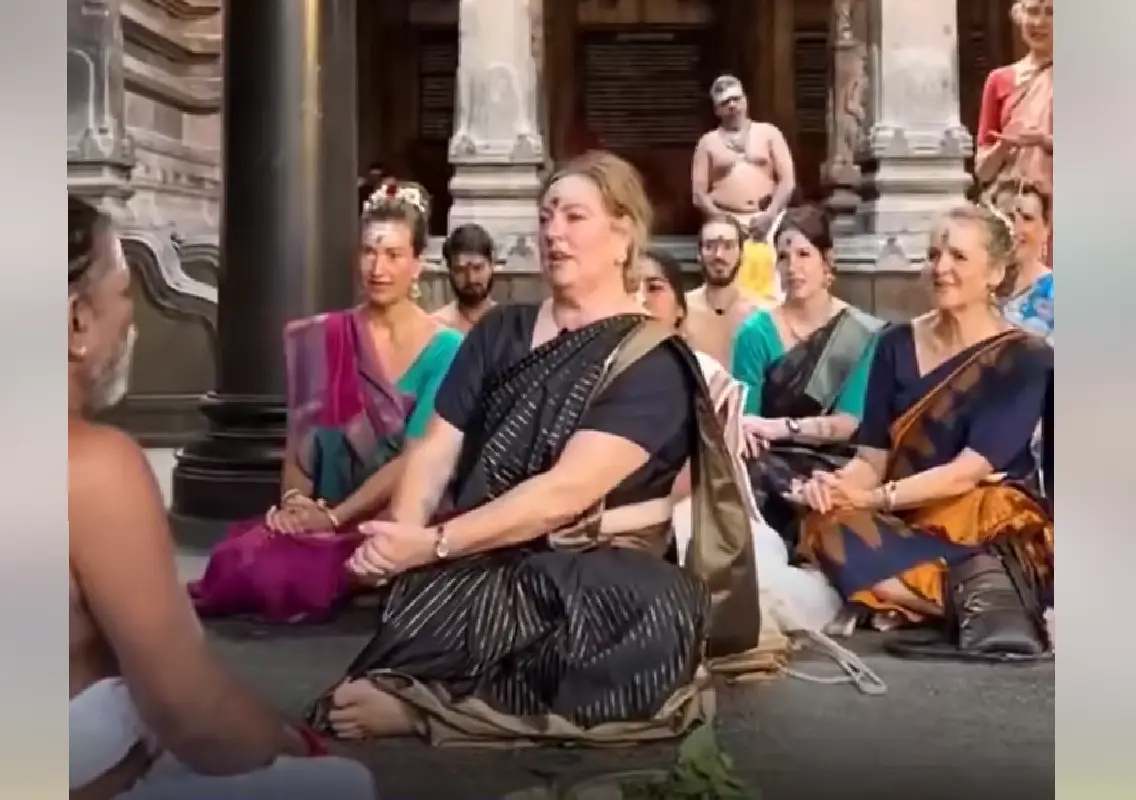


A group of nine women from Australia and the United Kingdom participated in a traditional Hindu homa at a South Indian temple, marking a rare and culturally significant moment of cross-cultural spiritual engagement. Dressed in sarees and guided by temple priests chanting Vedic mantras, the women performed ritual offerings into the sacred fire as part of the ancient ceremony.
The homa, a fire ritual deeply rooted in Hindu tradition, is performed to invoke divine blessings, purify the environment and promote spiritual well-being. The participation of foreign devotees in the ceremony drew attention for its demonstration of cultural exchange and growing global interest in Indian spiritual practices.
Ritual performed under priestly guidance
The ceremony was conducted strictly in accordance with traditional rituals, with priests reciting sacred mantras from Vedic scriptures. The women were guided step by step, ensuring that each aspect of the ritual was performed with reverence and accuracy.
As part of the homa, the participants offered green leaves and other symbolic materials into the ceremonial fire. These offerings are believed to represent devotion, surrender and harmony with nature. Observers noted that the women followed the instructions carefully, reflecting their respect for the religious traditions being observed.
Temple authorities said the ritual was conducted after proper orientation was given to the participants about its spiritual significance and procedures.
Dressed in traditional attire
The women wore sarees, traditionally associated with Hindu rituals and temple ceremonies. Priests and organisers said wearing traditional attire helps maintain the sanctity of rituals and reflects respect for local customs.
The sight of foreign devotees dressed in sarees and participating in the homa resonated strongly with local worshippers, many of whom described the moment as inspiring and heartening.
Temple visitors said such participation reinforces the idea that spiritual practices transcend nationalities and cultural boundaries.
Growing global interest in Hindu rituals
Religious scholars and temple officials noted that interest in Hindu philosophy, yoga, meditation and rituals has been steadily growing among people from Western countries over the past few decades.
Many foreign nationals visit India seeking spiritual experiences, often spending time in temples, ashrams and learning centres to understand ancient traditions. Rituals such as homa are increasingly drawing attention due to their symbolic depth and emphasis on harmony between humans, nature and the divine.
Temple authorities said they receive requests from foreign visitors who wish to observe or participate in traditional ceremonies, provided rituals are conducted respectfully and in accordance with established customs.
Cultural exchange through spirituality
Local cultural observers said such events play an important role in fostering mutual understanding and respect between cultures. Participation in rituals like homa allows visitors to experience Indian traditions beyond tourism, offering deeper insight into spiritual values and practices.
They added that such interactions help dispel misconceptions and promote appreciation of India’s rich cultural and religious heritage.
Temple authorities welcome participation
Temple officials said the participation of the nine women was welcomed as it aligned with the inclusive nature of Hindu spiritual practices. They clarified that while rituals are rooted in tradition, Hindu philosophy encourages openness and spiritual exploration.
Officials emphasised that proper guidance and adherence to rituals are essential, regardless of the background of participants.
A meaningful spiritual experience
The women reportedly described the experience as peaceful and transformative, expressing gratitude for being allowed to take part in the sacred ceremony. Temple priests said such experiences often leave a lasting impression on visitors and deepen their understanding of Indian spirituality.
Conclusion
The participation of nine women from Australia and the UK in a traditional Hindu homa highlights the growing global resonance of Indian spiritual practices. As interest in ancient rituals continues to cross borders, such moments serve as reminders of the universal appeal of faith, devotion and cultural exchange rooted in mutual respect.