







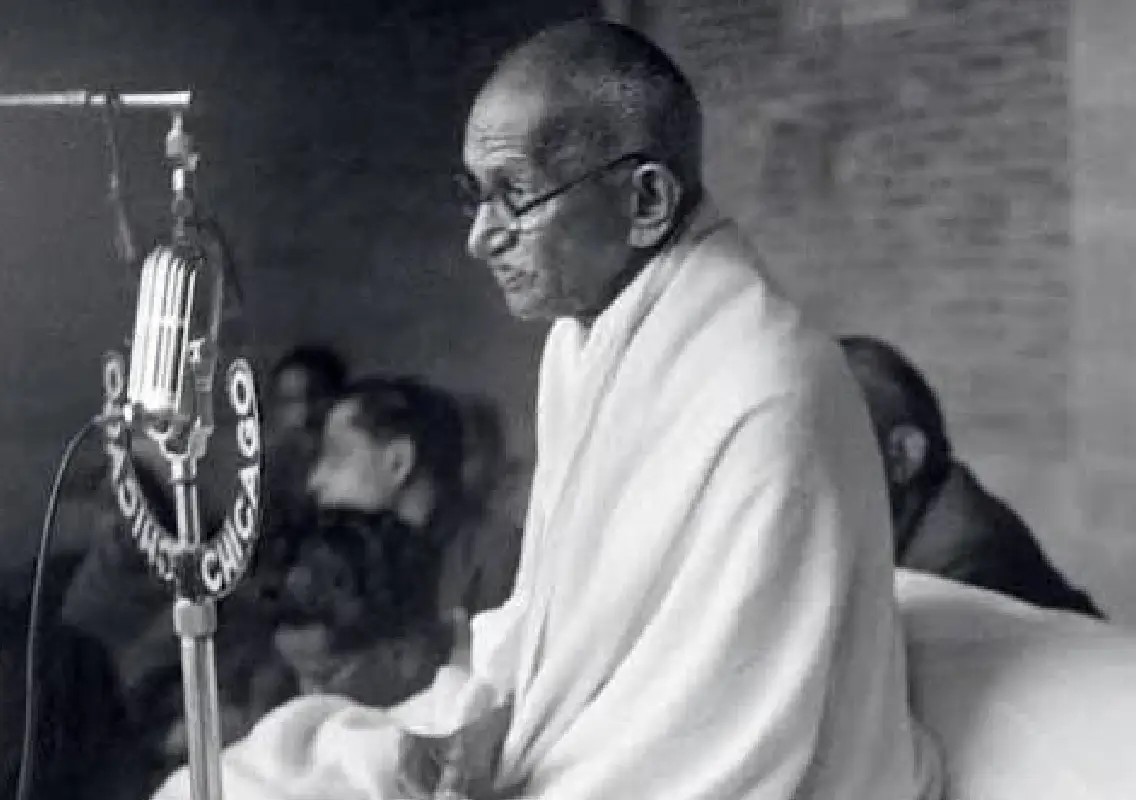


New Delhi: The sale of Mahatma Gandhi’s personal belongings and 688 handwritten reflections at auction has brought a sensitive question of heritage and ownership back into public discussion: when history enters the private market, who should control its future?
The collection of 688 handwritten reflections, written by Gandhi between 1944 and 1946, was recently sold for Rs 16.2 crore at a Saffronart auction in Mumbai. The sale set a record for an Indian historical document at auction.
More than valuable objects
The handwritten notes were written for Anand T. Hingorani, a close associate and freedom fighter, during a period of personal grief. They reflected Gandhi’s thoughts on truth, non-violence, self-restraint and life, offering a rare glimpse into his personal side beyond his public political role.
The auction also featured other personal possessions, including his iconic gold-rimmed glasses, a portable peti charkha and a watch.
While private ownership can provide the financial resources needed to protect fragile historical material, it does not automatically guarantee public access. A manuscript may be carefully preserved in a private collection but remain unavailable to students, researchers and ordinary citizens.
Who owns a nation’s memory?
The debate has grown stronger following calls from the National Gandhi Museum for Gandhi’s letters, manuscripts and personal artefacts to be treated as part of India’s common heritage.
India already has the Gandhi Heritage Portal, which preserves and provides digital access to a vast collection of Gandhi’s writings and related historical material.
The latest auction therefore raises an important question beyond money: should historically significant objects remain private possessions, or should their preservation and accessibility be treated as a responsibility to future generations?