







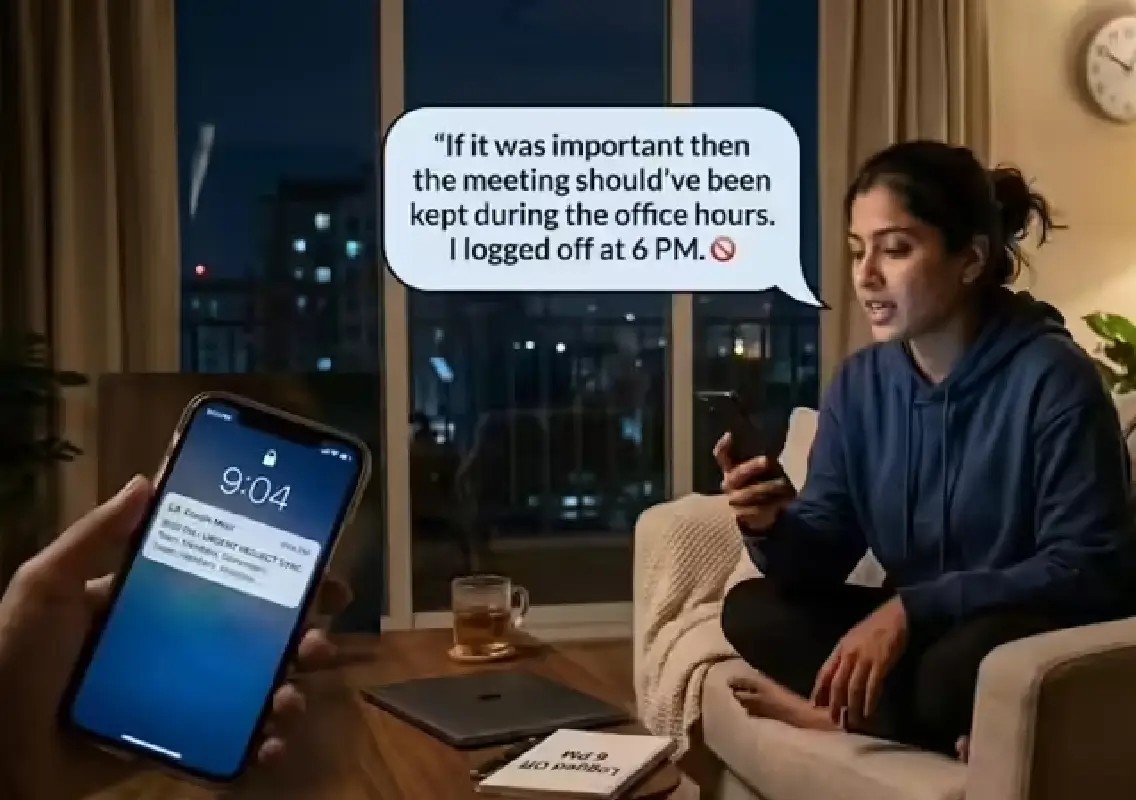


A LinkedIn post highlighting a Gen Z employee’s refusal to attend a 9 pm work meeting has sparked widespread discussion about workplace culture, burnout and the importance of setting professional boundaries.
The post, shared by Sanchit Goyal, featured a conversation between a manager and a young employee who chose not to participate in an after-hours meeting despite being told it was important.
“Schedule it during work hours”
According to the post, the manager informed the employee that a 9 pm meeting was necessary. The employee responded by saying that if the discussion was important, it should be scheduled during regular working hours.
When told that other team members had joined the meeting, she reportedly replied, “Everyone else is burnt out. I’d like to not be.”
The exchange continued when the manager described it as “just one meeting.” The employee disagreed, saying that repeated exceptions often begin with a single request.
Workplace boundaries in focus
The employee eventually logged off at 6 pm, adhering to her scheduled working hours despite pressure to attend the meeting.
The conversation resonated with many professionals online who viewed it as an example of younger employees prioritising mental well-being and work-life balance.
Supporters argued that employees should not be expected to routinely sacrifice personal time for work commitments, particularly when meetings can be planned during office hours.
Social media divided
The post generated mixed reactions across social media platforms.
While many users praised the employee’s confidence and ability to set healthy boundaries, others argued that certain industries and roles occasionally require flexibility beyond standard working hours.
The debate reflects broader changes in workplace expectations as organisations adapt to evolving attitudes toward productivity, employee well-being and work-life integration.
A growing shift in workplace culture
Unlike previous generations that often accepted late-night calls and extended working hours as part of professional life, many Gen Z employees are increasingly advocating for clearer boundaries between work and personal time.
The discussion has reignited conversations about burnout prevention and whether organisations should place greater emphasis on sustainable work practices.
As the post concluded, a message that resonated with many readers was simple: “Better to set boundaries before burnout, not after.”