







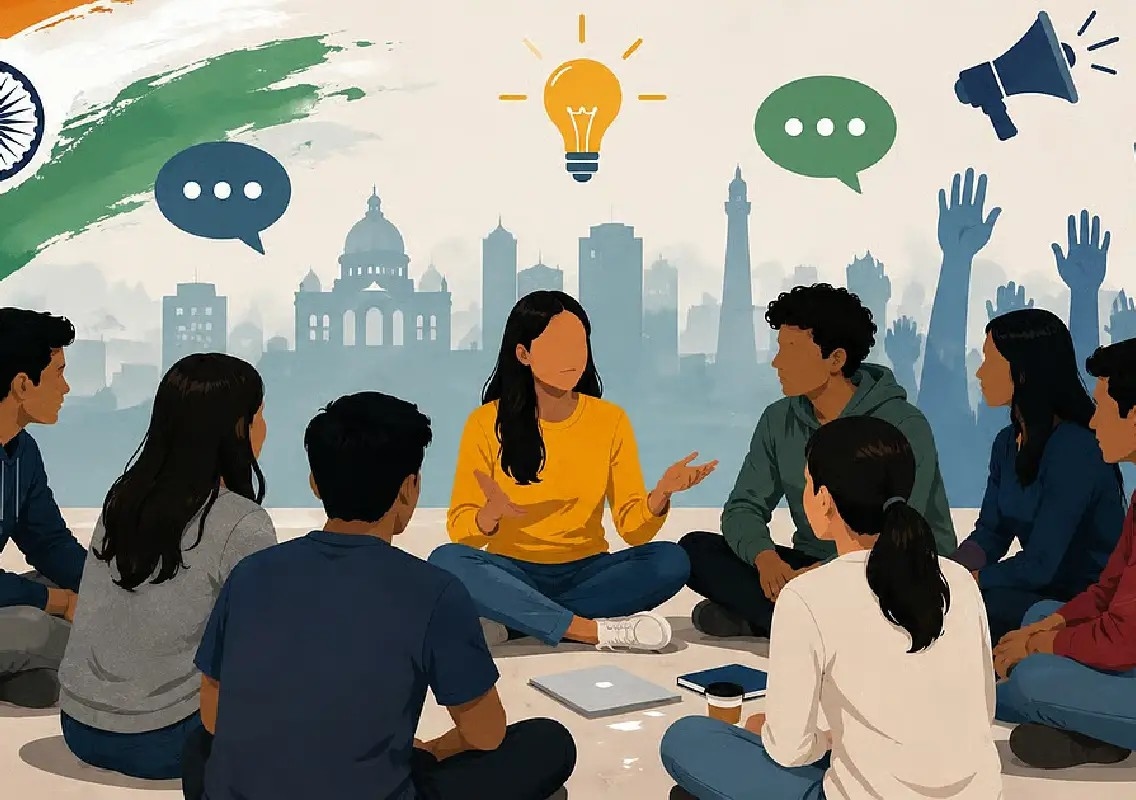


New Delhi: India’s education system is at a moment of transition, with students increasingly being urged to move beyond raising concerns and take an active role in shaping the future of learning. A recent commentary argues that Gen Z, as the generation most directly affected by today’s education system, should become a partner in reform rather than merely a critic.
From protest to participation
The discussion comes amid renewed attention to examination and education reforms. The commentary notes that while students have legitimate concerns about examinations and the wider education system, lasting change requires their involvement in finding practical solutions.
The central argument is that young people should not be viewed only as beneficiaries of educational policies. They can also contribute ideas, identify gaps and participate in creating better learning environments.
Education needs a wider reform
The focus, according to the commentary, should extend beyond examination reform to the entire learning ecosystem. This includes how students learn, how teachers are supported, how technology is used and how institutions respond to changing needs.
Such an approach could help move education reform away from isolated measures and towards a more connected system that places learning outcomes and student experience at its centre.
Young people can shape the future
The article draws on an Army leadership lesson: identifying a problem is only the first step; offering solutions and accepting responsibility for implementing them is more important.
For Gen Z, this means turning frustration into constructive participation. Students can contribute through campus initiatives, innovation, research, community engagement and informed dialogue with educators and policymakers.
The broader message is that meaningful educational reform cannot depend entirely on governments or institutions. It requires students, teachers, parents, policymakers and wider society to work together.
India’s next phase of education reform, therefore, could be shaped not only for young people but also with them.