







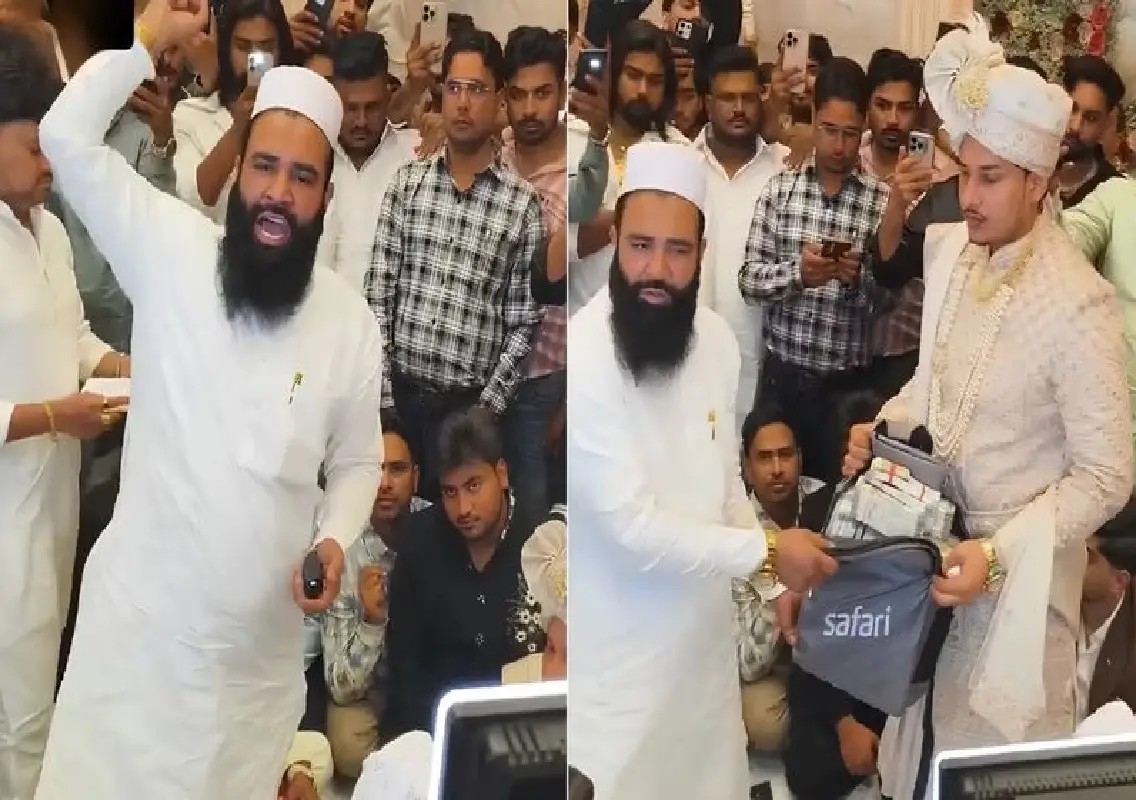


Ghaziabad: A viral video allegedly showing the public exchange of expensive dowry gifts, including over ₹1 crore in cash and a luxury BMW car, during a wedding ceremony in Uttar Pradesh’s Ghaziabad has triggered widespread outrage and renewed debate over the continuing practice of dowry in India.
The clip, which has spread rapidly across social media platforms, reportedly shows a man publicly announcing the gifts and cash allegedly presented by the bride’s family to the groom’s side during the wedding celebrations.
According to claims made in the viral post, the dowry included a BMW car along with cash amounting to more than ₹1 crore.
However, the authenticity of the video and the exact details surrounding the alleged dowry exchange have not been independently verified.
Video sparks criticism online
The footage quickly drew strong reactions from social media users, many of whom condemned the public display of dowry and called for strict enforcement of anti-dowry laws.
The video was reportedly shared on social media platform X by an account identified as “yuva_aas”.
The caption accompanying the clip criticised the practice and stated that social decline begins when families normalise excessive dowry demands and public celebrations of such exchanges.
Many users questioned why families spend enormous sums on dowry instead of securing the financial future of their daughters directly through investments, education or property ownership.
One user commented that rather than giving ₹1 crore to the groom’s family, the same amount could have been used to help the bride start a business or purchase property in her own name.
Others reacted sarcastically, mocking the apparent glorification of dowry in modern weddings despite legal prohibition.
Debate emerges over gifts and dowry
The viral clip also triggered discussions about the difference between voluntary gifts and illegal dowry practices.
Some social media users argued that wealthy families may choose to give expensive gifts to their daughters or sons-in-law voluntarily, and such exchanges should not automatically be labelled as dowry.
However, several users countered that public announcements and display of wealth during marriages encourage social pressure and contribute to the continuation of the dowry system across communities.
The debate also highlighted concerns about increasing financial pressure on families during marriages, especially in cases where extravagant gifts and cash exchanges are socially expected.
Dowry remains illegal in India
Dowry has been prohibited in India since the enactment of the Dowry Prohibition Act, 1961.
Under the law, giving, taking or demanding dowry is considered a punishable offence.
Despite legal restrictions, dowry-related practices continue to exist in various forms across several parts of the country, often disguised as gifts, wedding contributions or customary exchanges.
Activists and women’s rights organisations have repeatedly pointed out that dowry practices contribute to financial exploitation, harassment and, in some cases, violence against women.
According to official records and social studies, dowry-related disputes and complaints continue to be reported regularly across India.
Public display raises concerns
Observers noted that while private exchange of gifts during weddings may occur within families, publicly showcasing expensive cash transactions and luxury items can normalise social inequality and create unhealthy expectations among communities.
Experts also warn that such public displays may indirectly encourage competitive spending during marriages, particularly among middle-class families seeking social recognition.
The viral Ghaziabad clip has therefore reignited wider conversations about changing wedding culture, financial pressure and the need for stronger social awareness against dowry practices.
Authorities yet to comment officially
As of now, there has been no official statement from local authorities regarding the viral video or whether any inquiry has been initiated into the alleged dowry exchange.
The authenticity of the footage and the exact circumstances of the wedding also remain unverified.
Meanwhile, the incident continues to attract widespread attention online, with users demanding stricter action against dowry practices and greater awareness about women’s financial independence and legal rights.
The controversy once again highlights how social media has become a powerful platform for exposing and debating social practices that continue despite legal bans and public criticism.