







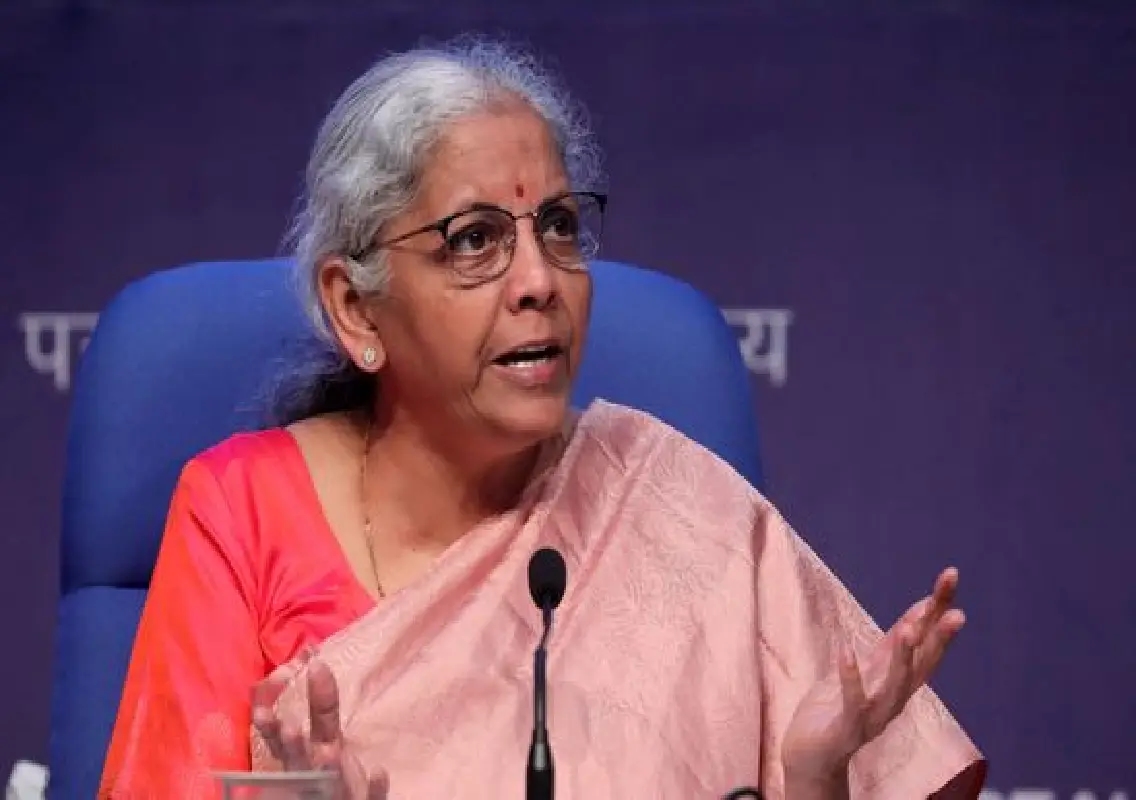


New Delhi: Finance Minister Nirmala Sitharaman on Wednesday cautioned that global trade is increasingly being “weaponised” through tariffs and other restrictive measures, and said India would need to navigate this evolving landscape with careful negotiation and strategic clarity. Speaking at the Times Network India Economic Conclave 2025, the finance minister underlined that the overall strength of India’s economy would be its biggest advantage amid rising trade disruptions worldwide.
Addressing policymakers, industry leaders and economists, Sitharaman said the notion of free and fair global trade was rapidly eroding. “Trade is getting weaponised through tariffs and through many other measures. India will have to negotiate its way carefully in this environment. It is not just about managing tariffs; our overall economic strength is what will give us that additional advantage,” she said.
Trade no longer free and fair
The finance minister observed that it has become “very clear” in recent years that global trade can no longer be described as free or fair. While India is often criticised for being inward-looking or labelled a “tariff king”, Sitharaman argued that such narratives ignore the changing realities of international commerce.
“India can be lectured and told that you are inward-looking, that you rely too much on tariffs. But today, tariff has been weaponised,” she said, adding that India’s intention has never been to use tariffs as a geopolitical or economic weapon.
She pointed out that India’s trade policy has largely focused on protecting domestic industries from unfair competition rather than restricting trade arbitrarily. “Our objective has been to safeguard domestic industries against flooding of goods, which often happens from a predator. That is very different from weaponising trade,” she said.
Double standards in global trade discourse
Sitharaman also highlighted what she described as double standards in global discussions on tariffs and protectionism. According to her, countries that previously championed free trade and criticised others for imposing tariffs are now openly embracing trade barriers without facing the same level of scrutiny.
“There was a time when nations would say tariffs are not good, and no one should take such measures. But suddenly, we have newer players coming up and saying we will impose tariff barriers, and there is no questioning at all. That seems to be the new normal,” she remarked.
Her comments come against the backdrop of growing global trade tensions, particularly due to high tariffs imposed by the United States in recent years. These measures have disrupted supply chains and added uncertainty to global markets.
Global disruptions add to uncertainty
The finance minister’s remarks are significant as international trade continues to face turbulence. The US has imposed steep tariffs on a range of imports, citing domestic economic interests and national security concerns. These actions have had ripple effects across global supply chains, impacting emerging and developed economies alike.
More recently, Mexico announced plans to impose high tariffs on imports from countries with which it does not have free trade agreements, further signalling a shift towards protectionist policies across regions.
Sitharaman suggested that such developments underscore the need for India to remain vigilant and adaptive in its trade negotiations. “In this environment, India cannot afford to be complacent. Negotiation has to be backed by economic resilience and clarity of purpose,” she said.
India’s economic strength as a buffer
Emphasising India’s macroeconomic fundamentals, the finance minister said the country’s growing economy provides a crucial buffer against global shocks. Strong domestic demand, a large consumer base, and ongoing structural reforms give India greater leverage at the negotiating table, she added.
“Our economy’s strength—be it growth prospects, consumption capacity, or reform momentum—will help us withstand these pressures better than many others,” Sitharaman said, without elaborating on specific policy responses.
She reiterated that India’s trade strategy would continue to balance openness with the need to protect domestic interests, especially in sensitive sectors such as manufacturing, agriculture and emerging technologies.
Conclusion
As global trade norms undergo a significant shift, Finance Minister Nirmala Sitharaman’s remarks reflect India’s cautious but confident approach to an increasingly protectionist world. With tariffs and trade barriers becoming tools of strategic influence, India, she said, will rely on careful negotiation and the inherent strength of its economy to safeguard its interests while remaining engaged with the global trading system.