









Gandhinagar: The Gujarat Legislative Assembly on Tuesday passed the Uniform Civil Code (UCC) Bill, 2026, after an extensive debate lasting over seven hours, making Gujarat the second state after Uttarakhand to implement a common civil law framework.
Common legal framework introduced
The legislation establishes uniform rules governing marriage, divorce, succession and live-in relationships, applicable to all residents of the state except Scheduled Tribes and certain constitutionally protected groups.
Notably, the provisions of the law will also extend to residents of Gujarat living outside the state, broadening its scope beyond territorial boundaries.
The Bill mandates compulsory registration of marriages within 60 days, failing which penalties of up to ₹10,000 may be imposed. It also requires the registration of live-in relationships, introducing a structured legal framework for such arrangements.
Strict provisions and penalties
The UCC Bill includes stringent provisions to address unlawful practices. Bigamy has been explicitly prohibited, while offences such as forced or fraudulent marriages could attract imprisonment of up to seven years.
The legislation also standardises divorce procedures by mandating court approval and registration, effectively invalidating informal or out-of-court divorces.
Additionally, it ensures equal inheritance rights for sons and daughters across all religions, a move aimed at strengthening gender equality.
For individuals aged between 18 and 21 entering live-in relationships, the law requires parental notification, adding another layer of regulation.
Government highlights constitutional values
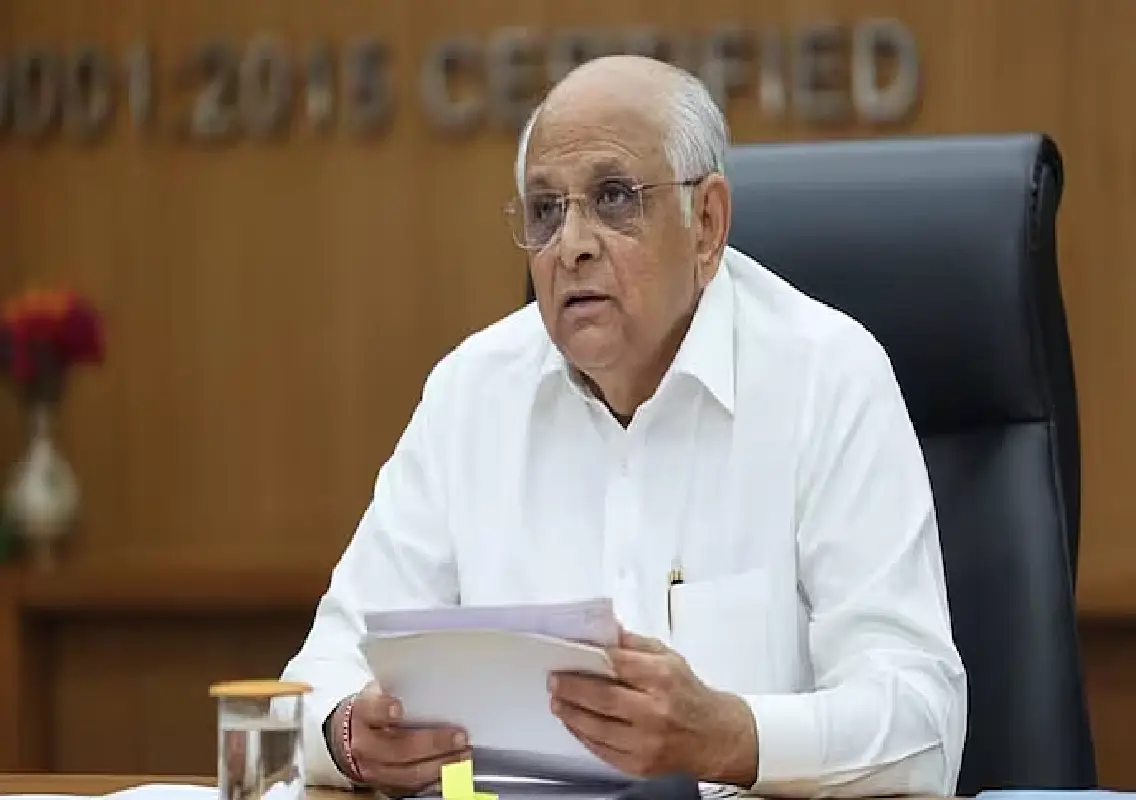
Chief Minister Bhupendra Patel described the Bill as rooted in India’s constitutional principles and civilisational ethos, referring to traditional values and ancient texts.
He emphasised that the law is designed to ensure equal justice, enhance women’s rights, and provide legal protection to children, including those born out of live-in relationships.
According to the government, the objective of the Bill is to eliminate discrimination while maintaining a balance by not interfering with religious practices and rituals.
Opposition raises concerns
The passage of the Bill was marked by protests from opposition parties, including the Congress and the Aam Aadmi Party, which demanded that it be referred to a select committee for further scrutiny.
Congress MLA Imran Khedawala and other opposition leaders criticised the legislation, alleging that it was introduced without adequate consultation and raising concerns about its implications for minority communities.
They also questioned the exclusion of Scheduled Tribes from the purview of the law and argued that the Bill was being rushed through the Assembly.
Drafting and consultations
The Bill was drafted following recommendations from a high-level committee chaired by retired Supreme Court judge Ranjana Prakash Desai. The committee reportedly conducted extensive public consultations and examined legal frameworks from various jurisdictions before finalising its report.
The ruling Bharatiya Janata Party described the legislation as “historic”, highlighting its focus on uniformity in civil laws and gender justice.
Key provisions at a glance
The law introduces several significant reforms, including mandatory registration of marriages and live-in relationships, uniform divorce procedures, equal inheritance rights, and strict penalties for violations.
At the same time, it provides exemptions for certain communities, particularly Scheduled Tribes, acknowledging their distinct customs and constitutional protections.
Conclusion
The passage of the UCC Bill marks a significant legal and political development in Gujarat. While the government has positioned it as a step towards equality and uniform justice, opposition concerns indicate that the law is likely to remain a subject of debate in the coming months. Its implementation and impact on various communities will be closely watched across the country.